
Stories
After my boss promoted his nephew instead of me, I quietly handed in my resignation with the subject line: “Re: Clause 8.” The company lawyers understood immediately: my non-compete was void, and I could legally take our top 3 clients; the CEO was on the line with me within minutes.
After being passed over in favor of his boss’s nephew, the narrator resigns using a carefully written Clause 8 that voids his non-compete. The move triggers a legal scramble and sets off a client exodus to his new firm, Hail Strategic LLC.

Clause 8
“I’m sorry. He’s family.”
That was all my boss said when I stared at the internal memo, still blinking, still trying to process what I was reading.
Twelve years.
Twelve years of making him look prepared in every meeting. Twelve years of smoothing over vendor negotiations after he had overpromised. Twelve years of whispering the right number in his ear five seconds before a client asked for final pricing.
And now Darren Hail, a man whose main strategic talent seemed to be walking into rooms with unearned confidence, was my new manager.
The email announcing his promotion did not even have a real signature. Just one cold sentence dressed up as leadership news.
Effective immediately, Darren Hail will assume the role of Director of Strategic Accounts.
No meeting.
No explanation.
No conversation.
Not even a simple thank-you for holding the department together during Q3, when two of our top reps left without warning and I personally took over their accounts just to keep the whole thing from falling apart.
My name was not mentioned once.
Not in the “thanks for your continued support” line.
Not in the CC field.
Not even in Darren’s typo-filled Slack follow-up, where he wrote, “Excited to be apart of the team,” and nobody corrected him because by then everyone had learned that correcting Darren was bad for your career.
It was 3:47 p.m. when I closed the email.
In that moment, a strange clarity settled over me.
Not rage.
Not grief.
Just a cold, quiet realization that the game I had been playing for more than a decade had never actually been mine.
I did not make a scene. I did not bang a desk. I did not send a dramatic message in the company Slack.
I stood up, walked to the small filing cabinet under my desk, and pulled out a three-ring binder labeled Legacy Clauses — Q1 Drafts.
It was dusty. The label was faded, written by hand back when we were still printing HR templates and redlining contracts with pens instead of leaving comments in shared documents.
The binder was mine.
My handwriting.
My appendix notes.
My quiet push for language that protected the company from conflicts of interest, until, ironically, those same lines could protect someone like me.
Inside, in black and white, was a clause we never fully reviewed after the board restructured six years earlier. I remembered the wording because I had fought to keep it short and clear against legal’s usual desire to bury simple ideas under four pages of extra language.
In the event of an internal promotion that involves a familial relationship within two tiers of senior leadership, all non-compete restrictions shall be considered null and void unless renegotiated in writing.
Clause 8.
Nobody remembered Clause 8 because nobody thought the company would ever be careless enough to trigger it in plain daylight.
But I remembered it.
I remembered it because I wrote it.
It was the kind of backstop you build for someone else and hope you never have to use yourself.
I set the binder beside my keyboard, opened Outlook, and clicked New Email.
Recipient: HR.
CC: Legal team.
BCC: myself, for the paper trail.
Subject: Re: Clause 8.
That was all the subject line needed to say.
The body was just one sentence.
Effective end of day today, I resign from my position as Senior Strategic Accounts Manager in accordance with Clause 8 of my employment agreement.
I hit Send.
Then I leaned back in my chair and looked at the motivational poster Darren had slapped on the wall the week before. It said, “You miss 100% of the shots you don’t take,” but the punctuation was wrong.
In the hallway, Darren’s voice bounced off the glass walls. Loud. Brash. Already talking about how he was going to “digitize the CRM pipeline” and “synergize cross-platform strategies.”
The man could barely explain CRM two weeks ago, and now he was preaching it like a keynote speaker.
I unplugged my headset, tossed my favorite coffee mug into my bag, and walked out.
No goodbyes.
No awkward hugs.
No final team meeting.
I did not slam the door.
I let it close slowly.
Quiet wins every time.
The rumors had started just after Labor Day.
You could feel them in the breakroom. The way the CFO lingered too long by the espresso machine. The way HR suddenly wore that tight, rehearsed smile every time you passed their cubicles.
People got twitchy. They polished their LinkedIn profiles. They acted humble in public and ambitious in private.
Then came the one-on-ones.
Mine was a Wednesday afternoon, scheduled without warning. A vague calendar invite titled Check-in — CFO and HR.
I walked in, sat down, and before I could even open my notebook, the CFO leaned forward like we were sharing state secrets.
“Mason, we’re making some long-overdue structural changes at the director level. You’ve been with us how long now? Twelve years?”
“Twelve and a half,” I said.
That half felt earned.
“Right,” he said, nodding. “Well, let’s just say you’ve built trust where it matters. The leadership team is very aware of that.”
He did not say it outright.
None of them ever did.
But it was there in the head tilt, the subtle nod from HR, the careful little pause that meant: get ready.
Later that day, an internal email went out from HR asking senior team members to refresh their internal CVs and update accomplishments from the past twenty-four months.
That never happened unless promotions were coming.
People started buzzing.
I heard whispers in the elevator.
“It’s finally Mason’s year, right?”
“No one is steadier than him.”
“He basically is the accounts department.”
I did not play into it.
I did not update my resume. I did not open the document. My record spoke for itself.
Retention rates north of 98%.
Client renewals that beat industry averages by fourteen points.
Two expansions that saved our quarterly numbers from falling short.
I did not need to sell myself.
I had the scoreboard.
A week passed.
Then two.
Suddenly, there was a town hall on the calendar.
Mandatory. Midday Friday.
We all gathered in the open-floor auditorium, under the company logo and the row of small American flags the facilities team put out for client visits. The CEO stood awkwardly in front of a slide deck that said Next Chapter: Leadership Evolution.
I felt it then, foolish as it sounds.
A little lift in my chest.
Maybe the invisible work was finally going to count. Maybe the late nights, the quiet fixes, the way I never let a contract expire without three contingencies, maybe all that had mattered.
Then the CEO smiled.
“I’d like to welcome our new Director of Strategic Accounts, Darren Hail.”
There was a beat of silence.
You could hear someone’s soda can hiss open in the back row.
Then came scattered, confused applause.
Darren walked to the stage in a jacket two sizes too tight, wearing the expression of a man who thought arriving was the same thing as earning.
He lifted a fist.
“Let’s crush Q4, team.”
I did not clap.
I did not blink.
I just stared straight ahead as the weight in my chest sank like a stone in water.
Darren.
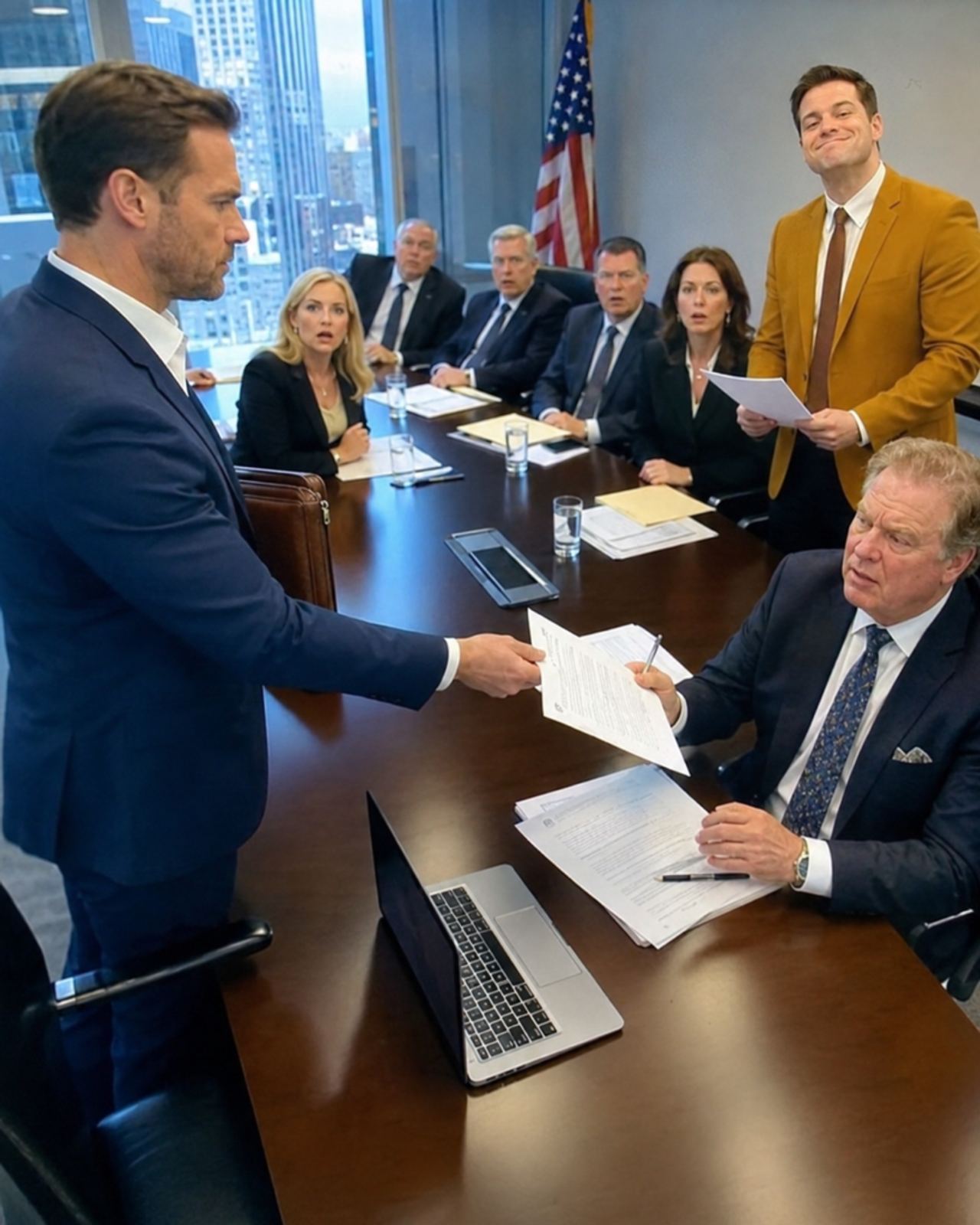
My boss’s nephew.
Darren, who once asked me what gross margin meant in front of a twenty-million-dollar client.
Darren, who thought RFP stood for “really fast proposal.”
Darren, whose biggest strategic idea was rebranding our department as “Hailstorm.”
And now I was supposed to report to him.
I did not storm out. I did not mutter under my breath.
But when I got back to my office, I did not sit down either.
I walked straight to the filing cabinet, second drawer down, and pulled it open.
The folder was still there.
Beige. Thick. Faded from years of sliding in and out of that drawer.
Legacy Clauses — Q1 Drafts.
I dusted it off, brought it to my desk, and flipped to the final appendix.
Supplemental Conditions: Conflict of Interest.
I skimmed the pages until I saw it.
Short. Precise.
Clause 8.
The one I wrote.
The one they had never revised.
The one no one had thought about since our last contract overhaul, back when everyone was too distracted by the merger with Tracant Partners to notice language they assumed would never matter.
But now it did.
It applied exactly.
I closed the binder, set it gently beside my keyboard, and looked out the window as Darren’s laugh echoed down the hallway.
Oblivious.
Unprepared.
Completely unaware that the paper trail had already chosen sides.
The walk back to my desk felt like the longest ten yards of my life and the shortest.
Everything blurred into soft shapes and muted voices, like I was already halfway detached from the place. The branded mugs. The dying succulent on my windowsill. Darren’s lopsided welcome balloon drooping next to the espresso machine.
All of it felt like a parody now.
I sat down, slid the binder to the far corner of the desk like I was shelving a book I did not need to read again, and opened Outlook.
No dramatic letterhead.
No long resignation speech.
Just a message to HR, legal, and the CEO.
Subject: Re: Clause 8.
I stared at the blinking cursor in the message body for a moment, letting it hover in the silence.
Then I typed.
Effective end of day today, I resign from my position as Senior Strategic Accounts Manager in accordance with Clause 8 of my employment agreement.
No “with regret.”
No “sincerely.”
I did not attach a handover note.
If they wanted knowledge transfer, they could ask Darren where I had stored twelve years of institutional memory.
Good luck.
I hit Send.
Then I sat back, folded my hands over my stomach, and watched the bottom-right corner of my screen light up as the email left the server.
Two minutes later, the ping came.
A Slack notification from the company’s legal channel, normally dormant and reserved for quarterly updates, flared to life.
Caroline, the junior associate who once asked me to explain deferred revenue for a case study, had posted.
“Uh… Clause 8. Anyone have eyes on this?”
Three question marks.
The universal corporate signal for: something is wrong.
I leaned back.
No need to respond.
The clause would speak for itself.
Behind me, I could hear Darren in his new corner office, already on a call, his voice ricocheting off the glass.
“We just need to sync our deliverables, you know, create some synergy.”
I felt bad for whoever was on the other end of that line.
I unplugged my mouse. Cleared my browser history out of courtesy. Dropped my key card in the drawer. Took my backup charger because there was no chance I was leaving that behind.
Before logging off, I opened one final tab.
The placeholder site for Hail Strategic LLC.
A barebones splash page with my initials and a contact form.
No launch announcement.
No press.
Just readiness.
Then I clicked Log Off.
No tears.
No scene.
No one even noticed I was leaving.
I passed a few coworkers in the hallway. Michelle from procurement smiled awkwardly. Theo from IT nodded, then looked back like he had sensed something but did not know what to ask.
Nobody stopped me.
That was the beauty of being the quiet one.
People notice when you arrive.
They panic when they realize you have already disappeared.
By the time I reached the parking lot, Caroline had followed up her Slack post with another message. This one included a screenshot.
Clause 8 highlighted.
Circulated.
Under it, a single wide-eyed emoji from someone in legal.
The silent scream.
I got into my car, started the engine, and let the radio play static while I sat with the weight of everything and the strange lightness underneath it.
Clause 8.
They had not just ignored me.
They had ignored the fine print I wrote.
Now it was going to cost them more than they imagined.
Legal had eyes on the clause within twelve minutes of me hitting Send.
By the twenty-minute mark, they were on a Zoom call titled Urgent Employment Contract Exposure — Clause 8.
Caroline was already screen sharing a PDF of my signed agreement. From what I heard later, she sounded like someone trying very hard to remain professional.
“So this clause is still in there,” she said. “Page thirty-eight, Appendix D. He signed it in 2017 when we transitioned everyone onto the new framework.”
Nobody spoke.
She continued.
“Nobody flagged it back then because, frankly, we did not think it would apply.”
Greg, the VP of Legal, joined from his second home in Vermont. He was not even wearing a collared shirt.
“It applies,” he said flatly. “The clause is clean. Familial promotion inside the leadership threshold voids the non-compete unless renegotiated in writing. He wrote this language, didn’t he?”
Another silence.
Then someone off camera sighed.
“I thought we scrubbed the legacy templates.”
“No,” Caroline said, scrolling down to another document. “Not just his. I found three other executive-level contracts with Clause 8 still live. All signed during that revision sprint when compliance was short-staffed.”
The room started doing the math.
I imagine they pictured me sitting in a leather chair somewhere, sipping expensive whiskey and contacting every client from a secret phone.
The truth was less glamorous.
I was on my back porch in sweatpants with leftover Thai food and two unread voicemails from Client Narwan.
But yes, I was smiling.
Because Clause 8 was not a loophole.
It was a fire escape I had built years ago, back when I still believed someone might one day push me into a room with no doors.
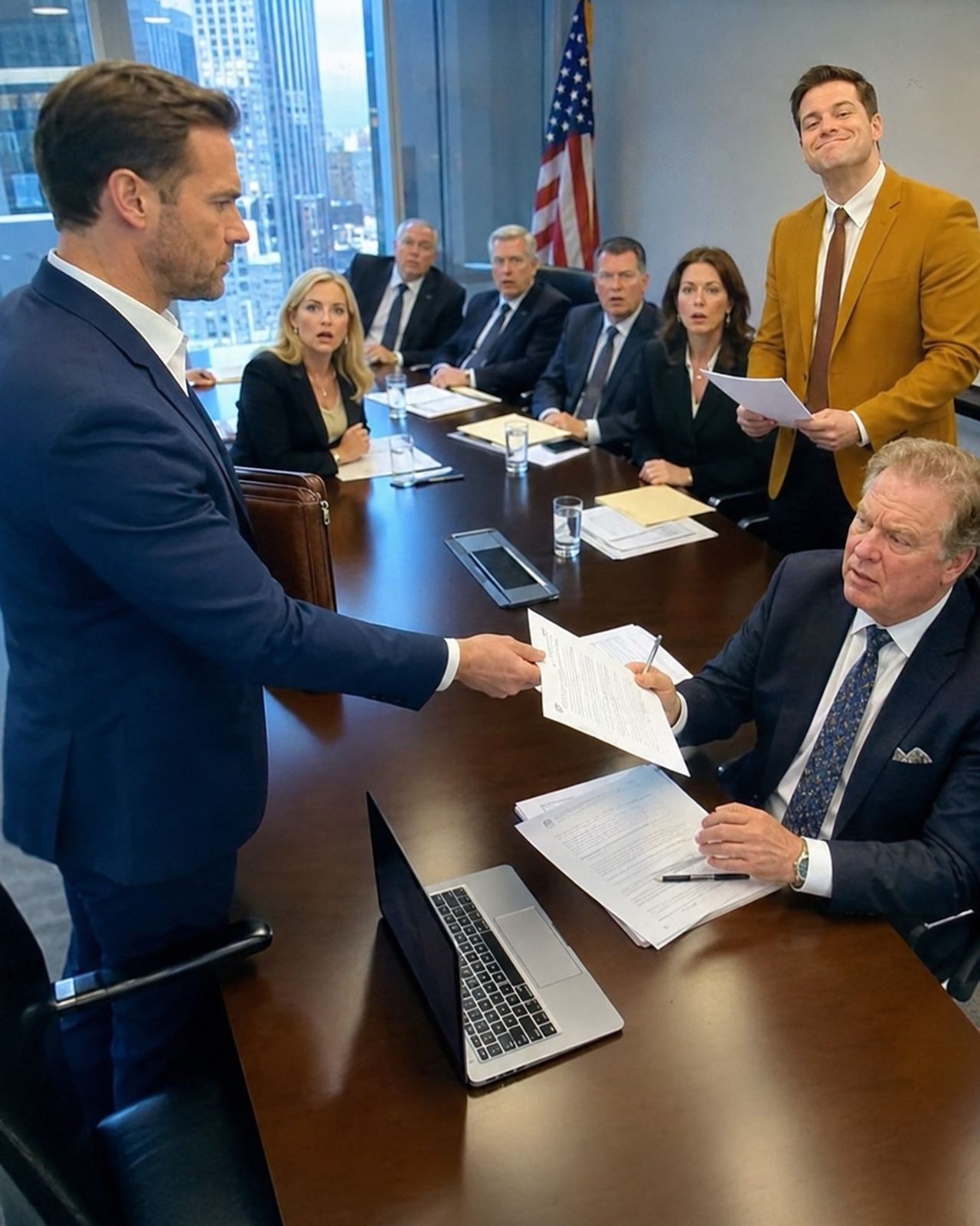
A backup plan disguised as fine print.
And the best part was that it did not just void my non-compete.
It made it unenforceable under the very conditions they had triggered.
That meant everything I had built through lawful access, every contact, every client note, every CRM export I had prepared during routine compliance audits, was not locked behind the threat they thought would keep me obedient.
Greg’s voice cut back in.
“Can we get ahead of this? Offer him a stay package? Reverse the nephew’s promotion?”
Caroline was quiet.
Someone else said what everyone was thinking.
“No chance. The CEO handpicked the kid. He’ll double down before he admits a mistake, especially not for Mason.”
Then another voice added, lower this time, “Mason Hail has a sterling client list. He could spin up a boutique shop in a week and drain half the trust out of this place.”
A silence followed.
Then Caroline spoke again.
“It’s already live. Hail Strategic LLC. Minimal, but real.”
At that moment, someone on the call muttered under their breath.
“This isn’t a resignation. It’s a structural event.”
They were not wrong.
Back on my porch, I finally opened the email from Client Number One.
Subject line: Catch-up coffee.
They kept it casual, but I knew what they were really asking.
Behind the scenes, that urgent legal Zoom spilled into Slack channels, Outlook threads, and last-minute office huddles.
Darren, from what I later heard, tried to reassure everyone. He called Clause 8 a technicality and promised a revised loyalty framework to ease client jitters.
He even had someone mock up a chart comparing his “new vision metrics” to mine.
It was embarrassing.
And it would not matter.
The clients were not going to look at metrics.
They were going to look at who answered the phone at 11:47 p.m. when their supplier in Taiwan fell through.
That was me.
Always had been.
Clause 8 was not revenge.
It was release.
I did not destroy the bridge.
I built a better one, brick by contractually binding brick.
And they had handed me the reason to cross it.
The LinkedIn update went live at 10:03 a.m. on a Tuesday.
No announcement.
No “excited to share.”
No motivational paragraph about new beginnings.
Just a simple change under Experience.
Founder — Hail Strategic LLC.
September — Present.
I did not even add a description.
The name alone was enough.
Anyone who mattered would read it. The rest were not my audience.
Within an hour, I had eight new connection requests.
Three from recruiters.
Two from old colleagues.
One from a former boss who once told me I lacked executive polish.
I ignored them all.
The one that mattered came through at 11:12 a.m.
Client Number One.
One of the big three.
Their name alone carried weight in quarterly reports. They had my personal number but chose email, formal and cautious.
Subject: Catch-up coffee.
The body was short.
Mason, heard you’ve made a change. Would love to grab coffee and chat about future continuity.
Translation: We are interested. Tell us what you are building.
I stared at the email, not because I did not know how to reply, but because it confirmed what I already knew.
They did not care about company logos.
They cared about continuity.
Trust.
Response time.
They remembered the dozen times I had flown out last minute to solve a logistics issue in person. They remembered that I could recite their Q1 procurement priorities from memory.
They were not loyal to the company.
They were loyal to the person who had kept showing up.
I typed back two words.
Thursday, 9:00.
No smiley face.
No exclamation point.
Just certainty.
Ten minutes later, another ping.
Client Number Two.
No small talk.
Can you send your new firm’s terms? We would like to keep the same team on the account if possible.
I stared at the screen for a second and let it settle.
There it was.
The shift.
Not just clients reaching out, but treating the change like a foregone conclusion. Like I had simply migrated departments and they were updating the paperwork.
No panic.
No concern.
Just: where do we send the purchase order?
Meanwhile, back at the office I had walked out of, panic was in full bloom.
A junior analyst named Rachel noticed something during a CRM audit. She was pulling a weekly activity report and spotted my credentials accessing multiple client profiles in the final weeks before I left.
It was not a breach.
It was not even subtle.
I had every right.
My role required me to generate compliance snapshots, export quarterly engagement logs, and prepare transition frameworks. I had done it every year like clockwork.
What changed this time was intent.
I was not preparing for a quarterly review.
I was preparing for extraction.
Every client note.
Every preferred vendor.
Every pain point.
Every exception window.
Every quiet promise the company had made but forgotten to document.
I had them neatly packaged under the label Continuity Assets.
All generated using my own login, through company systems, as part of my regular duties.
Rachel flagged it in Slack.
Caroline from legal replied with one sentence.
“He was authorized.”
Darren reportedly lost his composure.
He pulled Rachel into a side meeting to ask what else Mason had taken.

But there was nothing else to take.
I had not stolen a thing.
I had simply left with my knowledge.
Knowledge they had treated like it belonged to them by default.
Like it came with the badge and the email signature.
They forgot I was the one who built half those relationships from the ground up.
I was the one who walked clients through system overhauls while Darren was still trying to sound useful in meetings.
Control was returning quietly.
Steadily.
No fireworks.
No declarations.
Just motion.
Hail Strategic LLC was a placeholder no longer.
It was becoming real.
And everyone who had treated me like scenery was starting to realize I had been the foundation.
I did not post a press release.
I did not throw a launch party.
I booked a table at a quiet coffee shop downtown and ordered my usual because I already knew who was walking through that door Thursday at 9:00 a.m.
And I knew who would not be sleeping the night before.
By Friday morning, the math had changed.
Not the kind you find in spreadsheets.
The other kind.
The emotional calculus that tells a company whether it still owns the room.
By 9:47 a.m., it was clear they did not.
Client One did not just grab coffee. They brought their head of procurement and asked for a draft scope right there at the table.
No hedging.
No drawn-out dance.
Just: “We would prefer a seamless transition. Can you confirm when Hail Strategic will be registered in our vendor system?”
I almost laughed.
They had already pre-filled half the onboarding form.
They were just waiting for me to say yes.
Later that day, Client Two looped in legal.
We understand Mason’s departure triggered Clause 8. Please provide documentation on whether our contract still resides with your firm or if continuity may be maintained with Mr. Hail’s new company.
The email was copied to three VPs, a compliance officer, and one visibly nervous junior manager who sent me a separate message thirty minutes later.
Can we talk? Off the record.
Then came Client Three.
The one I least expected.
Their team had always been colder, more by the book. I assumed they would stay neutral, at least for a while.
Their response said otherwise.
Darren, we have reviewed the situation. Our contract includes a thirty-day exit provision and a relationship continuity clause allowing transfer of services under mutual consent. As Mason Hail has maintained consistent management of our portfolio since 2016, we intend to explore alternative continuation with his new firm.
Three clients.
Forty-seven million in annual revenue between them.
All suddenly reviewing options.
And all three portfolios had one name in common.
Mine.
Back at the office, Darren was unraveling.
His attempts at damage control were clumsy enough to become their own problem. He booked back-to-back calls, tried to rally the sales team, and even asked legal whether they could revise Clause 8 after the fact.
Caroline, to her credit, reportedly did not respond to that one.
The final straw came in the form of an email forwarded to me by Client Two.
Subject: About the recent transitions.
From Darren Hail.
Time: 3:14 p.m.
Hey, hope you’re doing great. I know there’s been some confusion, but wanted to reassure you that I’m fully in the loop on all your legacy workflows. Mason left a few docs, but no worries. We’re rebuilding everything from scratch and putting a new vision into play. Big things coming.
Attached was a pie chart titled Client Synergy Vortex.
No numbers.
No source.
Just bright colors arranged with confidence.
Beneath Darren’s message, the client had typed:
Mason, we thought you’d appreciate this.
That was the moment I knew the transfer was already underway.
Not through force.
Not through lawsuits.
Not through tricks.
Through gravity.
Through quiet relationships that carried weight.
People who had heard me say, “I’ll take care of it,” and then watched me actually do it.
Darren could not answer basic questions.
He could not tell them what their Q2 target was.
He did not know which vendor we had blacklisted for missed shipments in 2021.
He could not explain why Client Three’s service agreement had a twelve-hour exception window instead of the standard eight.
I knew why.
Because I had fought for that exception after a major outage nearly cost them a launch weekend.
The story was not just about Clause 8 anymore.
It was about every forgotten gesture.
Every late-night call.
Every early flight.
Every invoice I caught before it became a client problem.
Darren had the title.
I had the receipts.
And now I had three of the company’s crown jewels knocking at my door.
Not because I took them.
Because the company let them drift away.
All I had to do was open the door.
The call came just after 6:00 p.m., long after most people had cleared out of their offices.
I was still at my kitchen table nursing a second coffee and reviewing draft onboarding documents for Narwan.
The number that popped up was private.
That usually meant one of two things: spam, or someone who did not want the call recorded in an obvious trail.
I let it ring twice.
Then I answered like I already knew.
“Hello.”
A pause.
Then that voice.
Slow. Careful. Just shy of patronizing.
“Mason, it’s Richard.”
The CEO.
Finally, the man who had not said one word when I walked out two weeks earlier suddenly found his calendar wide open for me.
“I’ve been meaning to connect,” he said. “I understand you’ve been active.”
That was one way to put it.
I did not answer.
I let him sit in the silence.
“I was hoping we could have a civil conversation,” he added.
I leaned back in my chair and smiled without making a sound.
“I alw…
Read more stories
- Three days after I bought my dream mansion, my husband informed me that his parents
- The brakes failed on a lonely Smoky Mountain road, and our car went over the edge. As I lay trapped beneath twisted metal, a trucker appeared at the broken window and whispered, “Play dead… he’s still watching.” Only after my stepson finally left did the stranger reveal the truth he had been hiding.
- After I bought my dream lake house to recover in peace, my brother called to say he was moving in because dad approved it—but by morning, the locks were changed and two police officers were waiting
- On the midnight of my 18th birthday, I quietly transferred my late father’s $45 million inheritance into a protected trust structure.