Human Stories
A Mother-in-Law Ended Her Pregnant Daughter-in-Law’s Free Stay—Then Found the Secret Bags Hidden in Their SUV
A mother-in-law ends her pregnant daughter-in-law’s free stay after discovering hidden bags in their SUV containing her own valuables. The confrontation reveals an attempted fraud, stolen jewelry, and a plan to use Helen’s home as collateral for a new mortgage.
I was not asking.
David moved before Sarah did. That was what told me everything. He did not argue, did not blink, did not ask which suitcases. He walked past his wife with his shoulders tight and his face emptied out, like some part of him had been waiting for permission to stop pretending this was normal.
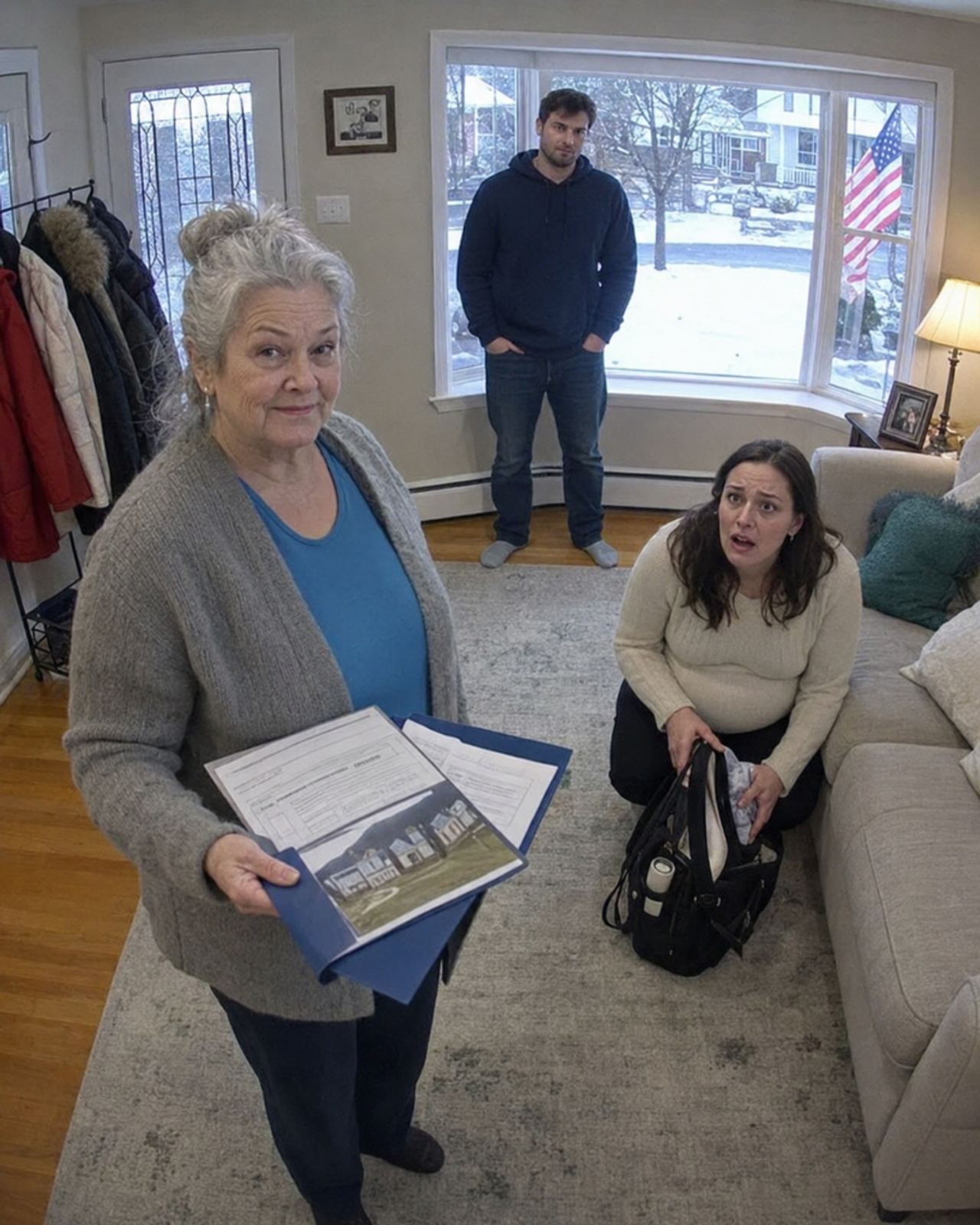
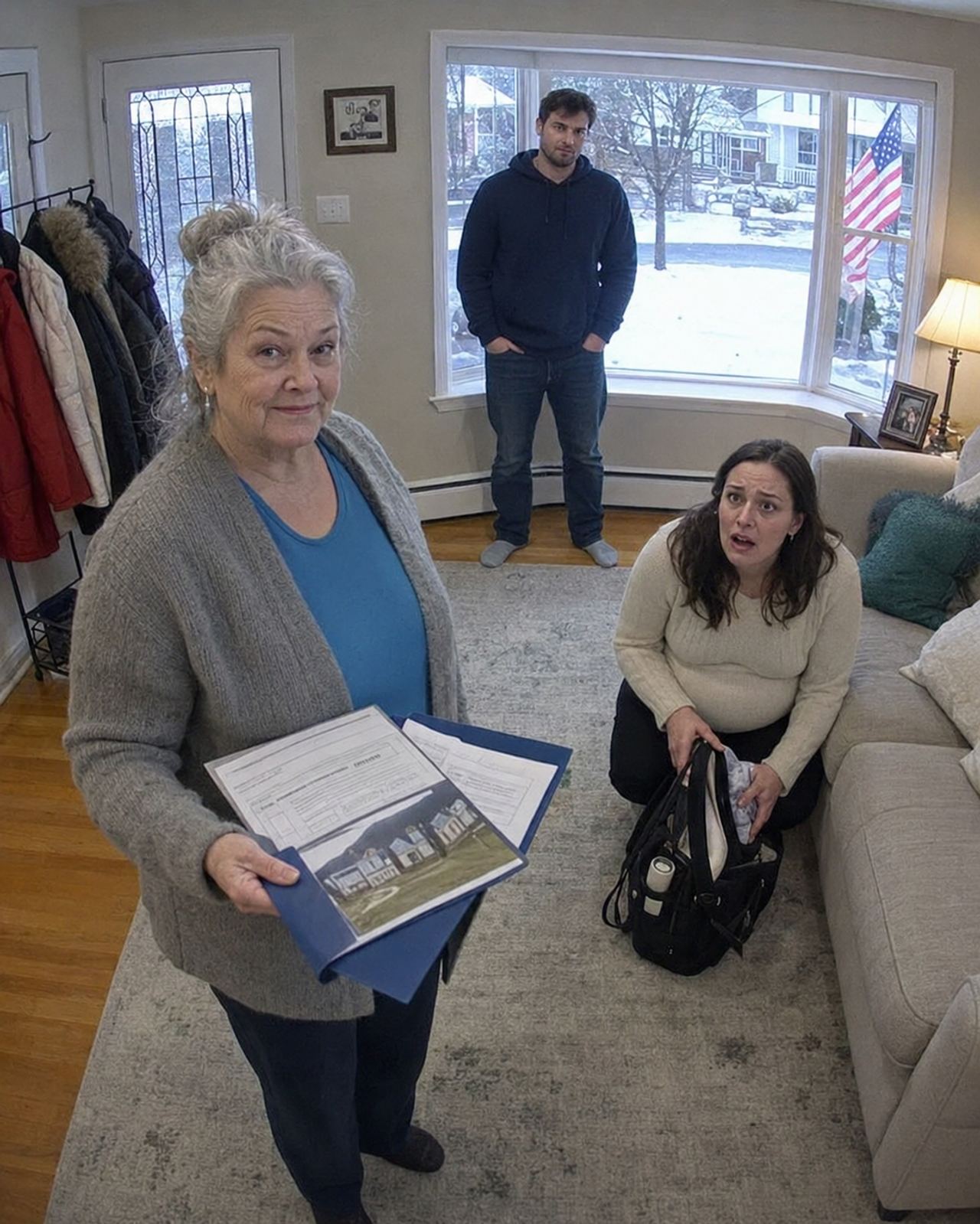
Sarah stared at the open folder in my hand. Her eyes kept jumping from the property tax statement to the mortgage payoff letter, then to the printed house rules she had signed when they moved in “temporarily” at 8:14 p.m. on a Friday in November.
“You can’t just kick out a pregnant woman,” she said, but the sharpness was gone.
“I’m not kicking out a pregnant woman,” I said. “I’m telling two adults that free housing in my home is over.”
That was when David came back from the garage carrying the black rolling suitcase Sarah had packed for their hospital bag practice run. He set it in the hallway. The sound of the wheels clicking against the hardwood made Sarah flinch.
Then he whispered, “Mom, there’s something in the car you should know about.”
Sarah’s whole face changed. Not fear of the snow. Not fear of moving. Something worse.
I looked past David through the frosted glass of the front door and saw the rear hatch of their SUV still open in the driveway, snow blowing into the cargo space where two more bags sat hidden under a gray blanket.
David swallowed hard, looked at his wife, and said, “Sarah… tell her what you packed before you asked her to leave.”
And that was when Sarah grabbed the diaper bag so tightly one of the little zipper pulls snapped off in her hand…
PART 3
The little plastic zipper pull bounced off the entryway rug with a tiny, pathetic click.
Sarah didn’t pick it up. Her eyes stayed locked on David, wide with a sudden, ugly panic.
“David, don’t,” she whispered. Her voice was no longer that cool, composed weapon she had used moments ago. It was shrill. “We talked about this. You agreed—”
“I didn’t agree to this!” David’s voice finally broke through the quiet of the house. It wasn’t a yell, but it had the raw, raspy strain of a man who had been suffocating for months. He didn’t look at her. He looked at the floor between them. “I never said we could steal from her.”
Steal.

The word hung in the cold hallway air, heavier than the snow piling against the glass.
I didn’t flinch. I didn’t shout. I simply turned, walked past Sarah—who pulled back as if my cotton cardigan might burn her—and stepped out onto the porch. The winter air hit my face like a cold slapped towel, instant and bitter. I walked down the two wooden steps to the driveway, my slippers sinking slightly into the fresh slush, and reached into the open hatch of the SUV.
I pulled back the gray blanket.
Underneath weren’t just extra clothes or extra diapers.
There were three heavy leather lockboxes—my lockboxes. The ones I kept in the built-in closet behind my vanity. The ones containing my late mother’s pearl necklace, my grandmother’s wedding ring, thirty years of family photographs, and the original bearer bonds my father had left me before he passed. Beside them was my mahogany jewelry chest, wrapped haphazardly in one of my own linen bath towels.
They hadn’t just planned to kick me out. They had already begun liquidating my life into the back of a Ford Explorer while I was making tea.
I didn’t cry. I think the cold inside me was too deep for tears.
I grabbed the handle of the heaviest lockbox and lifted it out. David instantly stepped up beside me, taking it from my hands before I could strain my back. His face was red from the wind, but his eyes were bloodshot with shame.
“Mom… I didn’t know she put the jewelry in there,” he stammered, his breath puffing white in the frost. “She told me… she told me we were just packing up the old linens and the stuff you said we could sell at the garage sale to help with the nursery fund—”
“Shut up, David!” Sarah stood on the porch, her arms crossed tight against the wind, though she wasn’t wearing a coat. “She doesn’t need those things! She’s one person! She lives in a four-bedroom house alone while we’re drowning in medical bills and contractor deposits! She’s hoard—she’s hoarding wealth!”
I walked past her, up the steps, carrying the small mahogany chest tightly against my chest.
“It isn’t wealth, Sarah,” I said softly as I crossed the threshold into the warmth of the foyer. “It’s my mother’s life. And it’s mine.”
I set the chest on the entryway table right next to her broken zipper pull.
“David,” I said, looking my son dead in the eye. “You have thirty minutes to clear your things out of the master bedroom. Anything left after thirty minutes gets locked in the garage until the sheriff arrives to supervise the handover.”
Sarah gasped. “The sheriff?! You’re calling the cops on your own grandchild’s parents? Over some dusty old rings?!”
“No,” I said, my voice dropping an octave, dead and calm. “I’m calling the sheriff because you put my dead mother’s jewelry in your trunk without asking. That’s grand larceny, Sarah. And right now, the only thing keeping you out of a squad car is the fact that I still remember what it felt like to carry a baby in winter.”
PART 4
The house turned into an arena of frantic, echoing sounds.
For thirty years, I had maintained a quiet rhythm in this building. Now, the stairs groaned under the frantic thud of David’s boots as he ran up and down, dragging duffel bags, plastic storage bins, and suit jackets still on their wire hangers.
Sarah didn’t help him.
She sat on the bottom step of the staircase, wrapped in her oversized coat, holding her phone to her ear. Her voice rose and fell in furious, hushed hissed sentences as she called her mother, her sister, and anyone else who would listen to her version of the tragedy.
“She’s throwing us out in a blizzard… Yes, Brenda, literally on the street… No, she doesn’t care about the baby… She’s lost her mind…”
I sat at the kitchen island, sipping my cold coffee. I took out my phone, unlocked it, and dialed a number I had saved three weeks ago—the day Sarah first started mentioning that my footprint in the house was “too large.”
“Mark?” I said when the line connected.
“Helen?” My lawyer’s voice was crisp, professional, and delightfully free of drama. “How are things holding up?”
“They’re moving out today,” I said.
A brief pause on the line. “Did she sign the voluntary vacate notice?”
“She didn’t need to,” I said, looking out the kitchen window at the snow steadily falling on the back patio. “They tried to take the lockboxes. David caught it. They’re packing now.”
Mark let out a low whistle. “Do you want me to file the formal trespass order with the county clerk tomorrow morning?”
“Yes,” I said. “And Mark? Call the real estate developer for the new subdivision on Elm Street. The one Sarah keeps talking about. The one where they put down a deposit on that townhouse.”
“Why?”
“Because I want to know whose name is on that deposit check,” I said quietly.
When I hung up, David was standing in the doorway of the kitchen. He was holding two large garbage bags filled with his shoes. He looked smaller than he had twenty minutes ago. His posture was slumped, the confidence he usually tried to project entirely drained out of him.
“Mom,” he said. His voice was thick. “Where are we supposed to go? The roads are terrible. The hotel near the highway is eighty dollars a night and…” He swallowed hard. “My card got declined at the gas station yesterday.”
I looked at my thirty-two-year-old son.
I remembered when he was six, sitting on the radiator with a towel wrapped around his shoulders after a bath, asking me if the snow would ever stop. I had spent my entire life building a shield around him so he would never feel the cold.
And in doing so, I had made him soft enough to let a woman walk into my home and try to erase me.
“You have a car, David,” I said. “And Sarah’s parents have a four-bedroom house twenty minutes north with heated driveways and a guest suite. You can drive there.”
“Her mother hates me, Mom,” he whispered.
“Then you’ll have a lot to talk about,” I replied. “Because right now, you don’t seem to like yourself very much either.”
PART 5
By two o’clock in the afternoon, the front door finally shut.
The heavy wood clicked into the frame with a solid, absolute sound that seemed to echo through every corner of the house. Outside, the taillights of Sarah’s SUV glowed red against the white wall of falling snow as they backed out of the driveway, spinning their tires briefly on the ice before catching traction and disappearing down the street.
The house was empty.
Truly empty.
I stood in the center of the living room, listening. The silence was different now. It was no longer the tense, breathless silence of people hiding in plain sight. It was the quiet of a house settling back into its own bones.
I walked upstairs.
The master bedroom was a disaster zone. Hangers lay scattered across the rug like fallen twigs. The bed was unmade, the duvet dragged halfway onto the floor. In the corner, the wooden crib David had assembled two weeks ago stood unfinished, its side rail leaning against the wall, missing three screws.
On the nightstand lay a single sheet of paper, folded in half.
I picked it up. It was a printed bank statement belonging to David and Sarah.
I didn’t mean to look, but my name was highlighted in yellow ink near the bottom.

It was an application for a co-sign on a secondary mortgage—a $450,000 loan for the Elm Street townhouse. Sarah had already filled out my social security number, my date of birth, and my estimated home equity value. All that was missing at the bottom was my signature.
She hadn’t just wanted me out of the house.
She had been planning to use my home as collateral to buy her dream house, move me into a low-income senior apartment downtown, and pretend she had done it all on her own. The “peace for the baby” speech hadn’t been an emotional outburst. It had been the final stage of a calculated transaction.
I folded the paper carefully, walked back down to the kitchen, and placed it inside the blue folder.
Then, I picked up the landline and called the local police department’s non-emergency line.
“Hello,” I said when the dispatcher answered. “My name is Helen Vance. I’m calling to report an attempted fraud and to request a property check for 412 Maple Street. I’ve just formally evicted two occupants, and I’d like a patrol car to log the incident in case of a return.”
I gave them the details calmly, clearly, without a single tear.
When I hung up, I walked into the laundry room, picked up my sewing table, and carried it back out into the bright, sunlit corner of the living room where it belonged.
PART 6
Three days later, the storm cleared, leaving behind a brilliant, blinding blue sky over a world buried in six inches of untouched white.
I was in the kitchen baking an apple tart—the house smelled of cinnamon, melted butter, and warm sugar—when the doorbell rang.
I didn’t jump. I walked to the front window, pulled back the sheer curtain, and looked out.
It wasn’t Sarah. It wasn’t David.
It was Brenda—Sarah’s mother.
She was standing on my porch in an ankle-length mink coat, her hands shoved into leather gloves, her face set in that rigid, polished scowl she brought to every holiday gathering. Behind her, parked at the curb, was her spotless white Lexus.
I opened the door, but I didn’t step back to let her in. I stood in the doorway, framed by the warm light of my foyer.
“Helen,” Brenda said, her breath rising in a sharp plume of steam. “This has gone entirely too far.”

“Good morning, Brenda,” I said calmly. “It’s cold out. What can I do for you?”
“You know what you can do,” she snapped, taking a step forward, expecting me to yield the threshold. I didn’t move an inch. She stopped, surprised by the solid wall of my presence. “My daughter is six months pregnant! She is sleeping in our guest room on an air mattress because her nursery furniture is locked in your garage! David is a wreck! He’s missed two days of work!”
“David is thirty-two years old, Brenda,” I said evenly. “If he missed work, that’s between him and his employer. As for the nursery furniture, it was purchased with my credit card—a card Sarah took from my desk drawer without asking. The receipts are in my blue folder. I’ll be donating the crib to the women’s shelter downtown on Friday.”
Brenda’s mouth opened slightly. The polished composure she usually wore like armor began to chip.
“You can’t do that,” she whispered. “That’s your grandchild’s furniture!”
“My grandchild deserves parents who don’t steal from their grandmother,” I said. “And my grandchild will always be welcome in this home—when they are old enough to walk through that door without two thieves standing behind them.”
Brenda took a ragged breath. “Sarah told me what you did. You humiliated her! You accused her of stealing jewelry that was practically garbage anyway!”
I smiled then. It was the same smile I had given Sarah three days ago.
“If it was garbage, Brenda, why did your daughter have an appraisal appointment scheduled for yesterday afternoon at the jeweler’s on 4th Street?”
Brenda froze.
“I have the email confirmation, Brenda,” I continued, my voice dropping to a whisper that cut right through the freezing air. “It was sent to the shared family iPad she left logged in on my kitchen counter. She didn’t just want the rings. She had already quoted them at twelve thousand dollars. So unless you’d like me to forward that paper trail to the county prosecutor, I suggest you take your mink coat, get back into your Lexus, and teach your daughter how to build a life she can actually afford.”
PART 7
Brenda didn’t say another word. She turned on her high heels, nearly slipped on the iced-over step, and practically ran to her car. The door slammed shut, the engine roared, and the white Lexus backed down my driveway so fast it threw slush onto the bushes.
I closed the door, locked it, and went back to my tart.
An hour later, my phone chimed on the counter. It was a text message from David.
Mom. I’m sorry. I didn’t know about the appraisal. I swear to God I didn’t know. I’m staying at a motel near the office. I moved my stuff out of Brenda’s house. Can we talk? Just you and me?
I looked at the screen for a long time.

The mother in me—the part that had stayed up with him through earaches, failed driving tests, and his father’s bitter departure—wanted to tell him to come home right now. To tell him there was hot soup on the stove and a clean bed upstairs.
But love that enables isn’t love. It’s just fear wearing an apron.
I typed back:
We can talk, David. But not today. And not in this house. Next Sunday, at the diner on Main Street. One hour. Bring your bank statements, your budget, and a plan for how you intend to pay back the three thousand dollars Sarah charged to my card.
Two minutes passed. Then the reply came:
Okay, Mom. I’ll be there. I’m sorry.
I set the phone down.
I took the apple tart out of the oven and set it on a wire rack by the window to cool. The sweet, rich scent filled the room, replacing the faint, lingering smell of Sarah’s cheap perfume that had haunted the hallway for weeks.
PART 8
Spring arrived late that year, but when it came, it came all at once.
By April, the snow on the lawn had melted into bright green grass, and the daffodils I had planted three years ago along the front walkway were finally blooming—bold, stubborn yellow heads pushing up through the dark dirt.
I sat on my front porch in a wooden rocking chair, holding a warm cup of Earl Grey tea.
The house was quiet.
Not the tense, heavy quiet of a war zone, and not the hollow quiet of abandonment. It was a peaceful silence—the kind that comes from knowing every inch of the space around you is yours, bought and paid for with honest labor, clean living, and clear boundaries.
David came by every Sunday now.
We didn’t talk about Sarah much. They were in marriage counseling, living in a modest one-bedroom apartment near his office. It wasn’t the luxury townhouse on Elm Street with the granite countertops and the vaulted ceilings, but it was theirs. He paid his own rent. He was working overtime to pay back the debt he owed me, fifty dollars a week, handed to me in a crisp envelope every Sunday over coffee.
He looked older, but he looked like a man now. His shoulders were broader, his eyes clearer. He had stopped looking at me like a boy waiting to be saved, and started looking at me like a son who respected his mother.
Sarah was due in six weeks.
She hadn’t come back to my house, and I hadn’t asked her to. But last week, David had brought me a small, framed ultrasonic photo of a little girl. On the back, in David’s neat handwriting, it said: For Grandma Helen.
I had put it on the mantelpiece, right next to the clock that kept ticking steadily, second by second, in the quiet living room.
A breeze rustled the leaves of the old oak tree in the front yard. I took a sip of my tea, leaned back against the cushions, and let the sun warm my face.
Sometimes, peace isn’t something you find.
Sometimes, peace is something you have to defend—with a blue folder in your hand, a clear voice, and the strength to stand your ground until the wrong people finally leave.
Read more stories
- The Five-Inch Fence Mistake That Stopped My Neighbor’s Dream Deck
- My Husband Hurted Me for Taking Our 104°F Daughter to the ER Instead of Serving His Mother’s Dinner Guests—One Phone Call Exposed Every Secret He’d Been Hiding
- At my sister’s wedding, I was forbidden from sitting with the family because I was “a single mom.” My mother sneered, “Your sister married a CEO—unlike you, who only brings shame to us.” I ignored her, focused on my daughter who had just spilled some wine. That’s when my father exploded—shouting before shoving us straight into the fountain. The guests burst into applause, laughing as if it were a show. 2 minutes later, my secret billionaire husband arrived. What happened next left every single of them regret.
- The Boy Who Planted Trees Until A Tennessee Drought Proved Him Right