
Celebrities & Music
A MAJOR TELEVISION NETWORK CALLED THE SONG TOO ANGRY FOR A NATION TO HEAR—BUT THEY FORGOT IT WAS WRITTEN BY A GRIEVING SON IN TWENTY MINUTES.
In the summer of 2002, ABC invited Toby Keith to perform on their Fourth of July television special, but the network pulled the performance due to the song’s perceived abrasiveness. The song, written in just twenty minutes, reflects Keith’s personal grief and resonated deeply with soldiers and working-class audiences.

In the summer of 2002, ABC invited Toby Keith to perform on their Fourth of July television special. But right before the broadcast, the network pulled the plug. Veteran anchor Peter Jennings reportedly found “Courtesy of the Red, White and Blue (The Angry American)” too abrasive to open a family program. The official statement cited scheduling conflicts, but the reality was a quiet clash over how grief should sound on national television.
The song had not been engineered in a boardroom as a calculated political anthem. Late in 2001, Keith sat alone with an acoustic guitar and poured out the lyrics in twenty minutes. He was carrying the weight of two back-to-back tragedies: the devastating September 11 attacks and the sudden loss of his father, H.K. Covel, a military veteran who had died in a car crash just six months prior.
Initially, Keith never intended to record the track for the public. He only played it during USO tours to encourage the troops. It was only after Marine Corps Commandant General James L. Jones heard the raw performance and urged him to release it that the song went to radio. While television executives in air-conditioned New York offices deemed the lyrics unrefined, young soldiers heading to deployment understood every word.
ABC offered him a choice to soften his stance or pick a milder hit to keep his slot. Keith refused to compromise. He was singing for a father who had lost his right eye in the military but never stopped flying the American flag, and for a working-class audience that was not ready to be polite about their heartbreak.
The network moved on with their broadcast, and the song went on to top the Billboard charts. The television elites called it inappropriate anger, but out in the country, it was just the sound of a broken heart refusing to stay quiet.
A MAJOR TELEVISION NETWORK CALLED THE SONG TOO ANGRY FOR AMERICA TO HEAR — BUT THEY FORGOT IT WAS WRITTEN BY A GRIEVING SON IN JUST TWENTY MINUTES.
In the summer of 2002, the stage was set for a pristine, carefully rehearsed national celebration. ABC was preparing their prestigious Fourth of July television special, a broadcast meant to echo across the country with polished patriotism and unifying smiles.
Toby Keith was invited to stand under those bright network lights. But before the cameras ever rolled on that performance, the invitation was quietly pulled away.
The official explanation handed to the press spoke of scheduling conflicts. But behind the closed doors of air-conditioned New York offices, the reality was a quiet, profound clash over how grief should sound on national television.
Veteran anchor Peter Jennings and the network executives had listened to “Courtesy of the Red, White and Blue (The Angry American).” They found it too abrasive. Too unrefined. Too unapologetic to open a family program.
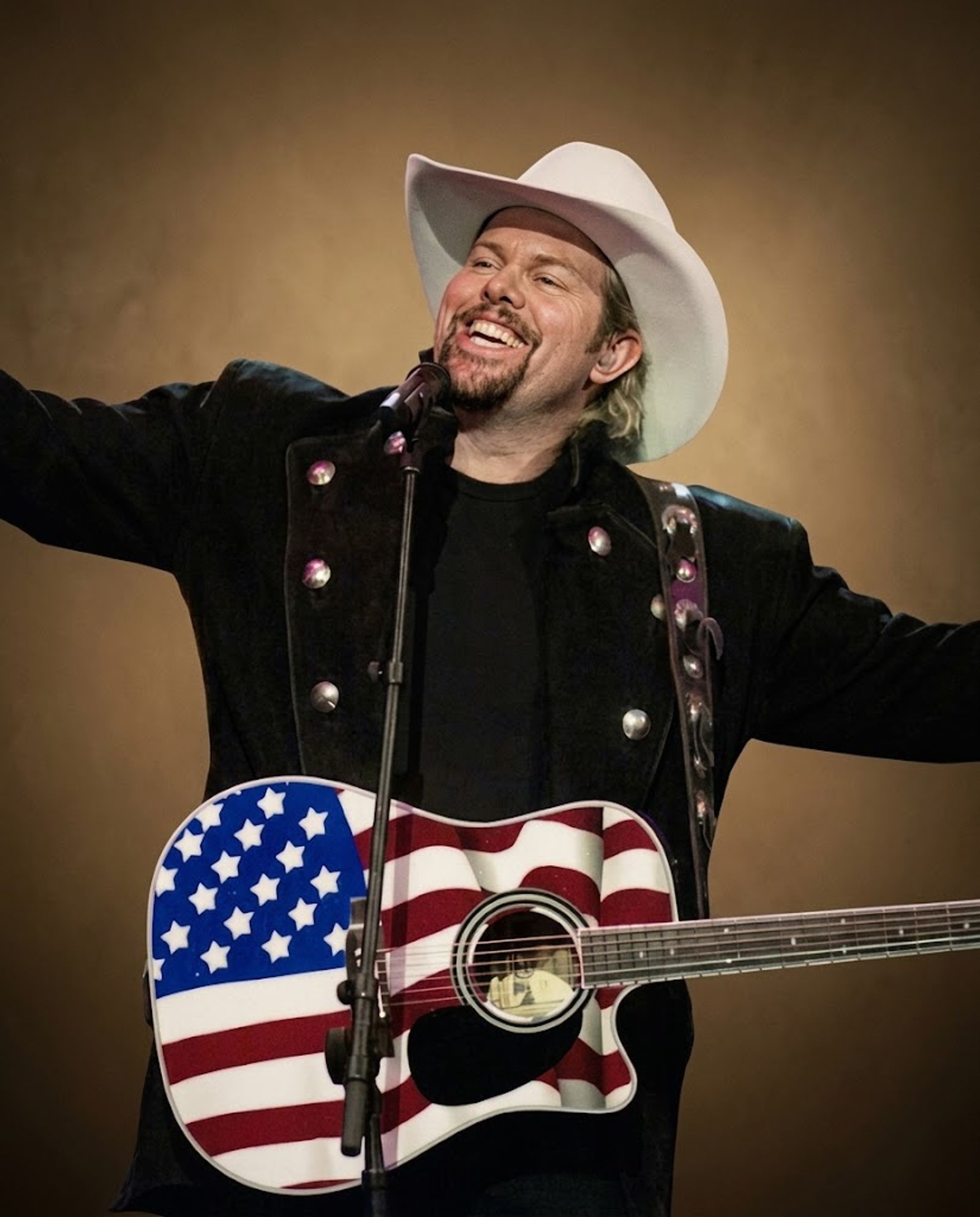
They wanted a softer kind of healing. They offered him an ultimatum: soften the stance, change the lyrics, or pick a milder hit to keep his prime television slot.
But what those executives saw as a calculated political anthem was something entirely different. They were critiquing a piece of paper, completely unaware of the bleeding heart that had held the pen.
The song had not been engineered in a corporate boardroom by a team of writers trying to capitalize on a wounded nation. It was born in the quiet isolation of late 2001.
Toby Keith had sat alone with nothing but an acoustic guitar and a heavy, breaking heart. In just twenty minutes, the lyrics poured out of him.
He was carrying the collective weight of the devastating September 11 attacks, but he was also carrying a much more intimate, suffocating sorrow. Just six months prior, he had lost his father.
H.K. Covel was a military veteran, a man who had lost his right eye serving his country but never once stopped flying the American flag in his yard. He died suddenly in a tragic car crash, leaving a void in his son that no amount of fame or money could ever fill.
When Toby wrote the song, he was not trying to speak for a nation. He was trying to speak for his dad. He was trying to give a voice to the kind of working-class men and women who were not ready to be polite about their heartbreak.
Initially, the public was never supposed to hear it. Toby kept the song tucked away, choosing only to play it out in the dirt and the dust of USO tours.
He sang it in the middle of nowhere, for young soldiers holding onto their rifles, heading off to deployments they might never return from.
While television executives in nice suits found the words offensive, the men and women in uniform understood every single syllable.
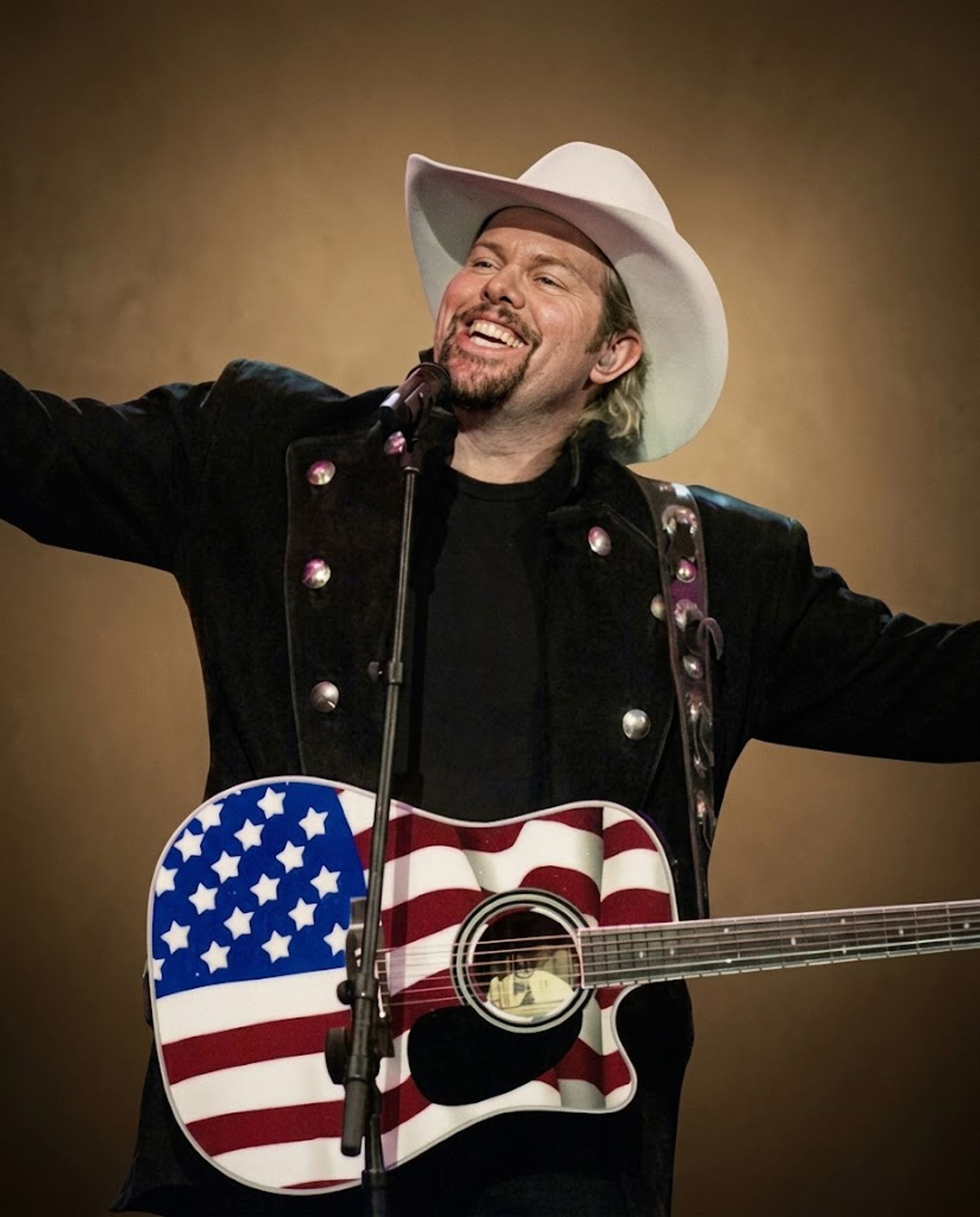
It was only after Marine Corps Commandant General James L. Jones witnessed the raw, electric reaction of the troops that he pulled the singer aside. He looked Toby in the eye and told him it was his duty to release the song. It belonged to the people now.
So when ABC told him to compromise his words, Toby Keith did exactly what the man who raised him would have done. He refused to bend.
He walked away from one of the biggest television stages in the country because you do not edit a tribute to your dead father just to make a teleprompter look pretty.
The network moved on with their broadcast, filling the airwaves with safer, softer sounds. But out in the real world, the song went on to top the Billboard charts.
It became a defining anthem for a generation walking through the ashes of a changed world.
Toby Keith has left this world now, but the legacy of that choice remains a permanent fixture in country music history.
He left behind a reminder that country music was never meant to be tailored for the boardroom. It was built for the front porches, the battlefields, and the living rooms of ordinary people who simply want to hear the truth.
The television elites called it inappropriate anger.
But for anyone who has ever lost someone they love, for anyone who has ever stood in the quiet aftermath of a tragedy, it was never just anger.
It was the sound of a broken heart, refusing to stay quiet.
Read more stories
- He Was Rejected By His Own Mom And Raised To Think ‘Women Are Evil’ But He Became A Legendary Rockstar
- TOBY KEITH RECORDED SOME OF THE BIGGEST PATRIOTIC ANTHEMS IN COUNTRY MUSIC HISTORY—BUT HIS REAL LEGACY WAS BUILT ON MILITARY BASES WHERE NO CAMERAS WERE ROLLING.
- [Video]: The One-Take Hit That Took Over Rock Radio
- The Box Tops’ “The Letter” Captures Lightning in a Bottle and Redefines Blue-Eyed Soul in 1967-2