Celebrities & Music
Robin Gibb’s “Saved by the Bell” Marks a Stunning Solo Triumph in 1969-2
Robin Gibb’s ‘Saved by the Bell’ marked a significant moment in his solo career, showcasing his emotional depth and unique artistry outside of the Bee Gees.
In the summer of 1969, Robin Gibb stepped into the spotlight alone, releasing Saved by the Bell, a song that would become one of the most hauntingly beautiful and successful solo ventures of his career.
At a time when the Bee Gees were one of the biggest acts in the world, Robin’s departure from the group and his decision to go solo were unexpected, making this single all the more significant.
Saved by the Bell quickly ascended the UK charts, reaching No. 2, and solidified his ability to captivate audiences outside of the familial trio that had brought him fame.

Robin Gibb, born in 1949 on the Isle of Man, was one of the defining voices of the Bee Gees, known for his distinctive vibrato and deeply emotive delivery.
Alongside his brothers Barry and Maurice, Robin played an essential role in crafting some of the most memorable hits of the late 1960s and beyond.
However, tensions had been brewing within the band, particularly between Robin and Barry over creative control.
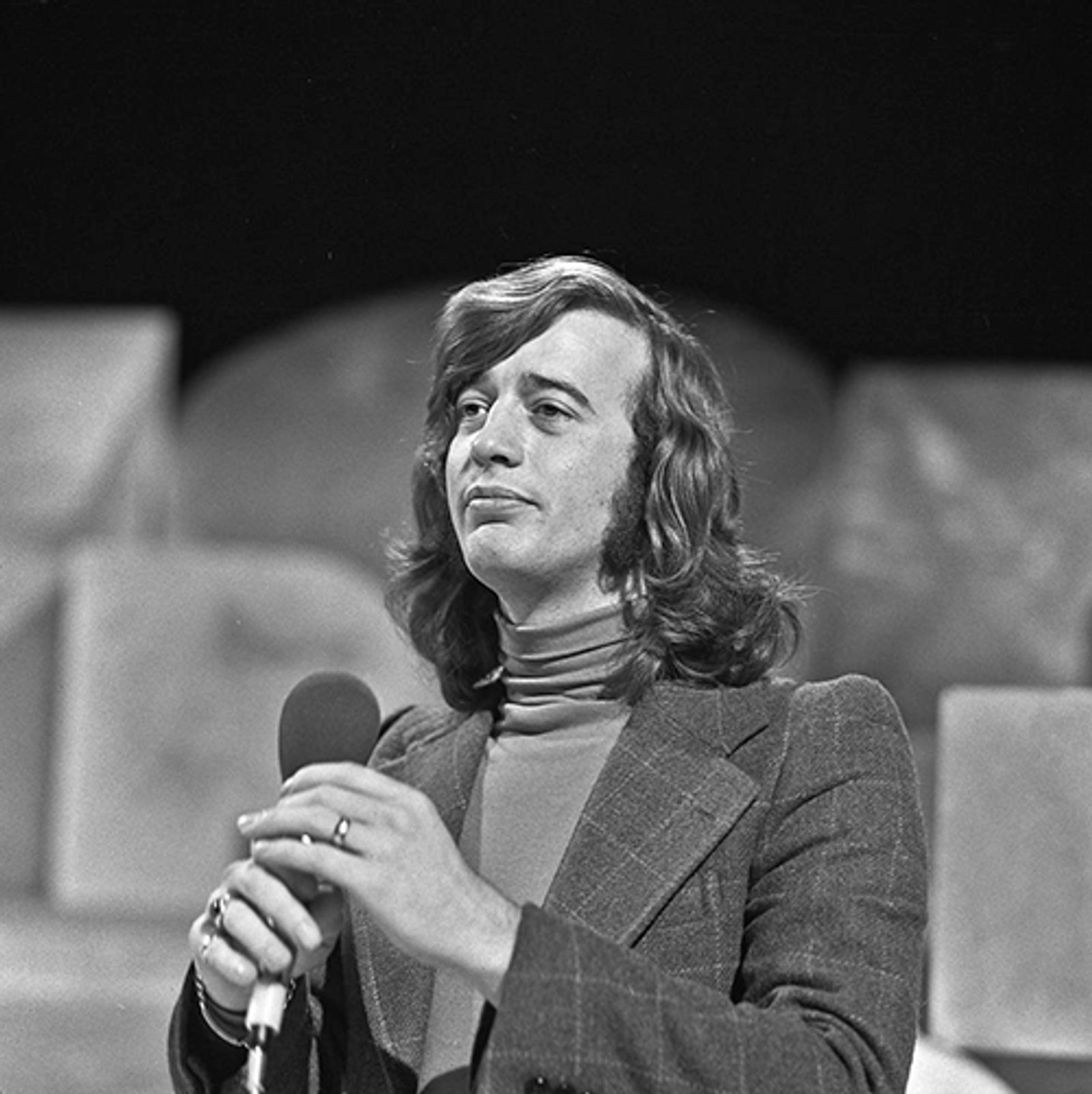
By early 1969, these tensions culminated in Robin leaving the group, setting the stage for his first solo endeavor.
Saved by the Bell was a deeply personal composition, written by Robin himself and produced by his longtime collaborator and Bee Gees producer, Robert Stigwood.
The song’s lyrics conveyed a sense of longing, loss, and heartbreak, reflecting the emotional turmoil Robin was experiencing at the time.

Many interpreted the song as a metaphor for his departure from the Bee Gees, while others saw it as a more straightforward tale of lost love.
Whatever its inspiration, the song’s melancholic orchestration and Robin’s signature tremulous vocals made it an instant classic.
The recording process for Saved by the Bell was distinctly different from the harmony-laden production style of the Bee Gees.

The track featured lush orchestration, arranged by the talented Australian musician Johnny Harris.
With sweeping strings and a dramatic build-up, the song took on a near-operatic quality, serving as the perfect backdrop for Robin’s emotional delivery.
The absence of his brothers’ harmonies made his vocal presence even more pronounced, highlighting the uniqueness of his voice in a way that few Bee Gees tracks had before.
Upon its release in June 1969, Saved by the Bell was met with immediate commercial success.
The single soared to No. 2 on the UK Singles Chart, just missing the top spot.
In several European countries, including the Netherlands and Germany, the song reached No. 1, demonstrating Robin’s widespread appeal.
It was also a minor hit in the United States, though it didn’t make as much of an impact as it did in Europe.
The song’s performance proved that Robin Gibb could stand on his own as a solo artist, a rare feat for a singer who had previously been part of a successful group.
Beyond its chart achievements, the song resonated deeply with listeners because of its haunting atmosphere and deeply personal lyrics.

In contrast to the more upbeat, harmony-driven sound of the Bee Gees’ late ’60s hits, the song leaned into orchestral pop with a baroque, cinematic style that set it apart.
Its grand production and sorrowful lyrics captured the loneliness of separation, whether personal, romantic, or artistic.
While the song was a major success for Robin, his solo career was short-lived.

By 1970, he reconciled with Barry and Maurice, and the Bee Gees reunited.
However, the song’s impact was lasting, as it demonstrated Robin’s individual strengths as a songwriter and performer.
His ability to carry an entire track with his voice alone reaffirmed his importance within the Bee Gees.
The influence of the song extended beyond Robin Gibb’s brief solo era.
Its orchestral and emotionally rich style inspired other artists in the singer-songwriter and orchestral pop genres.
The song also foreshadowed the Bee Gees’ later dramatic ballads of the early 1970s.
Several artists have covered the song over the years, though none have fully captured the fragile, ethereal quality of Robin’s original performance.
During its release, Robin was navigating both professional uncertainty and personal reflection.
Decades later, the song remains one of Robin Gibb’s most beloved and enduring recordings.
Looking back, this track was not just a departure from the Bee Gees, but a powerful declaration of Robin Gibb’s individual artistry.