Celebrities & Music
50 years later and we still haven’t found anyone in his league. Unbelievable talent.
The article celebrates the enduring legacy of Roy Orbison’s “Oh, Pretty Woman,” highlighting its timeless appeal and the artist’s unique vocal talent that continues to resonate across generations.
Some songs announce themselves with such unforgettable confidence that even a single opening note is enough to transport us back to another unforgettable era.
The moment “Oh, Pretty Woman” begins, its legendary guitar riff instantly fills the room with excitement, reminding listeners why true classics never lose their irresistible charm.
Released in 1964 and immortalized through Roy Orbison’s unforgettable live performances, the song became one of rock and roll’s most recognizable recordings almost overnight.
The famous Monument Concert performance from 1965 captured that magic perfectly, allowing audiences to witness not only a hit record but an artist completely in command of his gift.
Unlike performers who relied on dramatic movement or elaborate stage productions, Roy Orbison commanded attention through quiet confidence and extraordinary vocal ability.
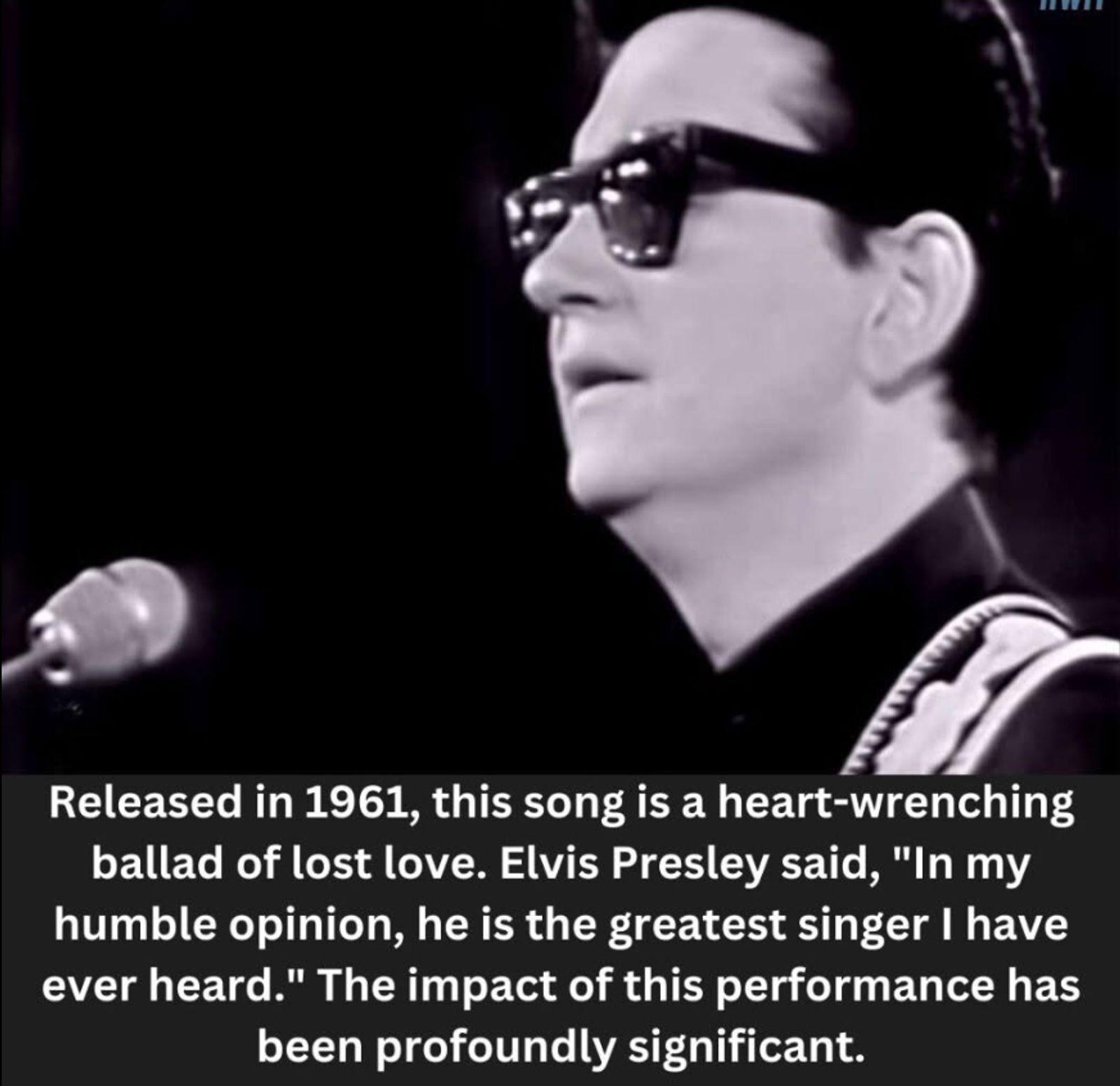
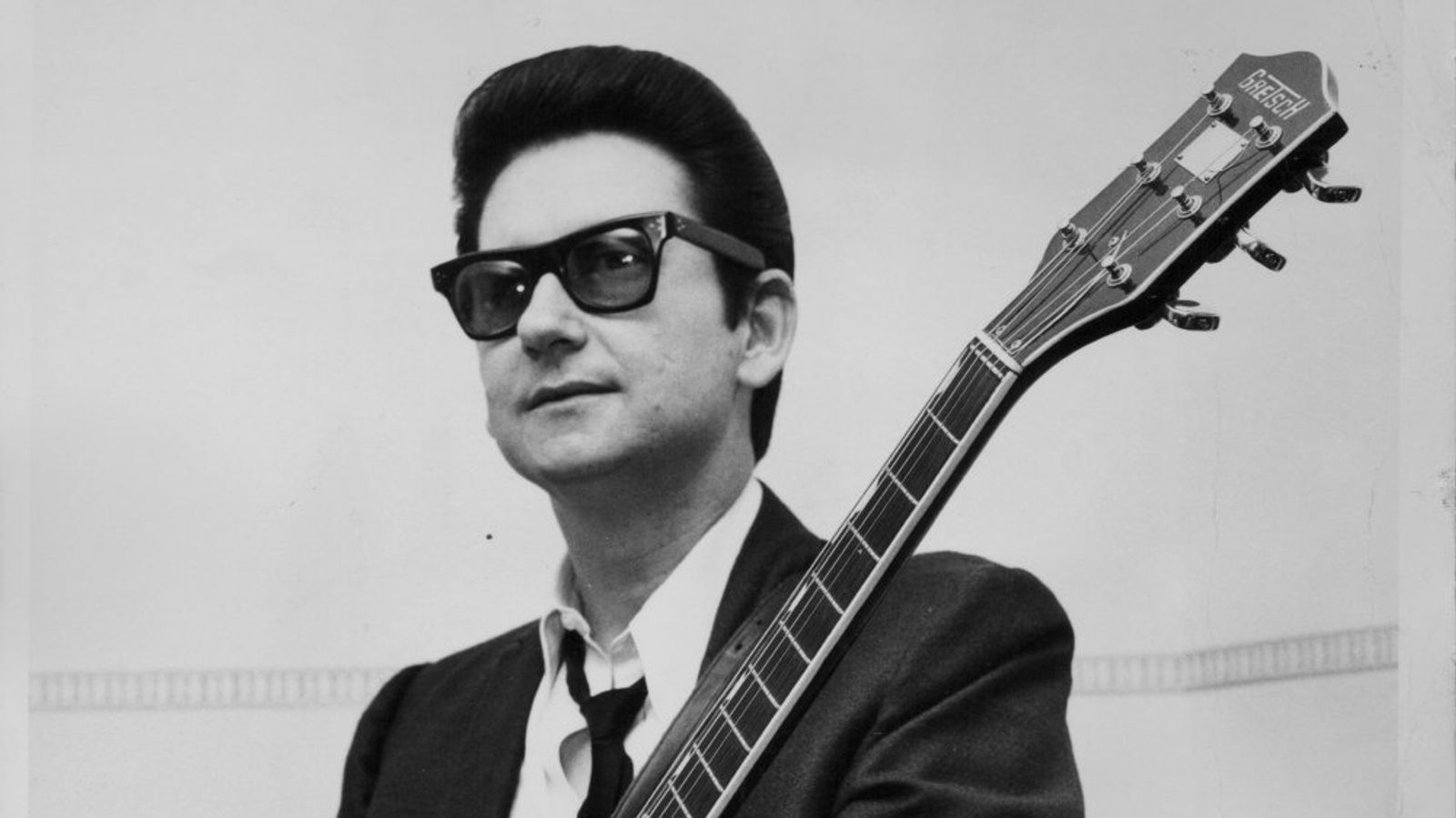
Standing almost perfectly still behind his signature dark sunglasses, he somehow filled the entire stage with effortless presence and unmistakable charisma.
That remarkable contrast became part of his enduring appeal because every ounce of energy flowed directly into the music rather than theatrical performance.
When his unmistakable voice entered after the iconic guitar introduction, every listener immediately understood they were hearing something truly extraordinary.
Orbison possessed one of popular music’s most remarkable vocal ranges, effortlessly blending tenderness, strength, and emotional depth within every carefully delivered phrase.
Few singers have ever sounded so powerful while remaining completely natural, allowing every performance to feel honest rather than overly dramatic.
The song itself celebrates a fleeting moment that almost everyone recognizes, catching sight of someone whose beauty briefly makes the ordinary world seem wonderfully different.
Rather than becoming an elaborate love story, the lyrics capture the excitement of unexpected attraction with playful confidence and timeless charm.
That simplicity became one of the recording’s greatest strengths because nearly every listener could imagine themselves inside the same unforgettable moment.
Behind the unforgettable melody, the musicians create an energetic rhythm that feels impossible to resist from beginning to end.
The driving beat, bright guitars, and steady bass combine with remarkable precision, producing a sound that remains instantly recognizable even after six remarkable decades.

Nothing feels excessive because every instrument serves the melody instead of competing for unnecessary attention.
That careful balance explains why the recording still sounds remarkably fresh despite belonging to the earliest golden years of rock and roll.
Listening today, it is easy to understand why audiences responded with such overwhelming enthusiasm during its original release.
The performance radiates confidence without arrogance, excitement without chaos, and joy without ever becoming overly sentimental.
Those qualities have allowed “Oh, Pretty Woman” to cross generations while continuing to attract listeners discovering Roy Orbison for the very first time.

Many younger fans first encounter the song through films, television, or streaming playlists before realizing it was recorded more than sixty years ago.
That surprise speaks volumes about the recording’s timeless production and exceptional songwriting.
Great music rarely depends upon trends because genuine craftsmanship remains recognizable regardless of changing musical fashions.
Roy Orbison understood that unforgettable performances begin with emotional authenticity rather than flashy presentation.
His voice carried enough personality to command complete attention without needing unnecessary theatrical effects or complicated stage choreography.

Watching the Monument Concert performance today reveals an artist completely comfortable allowing the music itself to become the true centerpiece.
Every vocal phrase feels controlled yet spontaneous, as though he is rediscovering the excitement of the song alongside the audience.
That remarkable sincerity transforms the live performance into something far greater than a simple concert recording.
Instead, it becomes a vivid snapshot of popular music during one of its most creative and influential periods.
The mid-1960s represented an extraordinary explosion of talent, yet Roy Orbison remained completely unique among his remarkable contemporaries.

While others emphasized rebellion or youthful energy, he built his legacy upon elegance, vocal mastery, and unforgettable emotional storytelling.
Even within an upbeat classic like “Oh, Pretty Woman,” those qualities remain beautifully evident from beginning to end.
The recording reminds us that confidence never requires loudness when genuine talent quietly speaks for itself.
Modern audiences often expect elaborate visual productions, yet Orbison proves that one remarkable voice can create unforgettable memories without endless distractions.
That lesson feels just as meaningful today as it did when thousands first applauded his unforgettable performances across packed concert halls.
Listening now feels almost like stepping inside a beautifully preserved photograph where every smile, every guitar chord, and every cheering voice remains wonderfully alive.
The years may continue passing, but the excitement contained within those opening notes never seems to grow older.
Every return to the recording offers another opportunity to experience the optimism and infectious energy that defined rock and roll at its absolute best.
Perhaps that explains why generations continue embracing this remarkable performance with the same enthusiasm shown by audiences who first witnessed it live.
Very few songs possess the rare ability to make listeners smile before a single lyric has even been sung.