
Celebrities & Music
This song was released in 1964 and captured hearts with its energetic rhythm.
The article explores the enduring legacy of Johnny Rivers’ 1964 song “Memphis, Tennessee,” highlighting its emotional depth and storytelling power that continues to resonate with audiences decades later.

This song was released in 1964 and captured hearts with its energetic rhythm. In 2026, it is still celebrated as a timeless classic and one of the most iconic tracks in rock and roll history. How timeless… the song is actually about separation from his daughter, not his lover, adding an even deeper emotional layer to its legacy.
Some songs begin like simple stories, only to reveal something far more emotional by the time the final note fades away.
When Johnny Rivers recorded “Memphis, Tennessee” in 1964, he transformed Chuck Berry’s brilliant composition into a heartfelt classic that reached millions of listeners around the world.
At first, the song sounds like an ordinary telephone conversation filled with quiet determination.
A man is trying to reach someone in Memphis, asking the operator for help with calm persistence.
Nothing seems unusual about the request.
It feels like another everyday moment that could belong to anyone.
But as the story slowly unfolds, every lyric begins carrying a deeper emotional weight.
Johnny Rivers understands that great storytelling doesn’t require dramatic gestures.
Sometimes the strongest emotions arrive through the simplest words.

His relaxed vocal delivery invites listeners to lean closer rather than pulling them in with overwhelming force.
That understated approach creates an intimacy rarely found in popular music.
Every verse quietly builds curiosity without revealing too much too soon.
The listener naturally begins asking questions.
Who is Marie?
Why is it so important to reach her?
What happened that left the narrator searching across so many miles?
Those unanswered questions become the engine driving the entire song forward.
Long before people spoke about audience retention, this recording mastered the art of keeping listeners completely invested.
Each line offers just enough information to encourage another moment of attention.

Johnny Rivers never rushes toward the ending.
Instead, he patiently allows the mystery to unfold one carefully chosen lyric at a time.
Musically, the recording feels warm, effortless, and wonderfully alive.
Its gentle rhythm, tasteful guitar work, and clean production create the perfect setting for the unfolding narrative.
Nothing distracts from the story.
Every instrument supports the emotion without demanding attention for itself.
That remarkable balance allows the lyrics to remain the true centerpiece.
Then comes one of the greatest twists ever written into a popular song.
The listener suddenly realizes that Marie isn’t a lost romance at all.
She is the narrator’s young daughter.
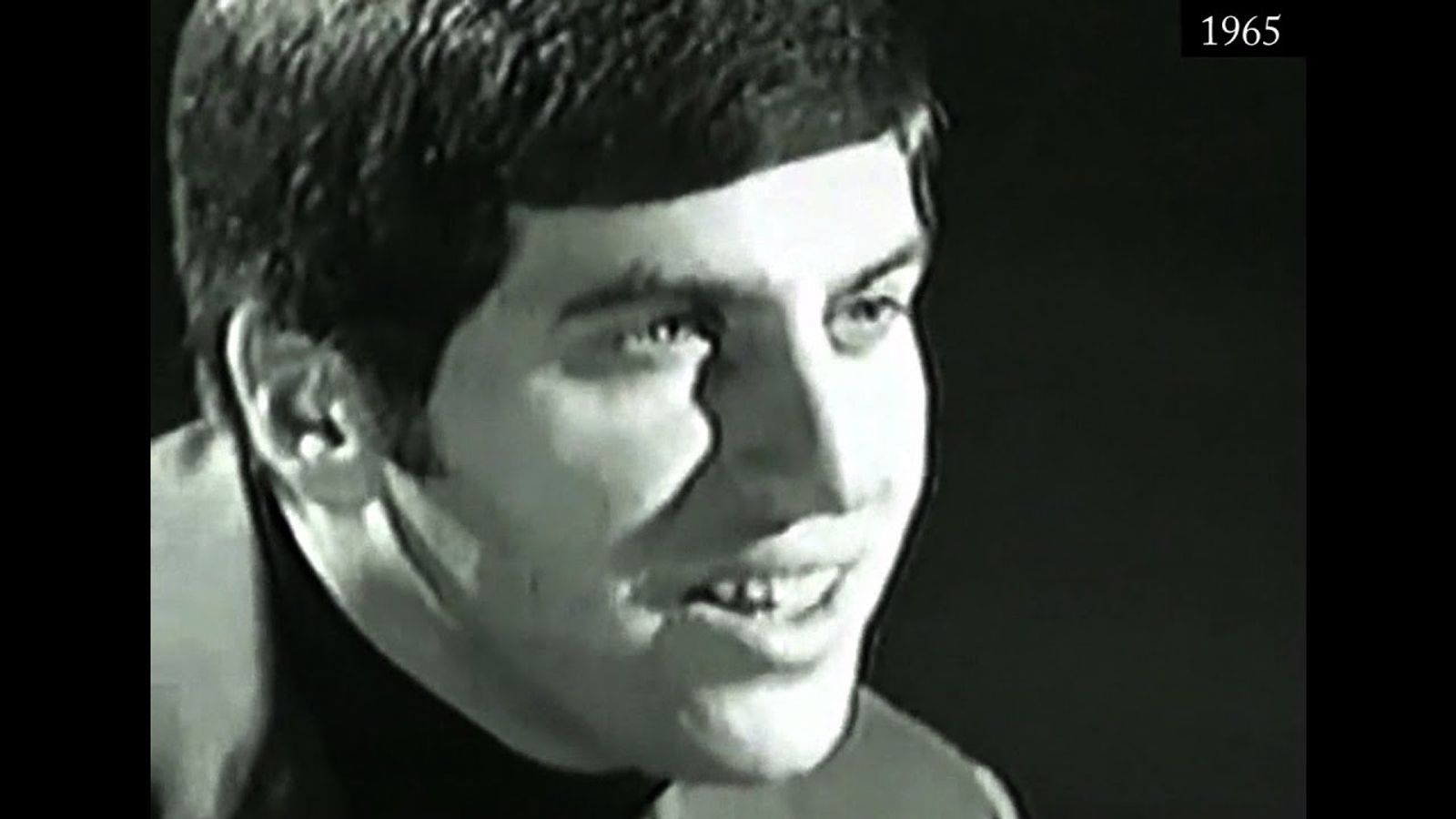
That revelation instantly transforms everything that came before.
What once sounded like a simple phone call becomes a father’s heartbreaking attempt to reconnect with his child.
Few songs have ever delivered such an emotional surprise with such elegance.
There are no dramatic speeches.
No exaggerated performances.
Only a quiet truth that lands with extraordinary power.
That emotional shift explains why generations continue remembering the song decades after its release.
The story lingers long after the melody has ended.
Johnny Rivers deserves enormous credit for recognizing the emotional potential hidden inside Chuck Berry’s songwriting.
Rather than changing its heart, he simply presented it with warmth, sincerity, and remarkable restraint.
His interpretation feels deeply personal without ever becoming sentimental.
Listeners believe every word because nothing feels forced.
Released during the height of the British Invasion, the recording proved that American rock and roll still possessed remarkable storytelling power.
While many artists chased louder sounds and bigger productions, Johnny Rivers trusted the strength of a beautifully written song.
That confidence paid off.
The single climbed the charts and became one of the defining recordings of his career.
Its success wasn’t built on flashy arrangements or studio tricks.
It was built on honest emotion wrapped inside unforgettable storytelling.
Even today, first-time listeners often experience the same emotional reaction.
The ending catches them completely by surprise.

Suddenly every earlier lyric takes on an entirely different meaning.
That rare ability to reward repeated listening is one hallmark of truly timeless music.
Each return to the song reveals another small detail that may have gone unnoticed before.
Its brilliance grows rather than fades.
Perhaps that is why the recording continues appearing on classic radio stations, nostalgic playlists, and collections celebrating the golden age of rock and roll.
It belongs to an era when songs trusted listeners to pay attention.
When lyrics unfolded like short films rather than quick headlines.
Modern audiences, despite living in a faster world, still respond to that kind of storytelling.
Because human emotions have never changed.
Parents still miss their children.
Families still become separated.
Hope still survives even after disappointment.
Those universal feelings give the song lasting relevance that reaches far beyond its original era.
Johnny Rivers’ calm, conversational voice makes every emotion feel believable.
He never oversings a single phrase.
Instead, he lets the story breathe naturally.
That quiet confidence has aged beautifully over the decades.
It reminds us that genuine feeling never requires unnecessary decoration.
Sometimes honesty alone is enough.
The recording also captures something increasingly rare in modern music.
Patience.
It trusts listeners to remain with the journey until the final revelation arrives.
In return, it delivers one of the most satisfying emotional payoffs in classic popular music.
Very few songs tell such a complete story in just a few minutes.
Even fewer continue moving audiences more than sixty years later.
Read more stories
- He Was Rejected By His Own Mom And Raised To Think ‘Women Are Evil’ But He Became A Legendary Rockstar
- TOBY KEITH RECORDED SOME OF THE BIGGEST PATRIOTIC ANTHEMS IN COUNTRY MUSIC HISTORY—BUT HIS REAL LEGACY WAS BUILT ON MILITARY BASES WHERE NO CAMERAS WERE ROLLING.
- [Video]: The One-Take Hit That Took Over Rock Radio
- The Box Tops’ “The Letter” Captures Lightning in a Bottle and Redefines Blue-Eyed Soul in 1967-2