
Celebrities & Music
HE STEPPED UP TO THE MICROPHONE FOR A DYING SINGER.
The article reflects on Marty Robbins’ poignant final performance in Clint Eastwood’s film Honkytonk Man, highlighting the emotional weight of his role as he faced his own mortality just days before his death.

“HE STEPPED UP TO THE MICROPHONE FOR A DYING SINGER.” One week later, Marty Robbins was gone himself. In 1982, Clint Eastwood made Honkytonk Man — a film about a country singer named Red Stovall trying to record one final song before his failing lungs gave out. Beside him stood Marty Robbins. Marty was 57 years old. His heart had already betrayed him more than once. He had survived major surgery, become one of the first men to live through a triple bypass, and ignored every warning telling him to slow down. He still raced NASCAR. Still chased speed. Still lived like there might not be enough time left to waste. Then came the studio scene. Red Stovall tries to sing the title track, but his body gives out before he can finish. The coughing takes over. The voice breaks apart. So Smokey — Marty Robbins’ character — quietly steps forward and finishes the song for him. On paper, it was acting. But Marty Robbins understood the scene too well for it to feel fictional. A dying singer. One last recording. A man trying to leave music behind before his body failed completely. Marty walked into that Nashville studio carrying the weight of all of it. And he sang anyway. Not dramatically. Not loudly. Just honestly. Then life delivered one final twist no screenplay could improve. Honkytonk Man opened on December 15, 1982. Marty Robbins died on December 8 after another heart attack. So when audiences finally watched him step to that microphone, they were no longer seeing only a character helping another singer finish a song. They were watching one of Marty Robbins’ final moments on screen. And suddenly, the scene no longer felt like fiction at all. It felt like a farewell hidden inside a movie.
“HE STEPPED UP TO THE MICROPHONE FOR A DYING SINGER.” — ONE WEEK LATER, MARTY ROBBINS WAS GONE HIMSELF…
In 1982, Clint Eastwood made Honkytonk Man — a film about a country singer named Red Stovall trying to reach Nashville before his failing body gave out completely.
The story centered around one final chance to leave a song behind before death arrived first.
Standing beside Eastwood in that story was Marty Robbins.
And by then, Marty understood the role too well for it to feel entirely fictional.
He was 57 years old. His heart had already betrayed him more than once. Years earlier, he survived major surgery and became one of the first men to live through a triple bypass procedure. Doctors warned him repeatedly to slow down.
Marty Robbins ignored them.
He still toured.
Still recorded.
Still climbed into NASCAR race cars chasing speed like time itself might be gaining on him.
That restless energy had always followed him. Even at the height of his fame, Marty never sounded like a man comfortable standing still for very long.
Then came the studio scene inside Honkytonk Man.
Red Stovall — Eastwood’s character — steps up to record the title song but cannot finish it. His lungs fail him in the middle of the take. The coughing grows worse. The voice starts breaking apart beneath the weight of exhaustion and illness.
The room goes quiet.
Then Smokey — Marty Robbins’ character — slowly steps forward toward the microphone and finishes the song for him.
On paper, it was acting.
But something about the scene carried a strange emotional gravity even then. Marty Robbins was not simply pretending to understand mortality inside that studio. He had already spent years living beside it quietly.
That changes a performance.
Especially one this restrained.
Marty did not overplay the moment. He did not turn it dramatic or sentimental. He simply walked forward and sang with the calm steadiness of someone who understood exactly what it means when a body begins failing before the spirit is ready to stop creating.
That honesty lingered inside every line.
A dying singer.
One last recording.
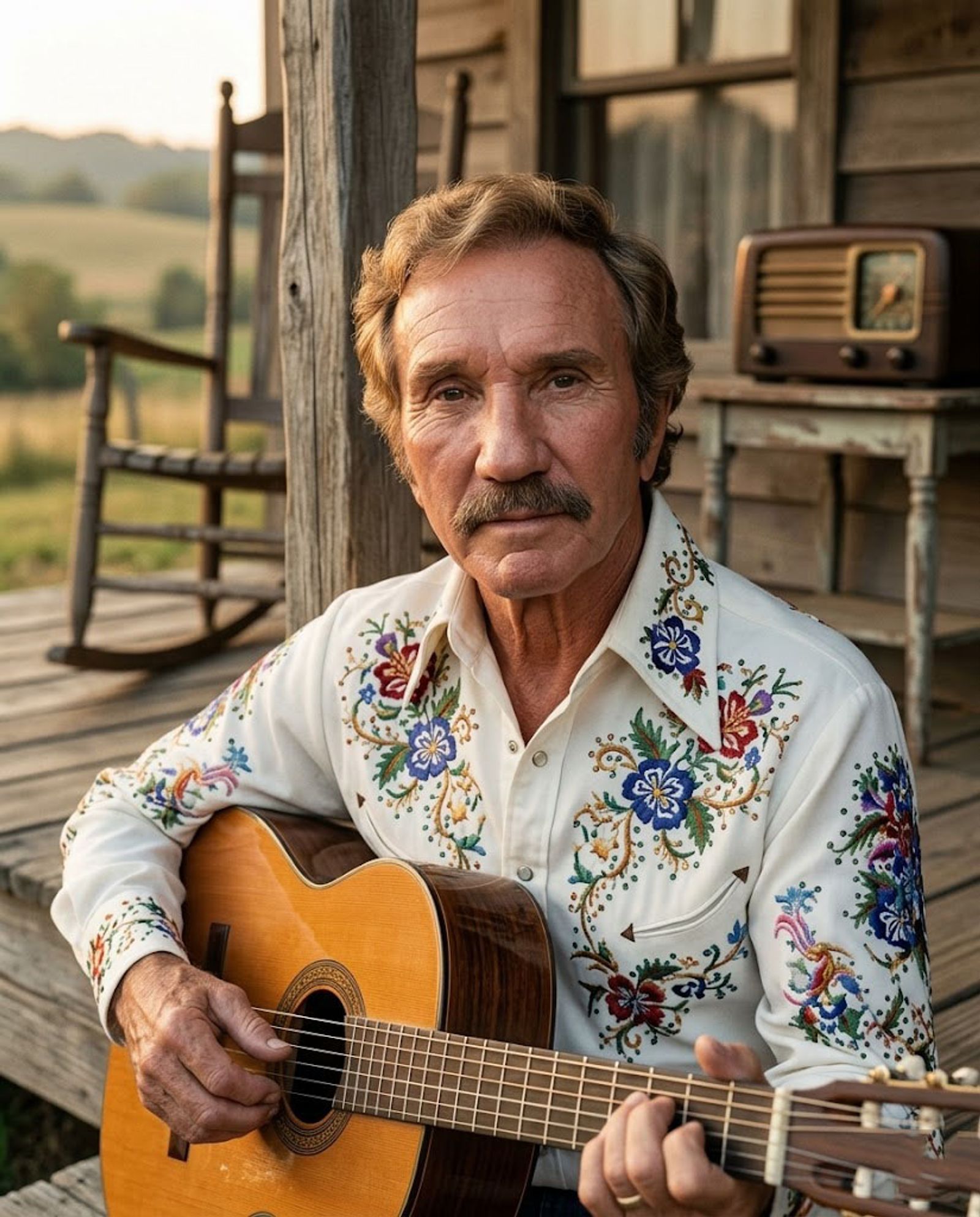
A man trying to leave music behind before time disappeared completely.
Marty Robbins walked into that Nashville studio carrying the weight of all of it whether audiences realized it or not.
And he sang anyway.
Not loudly.
Not heroically.
Just honestly.
Then life delivered one final twist no screenplay could have improved.
Honkytonk Man opened in theaters on December 15, 1982.
Marty Robbins died one week earlier on December 8 after suffering another heart attack.
Suddenly, the studio scene inside the film no longer felt like simple fiction. Audiences watching Marty step toward that microphone understood they were seeing one of his final performances captured on screen forever.
That changed everything.
The scene gained a second meaning the filmmakers never could have planned. What once looked like a supporting role now felt strangely intimate, almost prophetic. Marty Robbins was no longer only helping a fictional singer finish a song.
He was unknowingly stepping into his own farewell too.
And perhaps that is why the moment still carries such emotional weight decades later.
Not because the scene is loud.
Because it is quiet.
There is no dramatic speech. No swelling music forcing the audience toward tears. Only a tired country voice stepping in when another voice can no longer continue.
That simplicity makes it hurt more.
Especially now.
Marty Robbins spent his career singing stories about outlaws, heartbreak, death, longing, and men outrunning fate across dusty highways and border towns. Yet one of his most haunting moments arrived not inside a concert hall, but quietly inside a movie studio while helping another character finish a song.
By the time audiences finally saw the film, Marty Robbins himself had already slipped beyond the ending.
Leaving behind one last scene.
One last voice.
And one final walk toward the microphone that no longer feels like acting at all…
Read more stories
- He Was Rejected By His Own Mom And Raised To Think ‘Women Are Evil’ But He Became A Legendary Rockstar
- TOBY KEITH RECORDED SOME OF THE BIGGEST PATRIOTIC ANTHEMS IN COUNTRY MUSIC HISTORY—BUT HIS REAL LEGACY WAS BUILT ON MILITARY BASES WHERE NO CAMERAS WERE ROLLING.
- [Video]: The One-Take Hit That Took Over Rock Radio
- The Box Tops’ “The Letter” Captures Lightning in a Bottle and Redefines Blue-Eyed Soul in 1967-2