
Celebrities & Music
A HUMILIATED BOY, CHRONIC PAIN, AND A BITTER FIGHT IN A HIGH SCHOOL GYM — NO ONE KNEW THIS WAS EXACTLY HOW THE IMMORTAL LEGACY OF HANK WILLIAMS WOULD BEGIN.
The article explores the early struggles of Hank Williams, detailing how a painful childhood experience in a school gym led him to discover his musical talent, ultimately shaping his legacy in American music.

Before the tailored western suits and the sold-out auditoriums, Hank Williams was just a fragile teenager carrying a physical burden that most people couldn’t see. A congenital back condition made simple physical tasks agonizing. But in 1937, a gym teacher refused to understand, trying to force the boy through exercises his spine physically couldn’t endure. It sparked a bitter confrontation. It wasn’t just a schoolyard argument—it was a breaking point that would eventually change American music forever. Furious at the humiliation of her son, his fiercely protective mother demanded the teacher be fired. When the school refused, she packed up the family and left town for Montgomery, Alabama. She didn’t know it then, but that angry departure wasn’t a retreat. It was a pilgrimage.
In Montgomery, miles away from the cruelty of that gymnasium, a boy who couldn’t play sports picked up a guitar instead. He poured his physical ache and quiet loneliness into the strings, stepping onto local stages and finding a voice that would soon echo across the globe. He didn’t conquer his pain—he just learned how to sing through it. Today, his name is carved into the very foundation of music. But it’s staggering to realize that if a sickly boy hadn’t been pushed to his absolute breaking point on a gymnasium floor, the world might never have heard Hank Williams cry.
A HUMILIATED BOY, A SPINE THAT WOULD NOT LET HIM RUN, AND ONE BITTER DAY IN A SCHOOL GYM — THAT WAS WHERE HANK WILLIAMS’ LONELY CRY FIRST FOUND ITS ROAD.
Before Hank Williams became a voice carved into the bones of American music, he was just a thin Alabama boy carrying pain he could not explain away.
Other boys could run.
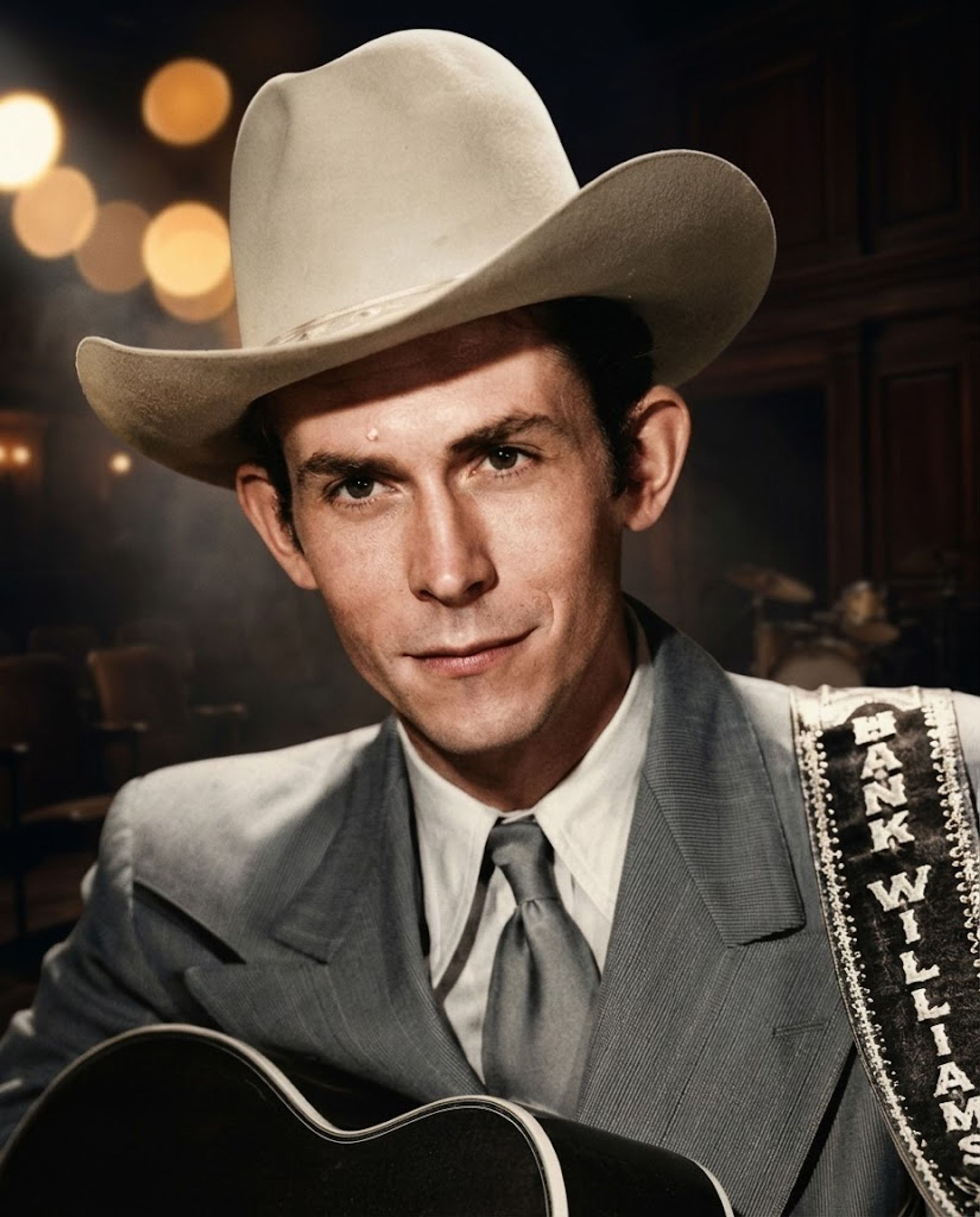
He often could not.
Other boys could bend, jump, and move without thinking.
For Hank, even the simplest motion could turn into a private punishment.
He was born with a spinal condition that followed him through life like a shadow, long before the world ever heard “Your Cheatin’ Heart” or “I’m So Lonesome I Could Cry.”
And then came that day in school.
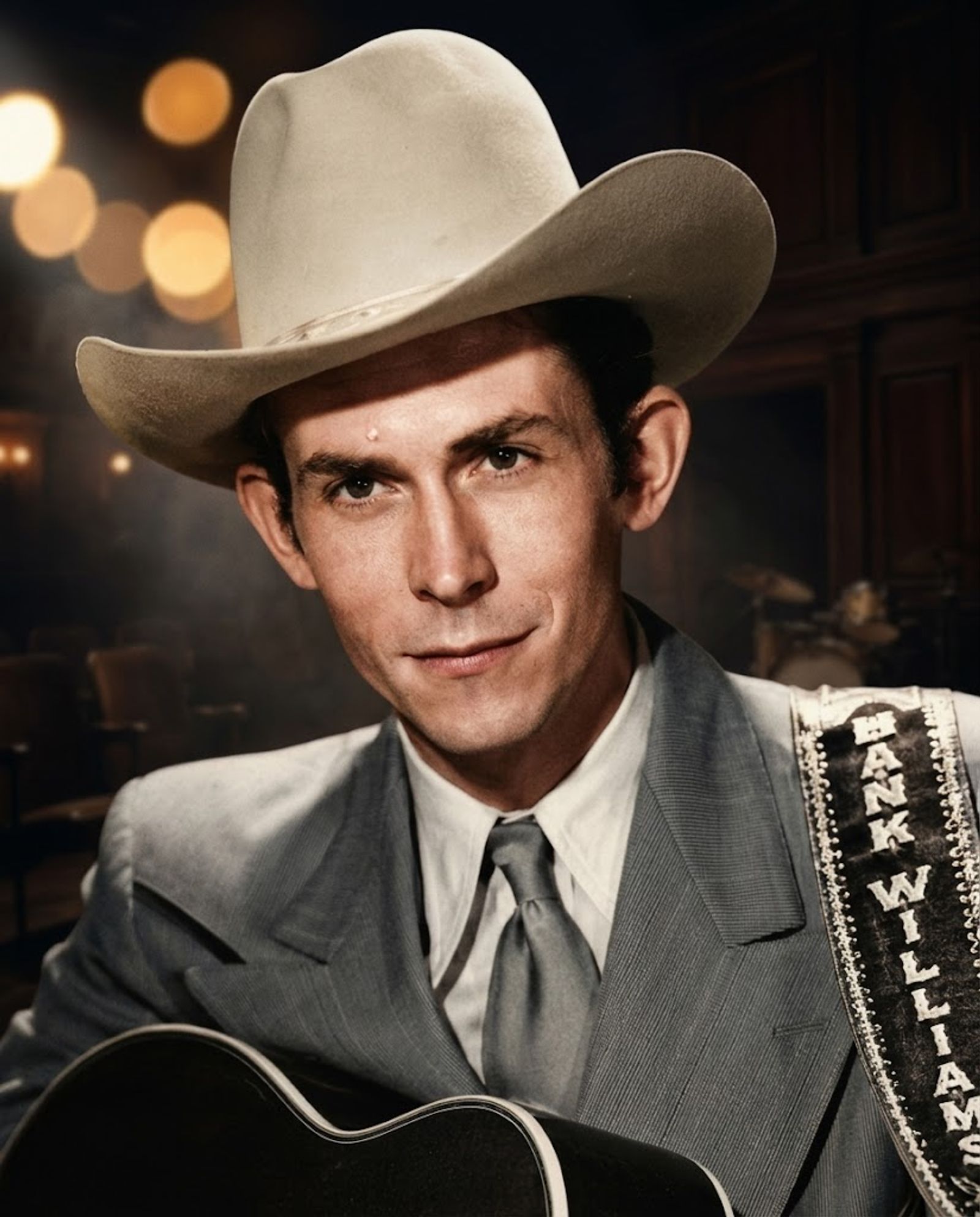
A gym teacher, seeing only a stubborn boy, pushed him toward exercises his body could not endure.
To the teacher, it may have looked like refusal.
To Hank, it was humiliation.
To his mother, Lillie, it was unforgivable.
She had watched her son carry enough pain already. She was not about to let the world add shame to it.
When the school would not bend, she did.
She packed up the family and moved them to Montgomery.
At the time, it looked like anger.
Looking back, it feels almost like fate.
Because in Montgomery, the boy who could not belong on a gym floor found another place to stand.
A sidewalk.
A radio station.
A small stage.
A microphone.
He picked up a guitar, and the pain that had once made him different began to give his voice its terrible beauty.
Hank did not conquer suffering.
He translated it.
Every ache became a bend in the note.
Every lonely mile became a line.
Every humiliation became part of that sound — raw, trembling, and impossible to fake.
That is why his songs still feel alive.
He never sang loneliness like an idea.
He sang it like a room he had slept in.
And maybe that is the part that still breaks the heart.
The world did not get Hank Williams because life was gentle with him.
The world got Hank Williams because life hurt him early, and music gave that hurt somewhere to go.
A school gym could not hold him.
Pain could not silence him.
And somewhere between a boy’s wounded pride and a mother’s fierce love, country music found one of its most unforgettable cries.
Read more stories
- He Was Rejected By His Own Mom And Raised To Think ‘Women Are Evil’ But He Became A Legendary Rockstar
- TOBY KEITH RECORDED SOME OF THE BIGGEST PATRIOTIC ANTHEMS IN COUNTRY MUSIC HISTORY—BUT HIS REAL LEGACY WAS BUILT ON MILITARY BASES WHERE NO CAMERAS WERE ROLLING.
- [Video]: The One-Take Hit That Took Over Rock Radio
- The Box Tops’ “The Letter” Captures Lightning in a Bottle and Redefines Blue-Eyed Soul in 1967-2