
News
How Charley Pride’s Voice Reached Country Radio Before His Face Did
When RCA and producer Chet Atkins introduced Charley Pride in the mid-1960s, they withheld his photograph from early record sleeves so country radio would hear the music before confronting the racial barriers of the era.

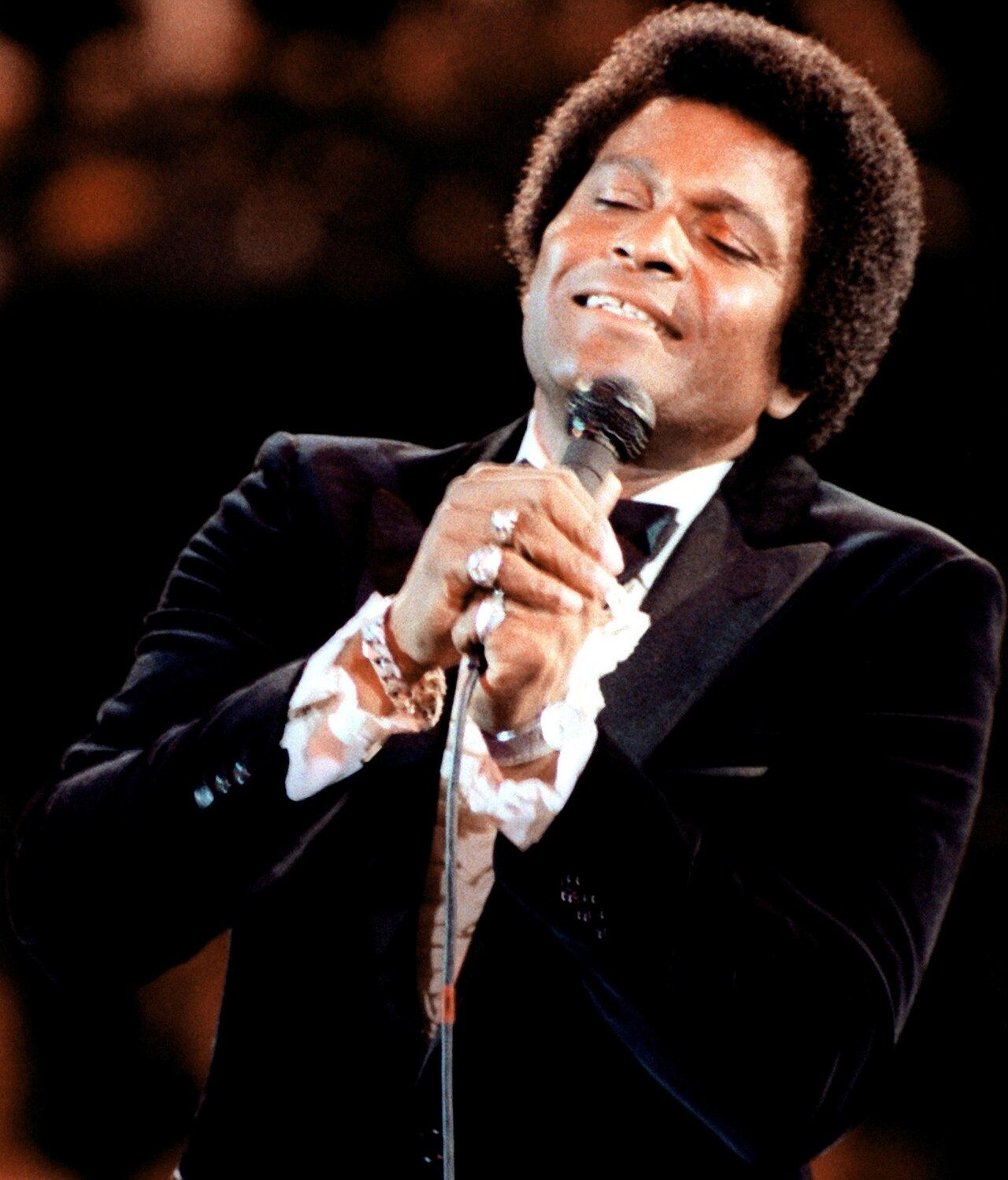
A calculated decision before the first spin
Before Charley Pride’s breakthrough, RCA and producer Chet Atkins made a choice that was as strategic as it was revealing: they sent his early singles to radio without a photograph. For Pride’s first three releases, including “The Snakes Crawl at Night,” stations received a record, a name, and a voice—but no image to frame what they were about to hear.
That absence mattered. In country music of the mid-1960s, segregation still shaped business decisions, audience expectations, and the judgments of gatekeepers. Atkins understood that a publicity photo alone could cause some programmers to reject a record before the song even had a chance. By removing the image, he made sure the first encounter was strictly musical.
Without a photo to trigger reflexive prejudice, the record had one chance to live or die the old-fashioned way: by what came out of the speaker.
Country radio’s split-second judgments
Radio has always been a fast medium. Program directors and DJs often decide in moments whether a new single belongs in rotation, and those decisions can be shaped by instinct as much as deliberation. In that environment, presentation is powerful. A sleeve, a headshot, even a rumor about an artist can steer a song’s fate before the needle ever touches the groove.
For Pride, withholding the photograph short-circuited that process. Stations around the country put on the records and heard a classic country baritone, steady and familiar in tone, that fit comfortably beside the voices already populating playlists. The songs were not introduced as a novelty or a challenge. They arrived sounding like country records and were judged, at first, as country records.
The sound came first
That was the crucial opening. Even DJs who carried racial prejudice could respond enthusiastically to the music because they did not yet know the identity of the singer. The traditional sound of “The Snakes Crawl at Night” and the singles that followed gave radio workers no obvious cue that this was anything other than a strong new country artist deserving attention.
The tactic did not guarantee success, but it created a fairer first hearing than Pride might otherwise have received. In an industry where assumptions could close doors instantly, the lack of a face bought time—time for a song to register, for a voice to become recognizable, and for curiosity to build around the name on the label.
Momentum before recognition
Once stations began spinning the records, the normal mechanics of radio started to work in Pride’s favor. Listeners called in. Programmers kept the tracks in circulation. Familiarity grew in the way it often does in popular music: gradually, through repetition, until a singer who had been unknown began to sound like someone audiences already trusted.
That sequencing was everything. By the time many people in the industry and among the listening public realized that Charley Pride was Black, they were no longer reacting to an abstract category. They were reacting to a voice they had already heard, songs they already liked, and a presence on country radio that had already been established.
What the missing photograph reveals about the era
The story of those first singles is not just a clever bit of label strategy. It is also a stark measure of the barriers Pride faced. If executives believed a photo could sink a record on sight, that belief came from the realities of the marketplace. Country music may have celebrated authenticity and tradition, but in practice its institutions were still deeply shaped by racial exclusion.
That makes the no-photo rollout both pragmatic and unsettling. It was a way of navigating prejudice, not defeating it outright. Yet it also exposed a contradiction at the heart of the format: many gatekeepers who might have rejected a Black singer on sight were perfectly willing to embrace the sound when they encountered it without preconceptions.
A breakthrough carried by the songs themselves
By the time Charley Pride’s identity became widely known, the records had done important groundwork. They had earned airplay on their own terms, built recognition through repeated spins, and made it harder for stations to dismiss an artist that listeners were already hearing and enjoying. The music had created its own argument.
That does not erase the discrimination embedded in the process; if anything, it underscores it. But it helps explain why Pride’s emergence was so significant. His early singles showed that once the usual visual assumptions were stripped away, his voice belonged exactly where it was—on country radio, in regular rotation, alongside the genre’s established stars.
Quick Facts
- Artist: Charley Pride
- Producer associated with rollout: Chet Atkins
- Label: RCA
- Early single mentioned: The Snakes Crawl at Night
- Key strategy: No photograph on the sleeve for the first three singles
- Why it mattered: To let country radio judge the music before reacting to Pride’s race
Image credits: GREG MATHISON / Wikimedia Commons / Public domain; Republic Country Club / Wikimedia Commons / CC BY 2.0; Republic Country Club / Wikimedia Commons / CC BY 2.0.