
News
Inside Waylon Jennings and Jessi Colter’s Quiet Phoenix Wedding—and the Faith That Helped Hold Their Marriage Together
On an October afternoon in 1969, Waylon Jennings and Jessi Colter chose a church in Phoenix over celebrity spectacle, grounding their marriage in her family’s Pentecostal faith and a steadiness that would carry them through decades of fame, hardship, and devotion.

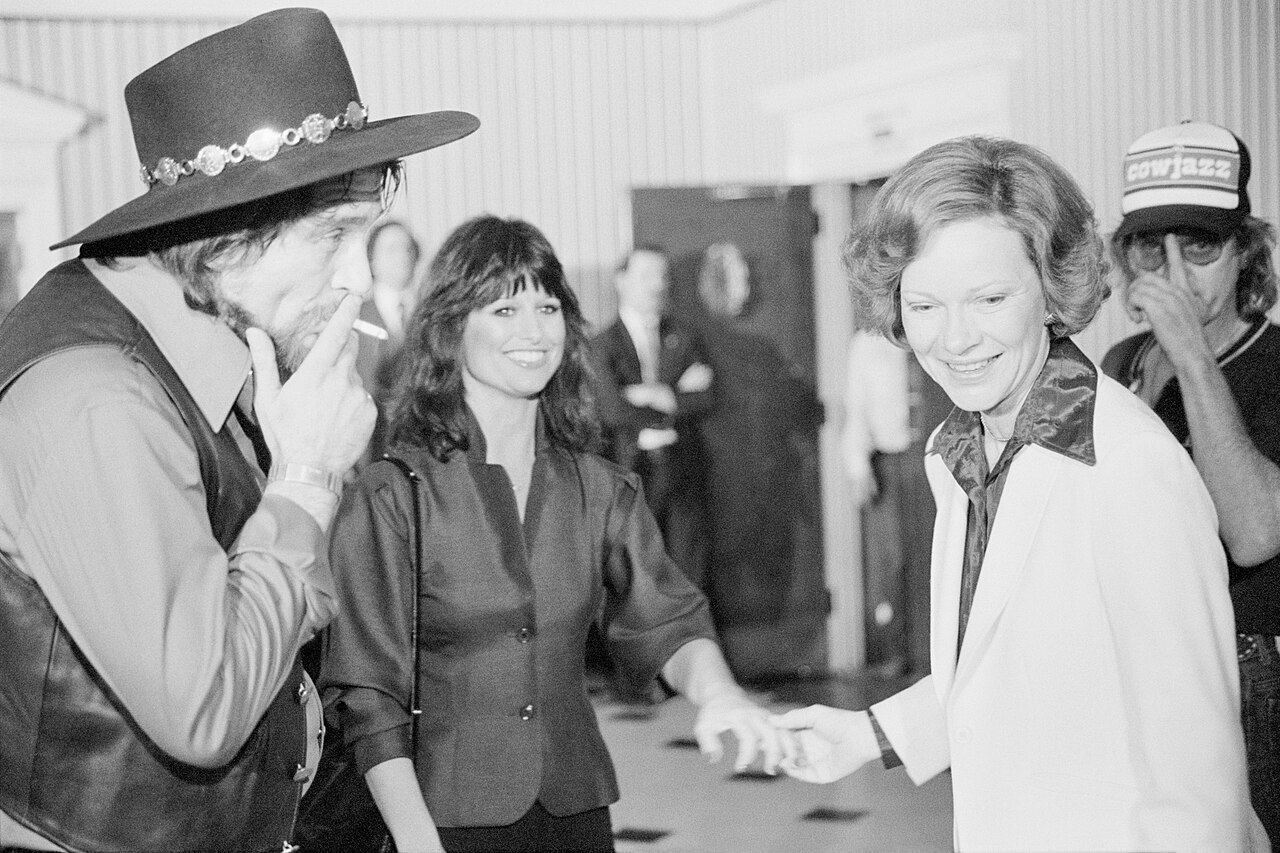
A wedding far from the noise of the road
On October 26, 1969, Waylon Jennings stood at the altar of a church in Phoenix, Arizona, and married Jessi Colter in a ceremony officiated by her mother, a Pentecostal preacher. It was not staged as a star turn or wrapped in the glamour that can follow famous musicians. Instead, the setting emphasized something quieter and more lasting: family, faith, and intention.
That choice said a great deal about the moment they were entering. Jennings was already known as a gifted, hard-living country artist with a turbulent personal history behind him. Colter came from a very different world, one shaped by church life, religious music, and the close moral structure of a family rooted in belief. Their wedding did not erase those differences. It acknowledged them, and then placed them inside a sacred space that asked for commitment anyway.
Welcoming a man with a turbulent past into the family required trust and grace, and the blessing of Jessi Colter’s mother gave the day a steadiness far from the noise of the road.
Phoenix was more than a backdrop
The city mattered. Phoenix was not just a convenient stop on a touring schedule; it was Jessi Colter’s hometown and the place where she and Jennings had first met years earlier. By marrying there, the couple folded the beginning of their story back into the place that had formed her.
That sense of geography gave the ceremony an emotional weight a more public event might have lacked. Phoenix represented home, memory, and the spiritual foundation of Colter’s life. For Jennings, stepping into that church in her city suggested a willingness to enter her world as fully as she was entering his.
Jessi Colter’s roots ran through the church
Before she was known to the public as Jessi Colter, she was shaped by a Pentecostal upbringing in which faith was not a decorative part of life but the structure around it. Church pews, hymns, and family devotion formed the emotional language of her early years. In that world, marriage was not a fleeting gesture but a covenant witnessed by both loved ones and God.
That her mother officiated the ceremony deepened the symbolism. This was not merely parental participation in a daughter’s wedding. It was a spiritual act of welcome and discernment. Her mother stood not only as family, but as a religious authority blessing a union that brought a complicated, celebrated, and often unpredictable man into the center of their family circle.
An Outlaw image, and a search for stability
Jennings would become one of the defining figures of country music’s outlaw movement, a public identity built around artistic independence, personal toughness, and resistance to Nashville polish. Yet the appeal of that image can obscure the private instability that came before. By the time he married Colter, he had already been divorced three times, and his life carried the wear of constant travel, fame, and upheaval.
That is what made the modest Phoenix ceremony so resonant. For a singer publicly associated with rebellion, the church wedding suggested a different kind of turning point: not a reinvention, but a decision to build something steadier. The moment did not cancel who Jennings was. It showed that even a man with a restless reputation could seek grounding in commitment, family, and faith.
The strength Jessi carried into the decades ahead
The significance of that day did not end when the ceremony did. Over the years that followed, Colter drew on the resilience she had inherited from her mother and her upbringing. Life with Jennings would include the pressures that come with celebrity, the strain of public attention, and later the burden of serious illness. The virtues embedded in her early life—endurance, loyalty, and spiritual steadiness—became central to how she navigated those years.
That endurance is one reason the wedding remains so meaningful in hindsight. The church setting was not simply picturesque; it foreshadowed the role faith would continue to play in her life. Colter’s ability to stand beside Jennings through hardship was not improvised in the moment. It had been formed long before, in the religious and familial world she came from in Phoenix.
A marriage that lasted
Their union, begun quietly in church on that October day in 1969, lasted 32 years, until Jennings’ death in 2002. In a music world often defined by motion, disruption, and reinvention, that span gave the marriage its own quiet distinction. It endured not because it was untouched by hardship, but because it was anchored by qualities stronger than public image.
In the end, the Phoenix wedding stands as more than a charming footnote in country music history. It reveals the meeting of two distinct worlds: the outlaw star and the preacher’s daughter, the road and the sanctuary, turbulence and grace. The ceremony’s restraint is precisely what gives it its lasting power. It marked the beginning of a partnership built not on spectacle, but on blessing, resolve, and the kind of faith that holds when everything else grows uncertain.

Quick Facts
- Wedding date: October 26, 1969
- Location: Phoenix, Arizona
- Bride: Jessi Colter
- Groom: Waylon Jennings
- Officiant: Jessi Colter’s mother, a Pentecostal preacher
- Marriage length: 32 years, until Waylon Jennings’ passing in 2002
Image credits: Leffler, Warren K. / Wikimedia Commons / Public domain; Committee on the Judiciary / Wikimedia Commons / Public domain; Fairburn, William Armstrong, 1876-1947 / Wikimedia Commons / Public domain.

