
News
Johnny Cash at June Carter Cash’s Bedside: The Final Vigil in Nashville
In the last days of June Carter Cash’s life, a frail and nearly blind Johnny Cash kept watch from her intensive care bedside, holding the hand of the woman who had once helped save his own life.

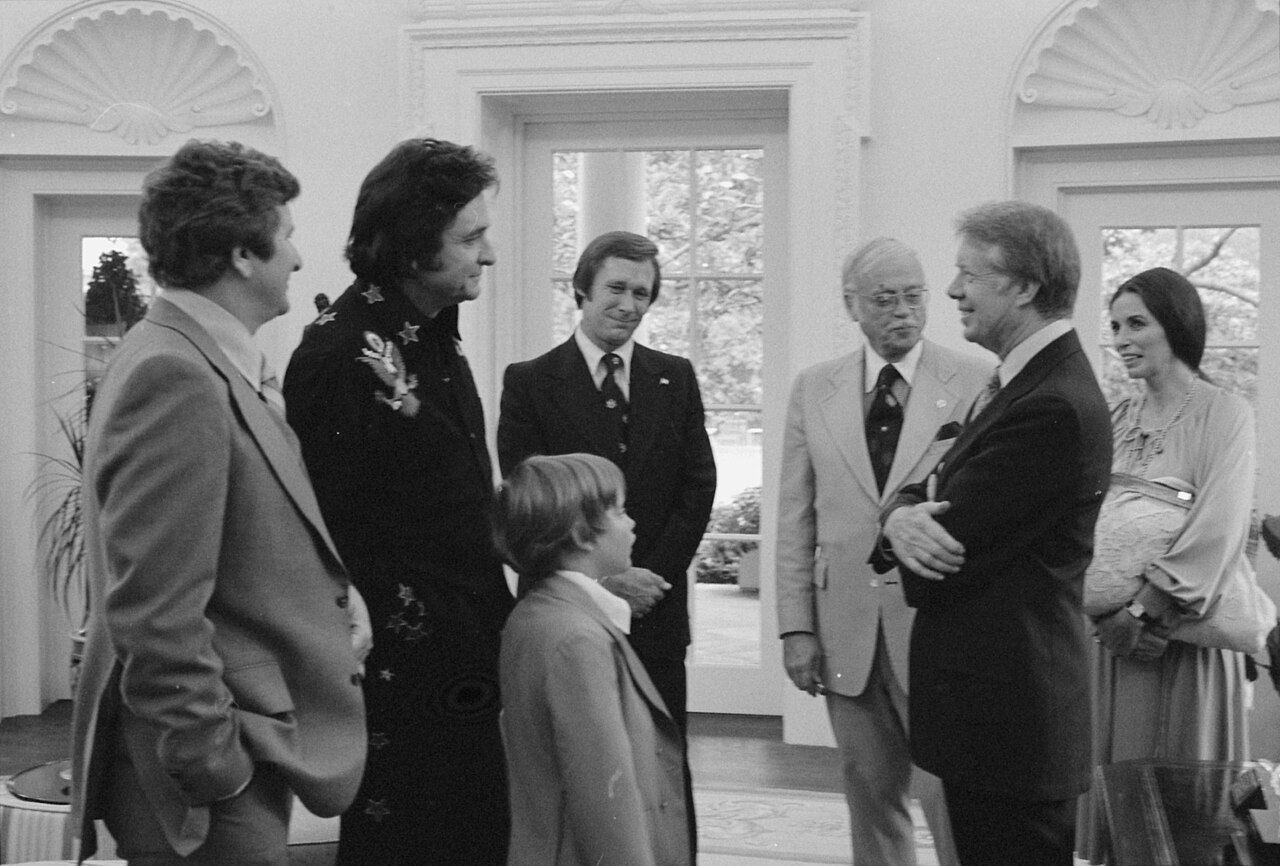
A hospital room in Nashville became the center of their story
In May 2003, the long public story of Johnny Cash and June Carter Cash narrowed to one intensely private scene: a Nashville intensive care unit, a hospital bed, and Johnny in a wheelchair beside it. He was 71, weakened by diabetes complications and autonomic neuropathy, and had lost nearly all his sight. Yet family members recalled that he insisted on being taken to her room day after day, despite doctors urging him to rest.
June, 73, had entered Baptist Hospital in Nashville for heart valve replacement surgery on May 7, 2003. At first, the operation seemed to go well. But serious complications followed, and she fell into a coma. In those days that stretched over more than a week, the man whose voice had filled concert halls spent hours in near silence, staying close through touch more than sight.
Before surgery, June gave a final instruction
Even before she was taken into the operating room, June Carter Cash was still thinking about Johnny’s work. She told her husband and producer Rick Rubin that if anything happened to her, Johnny had to keep working. It was the kind of practical, loving directive that fit the role she had long played in his life: partner, protector, sounding board, and source of steadiness.
That request carried extra force because work had become one of the ways Johnny kept going through physical decline. In his final years, recording had taken on a stark, stripped-down urgency. June understood that music was not only his vocation but also his structure, discipline, and, in moments of grief, perhaps his only reliable path forward.
If anything happened to her, Johnny had to keep working.
Their last days echoed the deepest history of their marriage
The vigil at her bedside had a painful symmetry. Decades earlier, before Johnny Cash’s famous onstage proposal to June in Ontario in 1968, she had been one of the people who stayed up through the night helping him battle severe drug addiction. She had known the chaos that fame and dependence could bring, and she had stood with him through it.
By spring 2003, the roles had reversed in form if not in spirit. Johnny could no longer rescue June medically, and he could no longer even clearly see her face. But he could remain present. He could reach for her hand. He could sit beside her pillow and fill the room with prayers, fragments of memory, and the familiar grain of his voice. The gesture was simple, but for a couple whose lives had been tested by illness, touring, devotion, and public scrutiny, it said almost everything.
Holding on when sight was gone
Because his vision had faded so dramatically, touch became Johnny Cash’s connection to his wife in those final days. Family members remembered him leaning close, speaking to her in a hoarse voice over the steady rhythm of hospital machines. The image is striking partly because it strips away every layer of celebrity: no stage lights, no television cameras, no black suit commanding an audience. Just a husband refusing distance.
His son John Carter Cash and daughter Rosanne Cash later recalled those scenes with painful clarity. The details matter: the wheelchair, the whispering, the long stretches of hand-holding, the determination to keep returning. For a performer whose presence had always felt monumental, the intimacy of the moment was almost unbearable in its smallness. It was not performance. It was witness.
May 15, 2003
When June Carter Cash died on the afternoon of May 15, Johnny Cash remained in his wheelchair beside her. He held her hand a little longer before letting go. The restraint in that moment, as it has been remembered, is part of what gives it such force. There is no dramatic public statement attached to it, no ornate scene-making, only the image of a man staying where he had been through the end.
For people who had followed their marriage for decades, the moment carried the weight of a larger American love story, but in the room itself it was personal and final. The years of touring, songs, reconciliations, family life, faith, and survival all ended in the oldest gesture of human attachment: not wanting to release the hand of the person you love.
After the funeral, only grief and work remained
A few days later, Johnny Cash sat in the front row at First Baptist Church in Hendersonville for June’s funeral. Then he returned to the quiet of their home carrying the instruction she had given him before surgery. Keep working. In that command was both burden and mercy, something to obey when ordinary life had been shattered.
The closing chapter of Johnny Cash’s life is often told through his final recordings, but those songs are inseparable from this loss. The hospital vigil, the funeral pew, the empty house afterward: these scenes help explain the stark emotional truth of his last work. June Carter Cash had been central to his survival for decades. In her final act of care, she left him a task. He was grieving, frail, and nearly blind, but he understood what she meant.
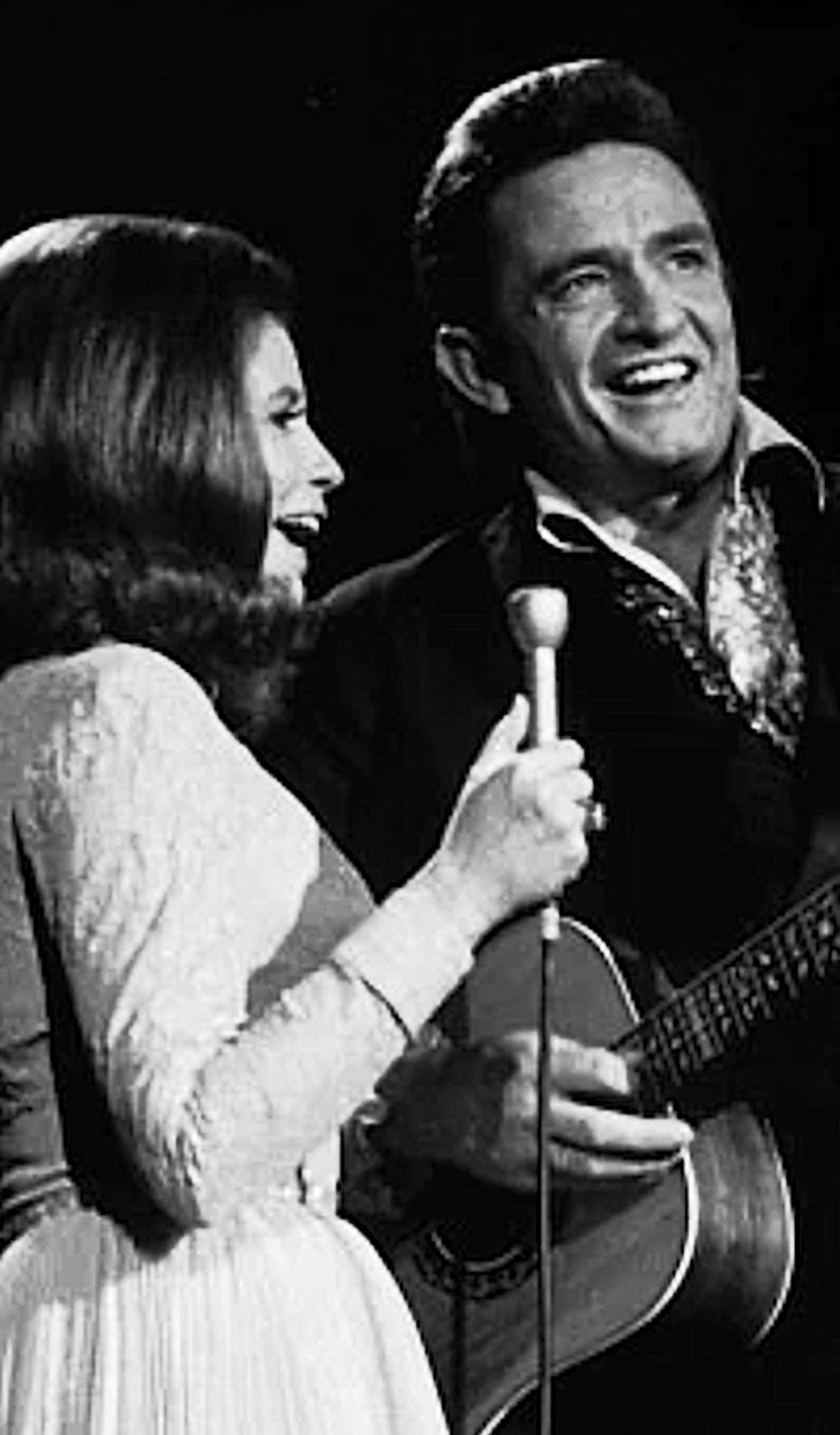
Quick Facts
- Who: Johnny Cash and June Carter Cash
- Where: Baptist Hospital, Nashville, Tennessee
- June’s surgery: Heart valve replacement
- Surgery date: May 7, 2003
- June died: May 15, 2003
- Johnny’s condition: Nearly blind, in a wheelchair, weakened by diabetes complications and autonomic neuropathy
Image credits: Unknown authorUnknown author or not provided / Wikimedia Commons / Public domain; Columbia Records / Wikimedia Commons / Public domain; Columbia Records / Wikimedia Commons / Public domain.