
News
The Night Charley Pride Walked Onto the Opry Stage
On a tense January evening in 1967, Charley Pride’s Grand Ole Opry debut became a defining test of whether country music’s most tradition-bound stage would embrace the voice its audience already loved.

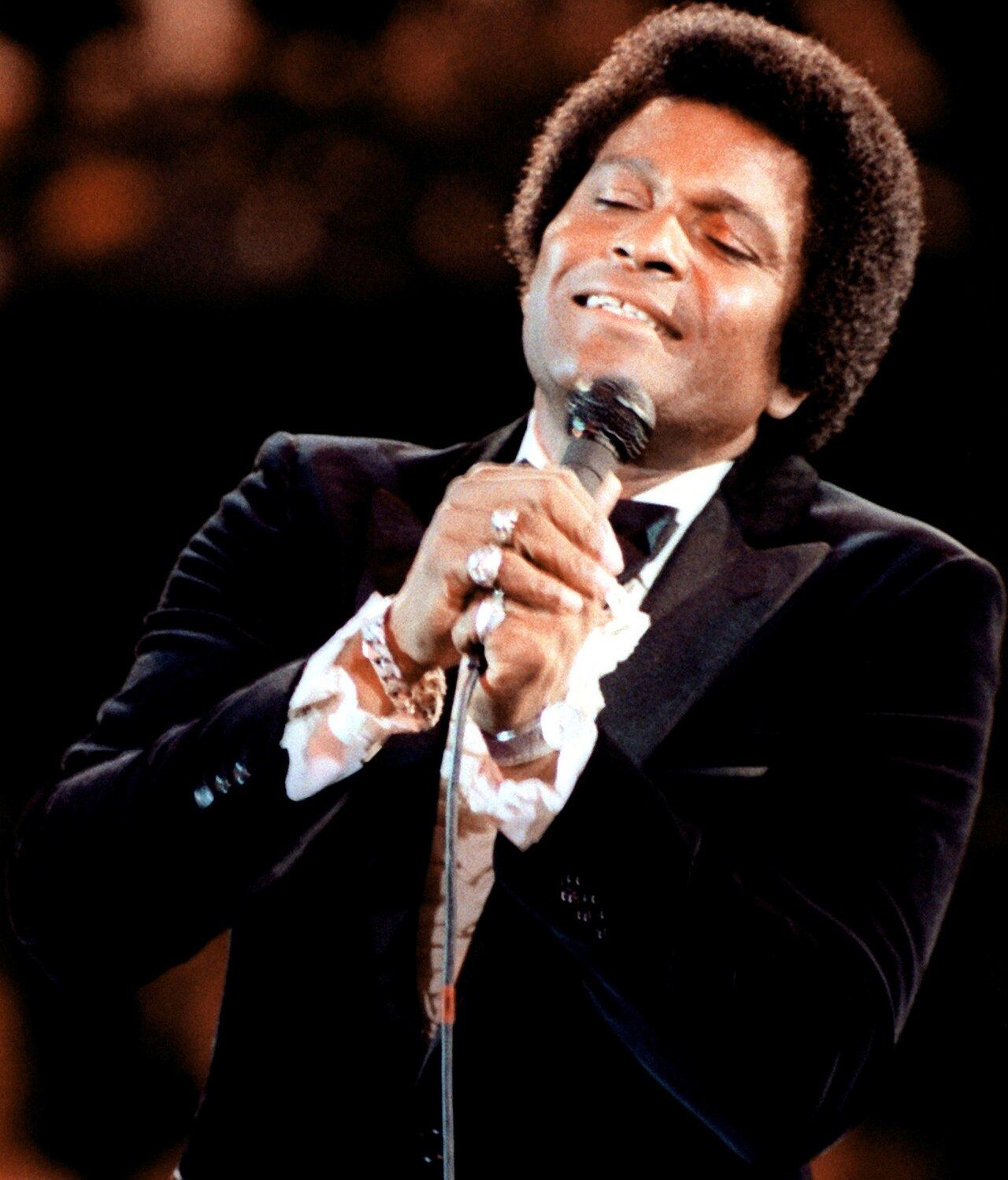
A handclasp in the wings
In the cramped, busy backstage area of Nashville’s Ryman Auditorium on January 14, 1967, Rozene Pride stood beside her husband and held his hand as he prepared to walk into country music history. It was a small gesture, intimate and steadying, but the stakes around it were enormous. Charley Pride was not just another rising singer waiting for his cue. He was about to step before the Grand Ole Opry audience as the first Black performer to appear on that stage since harmonica player DeFord Bailey in 1941.
paras_extra_ignored
He had the voice the audience already knew from the radio; what they had not yet fully confronted was the face behind it.
A voice introduced before a face
By the time Pride reached the Ryman, his record company had already tried to navigate the racial prejudice of the era with caution and calculation. RCA Victor sent his first three singles to radio stations without publicity photographs, allowing programmers and listeners to encounter the records without immediately seeing that the singer was Black. The strategy said as much about the industry as it did about Pride’s talent: his voice could travel freely where his image might be resisted.
That resistance did not stop the music. His third release, Just Between You and Me, broke into the country top ten and earned a Grammy nomination in late 1966. The record established him not as a novelty or a curiosity, but as a genuine country artist with a warm, familiar baritone that fit naturally alongside the voices dominating the format.
The silence before acceptance
If the records proved one thing, live performance could prove another. At an earlier 1966 concert in Detroit, when Pride walked out and the audience realized the singer they had come to hear was Black, ten thousand people fell completely silent for twenty seconds. It was not the hush of reverence but of recognition, recalculation, and surprise. In those suspended moments, Pride faced the gap between what people had heard and what they expected country music to look like.
That memory would have sharpened the tension in Nashville. In 1967, amid the wider strain of American racial conflict, the question hanging over the Ryman was simple and unforgiving: how would a Southern auditorium respond when the beloved radio voice stepped into view? For Charley and Rozene Pride, the Opry debut was more than a booking. It was a public test on country music’s most symbolic stage.
From Mississippi fields to Montana smelter
Pride’s path to the Opry made the moment all the more resonant. He had grown up picking cotton in Sledge, Mississippi, far from the polished rituals of Nashville show business. Later, in the early years of his marriage, he worked at a lead smelter in Montana. The image is almost archetypal in its plainness: hard labor by day, ambition carried quietly, a life built far from the institutions that would eventually claim him.
Yet even then, country music was part of his world. Like countless listeners across the South and West, he tuned in on Saturday nights to the Grand Ole Opry broadcasts on WSM radio. Before he ever walked onto its stage, the Opry existed for him as a voice in the darkness, a signal carried across distance, work, and class. That he would one day stand inside the broadcast he had once only heard gave the evening an emotional symmetry country music itself has always treasured.
Ernest Tubb opens the door
Backstage at the Ryman, Rozene’s presence mattered. In a room where a Black headliner and his wife were still an unfamiliar sight, she carried herself with what witnesses remembered as quiet elegance. The glamour of the Opry could often mask its rigidity, and on this night dignity itself was part of the scene. She stayed beside Charley until his nerves eased, a private anchor before the public trial.
Then came a crucial act of welcome. Traditional country legend Ernest Tubb stepped to the microphone first and offered Pride a warm introduction to the packed Ryman crowd and the millions listening on WSM. In an institution built on inherited trust, Tubb’s endorsement was more than courtesy. It was a signal from the old guard that this newcomer belonged long enough, at least, to be heard fairly.
When the baritone filled the room
Once Charley Pride began to sing, the drama that had built around his appearance gave way to the thing that had brought him there in the first place. The audience heard the same familiar baritone that fans had been playing for months on the radio and on jukeboxes, a voice rooted in country feeling rather than spectacle. Whatever anxieties had gathered in the wings or the pew-like seats of the Ryman had to contend now with melody, phrasing, and command.
That is what made the night so consequential. Pride’s appearance did not erase the prejudice that had shaped the path to it, nor did one performance resolve the contradictions of country music in the civil rights era. But on the Opry stage, before a live crowd and a vast radio audience, he crossed a threshold that had stood closed for decades. The moment was historic because it was personal, risky, and plainspoken: a husband steadied by his wife, introduced by a legend, then judged at last by the sound of his singing.
Quick Facts
- Event: Charley Pride’s Grand Ole Opry debut
- Venue: Ryman Auditorium, Nashville
- Date: January 14, 1967
- Historical significance: First Black performer on the Opry since DeFord Bailey in 1941
- Breakthrough song: Just Between You and Me
- Key supporter that night: Ernest Tubb
- Spouse beside him backstage: Rozene Pride
Image credits: GREG MATHISON / Wikimedia Commons / Public domain; Republic Country Club / Wikimedia Commons / CC BY 2.0; Republic Country Club / Wikimedia Commons / CC BY 2.0.