
Celebrities & Music
Tim McGraw had played to packed stadiums for decades, yet his hands shook when Lorrie Morgan handed him Keith Whitley’s acoustic guitar at the Country Music Hall of Fame.
The article recounts how Keith Whitley’s brief encouragement inspired a young Tim McGraw to move to Nashville, and how decades later McGraw honored that influence by performing with Whitley’s acoustic guitar at the Country Music Hall of Fame. It closes by noting McGraw’s 2026 Hall of Fame induction, bringing their connection full circle.

Long before his own records reached the radio, a young McGraw met Whitley at a show in Louisiana in the late 1980s. Whitley was already the voice behind “Miami, My Amy,” and the brief encouragement he offered that night helped push McGraw to load his old truck and drive to Nashville.
Years after Whitley’s death, the Country Music Hall of Fame and Museum in Nashville brought together family and fellow artists to honor his music. For the ceremony, Morgan and the Whitley family carried out the acoustic guitar Whitley had used through years of road dates and studio sessions, placing it in McGraw’s hands for the performance.
Sitting alone on a stool under the stage lights, McGraw set aside the energy of his arena shows. He traced the scratches and worn spots on the wood where Whitley’s hands had rested, closed his eyes, and took a slow breath to steady himself before playing the first notes of “Don’t Close Your Eyes.”
With no band behind him, he sang the ballad in a quiet, weathered voice that let the old instrument fill the room. Out in the seats, Whitley’s family wiped away tears as the guitar rang out in a Nashville hall once again.
When the last chord faded, McGraw stayed on the stool for a moment before facing the crowd. He rested his hand along the guitar neck and lowered his black cowboy hat over the wood, offering a quiet thank you to the man who helped start his journey.
When a college-aged Tim McGraw stood in an autograph line after a Keith Whitley and Lorrie Morgan concert in the late 1980s, he only had enough cash in his pocket to buy a single eight-by-ten glossy photo.
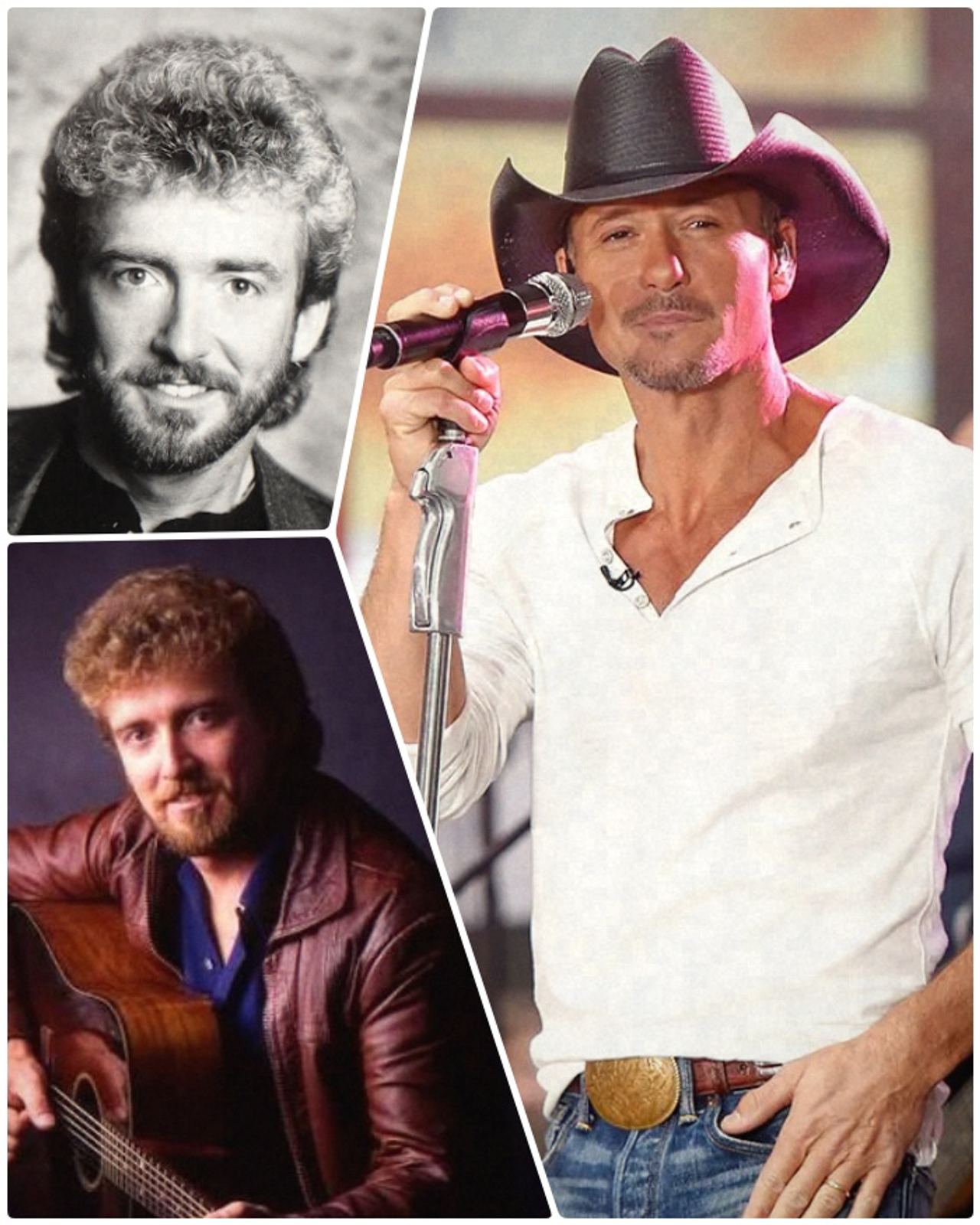
He chose Whitley’s picture and waited his turn at the table. When he finally reached the front of the line, the young singer from Start, Louisiana, told his musical hero that he was playing clubs and planning to move to Nashville to chase a recording contract of his own.
Whitley, already one of the most respected traditional voices in country music behind hits like “Miami, My Amy,” signed the photo and offered a simple piece of encouragement. He wished McGraw well, looked up, and told him, “I’ll see you there”.
That reunion never happened. On May 9, 1989, the exact day twenty-two-year-old McGraw dropped out of community college and loaded his things to move to Nashville, news broke across the radio that Whitley had died at his home in Goodlettsville, Tennessee, at age thirty-four.
McGraw arrived in Music City grieving a singer he had only met for a few seconds, carrying Whitley’s records as the standard for how a country vocalist should phrase a lyric. Over the next three decades, as McGraw built a career spanning dozens of No. 1 singles and stadium tours, he continued to cite the Kentucky-born singer as the artist who made him want to pack up and head to Tennessee in the first place.
Thirty-one years after that fateful move, McGraw was invited to the Country Music Hall of Fame and Museum in Nashville for the October 28, 2020, benefit special Big Night (At the Museum). Hosted by Hall of Fame member Marty Stuart, the evening paired modern country stars with historical instruments pulled directly from the museum’s archives.
The guitar brought out from the collection for McGraw was Whitley’s prized 1980 custom-built C.W. Parsons acoustic. Crafted by Kentucky luthier C.W. Parsons, the instrument was a piece of music history that Whitley had famously acquired for a single dollar and a handshake, later holding it on the cover of his posthumous album Sad Songs and Waltzes.
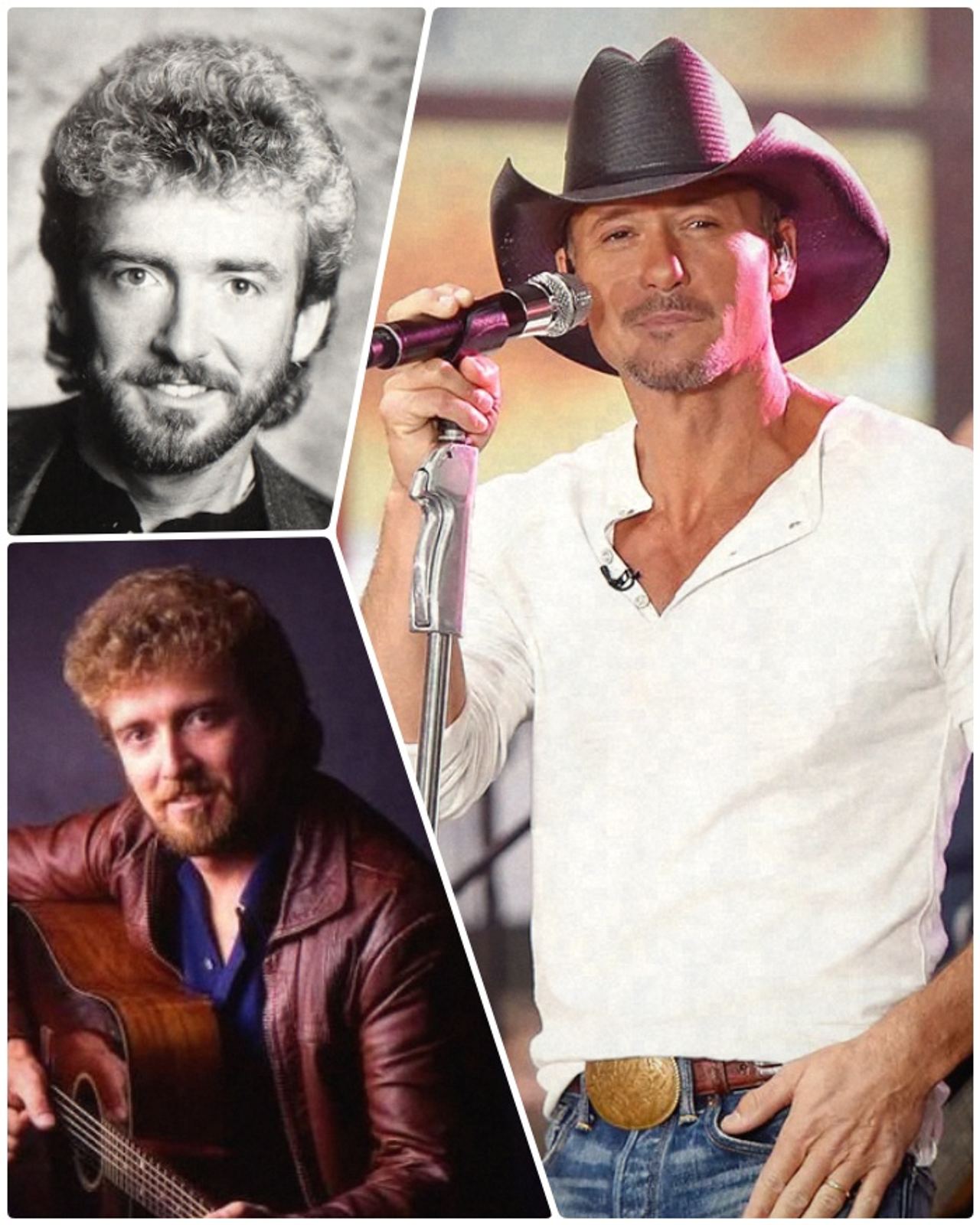
Preserved through the years by Morgan and the Whitley family for the museum’s collection, the acoustic still carried the physical marks of Whitley’s brief run at the top of the genre. Before sitting down to play, McGraw admitted on the broadcast that he felt he had no business even holding Keith Whitley’s guitar.
Sitting alone on a stool inside the quiet hall with his black cowboy hat tilted low, McGraw set aside the high-energy production of his arena tours. He looked down at the worn wood and custom inlay, steadied his hands along the neck where Whitley’s fingers had once moved, and began picking the opening progression of “Don’t Close Your Eyes”.
Written by Bob McDill, the ballad had become Whitley’s first No. 1 hit on the Billboard country chart in the summer of 1988, capturing the ache of a man pleading with a partner who is still in love with someone else. With no backing band behind him, McGraw sang the verses in a raw, weathered voice, letting the resonance of the forty-year-old Kentucky guitar carry the melody through the room.
As the final chord faded into the hall, McGraw sat still on the stool for a beat, resting his hand against the neck of the instrument that had belonged to his hero.
Years later, in March 2026, the history linking the two singers came full circle one more time when McGraw was officially announced as an inductee into the Country Music Hall of Fame’s Class of 2026, joining the same sacred institution where Whitley had been inducted in 2022.
All these years after a broke kid spent his last few dollars in an autograph line, McGraw had finally kept the appointment Whitley made with him before he ever reached Nashville.
Read more stories
- Growing up on an Oklahoma cattle farm, Carrie Underwood stopped eating beef at age 13 after listening to mother cows cry for their calves outside her bedroom window.
- Years of arena tours and chart-topping records gave Carrie Underwood the means to live in any gated neighborhood in Tennessee, yet she never felt at home behind subdivision walls.
- How San Quentin and a Mother’s Faith Changed Merle Haggard
- By May 2006, Carrie Underwood had already sold millions of copies of her debut album, yet she still returned to an Oklahoma campus to collect her journalism degree.