
Celebrities & Music
In August 2016, Alan Jackson spent $5.75 million on a narrow, three-story brick building a
In August 2016, Alan Jackson spent $5.75 million on a narrow, three-story brick building at 421 Broadway in downtown Nashville. At $925 per square foot, it set

In August 2016, Alan Jackson spent $5.75 million on a narrow, three-story brick building at 421 Broadway in downtown Nashville. At $925 per square foot, it set a real estate record for the strip.
By then, Lower Broadway was changing fast. Multi-level entertainment complexes were taking over the street, transforming traditional music rooms into loud tourist spots packed with pop remixes and DJs. Most celebrity-branded bars were simply licensing a famous name to sell merchandise and overpriced drinks.
Jackson had a different reason for purchasing the oldest building on the block. Thirty-one years earlier, in 1985, he had come to Nashville from Newnan, Georgia, with no industry connections. Before the radio hits and stadium tours, he was just another unknown singer working in the mailroom at The Nashville Network and taking whatever small bar gigs he could get to sharpen his craft.
He knew firsthand how difficult it was for a young musician to find a stage that actually cared about country music. As downtown rents soared, the traditional honky-tonks that once gave newcomers a chance were disappearing. Young players were losing the very proving grounds where Jackson had learned how to hold a crowd.
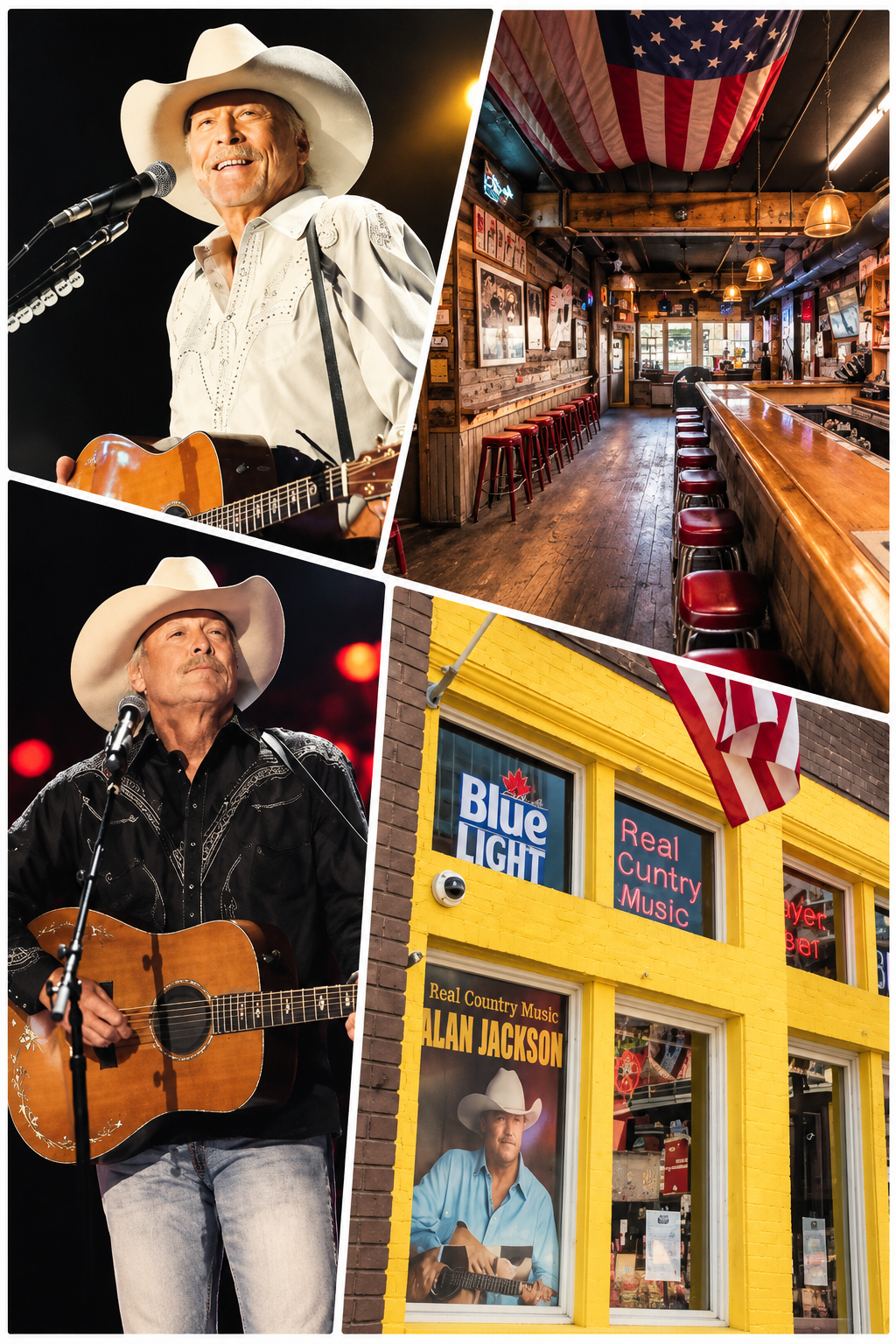
So when he opened AJ’s Good Time Bar in late 2016, he built it around one strict rule. While neighboring rooftops blasted hip-hop and rock, Jackson devoted all three floors of his 6,000-square-foot venue to traditional country music. He covered the walls with pieces from his own career, set up multiple live stages, and handed the microphones over to local working bands.
From opening day through 2026, the doors at 421 Broadway opened at 11 a.m. seven days a week, keeping working musicians on stage until 2:30 in the morning. Even as corporate chains bought up the rest of the street, Jackson kept the focus on steel guitars, fiddles, and songwriters earning their living one tip jar at a time.
Billboard later named it the number one honky-tonk in Nashville.
Years after he no longer needed small stages himself, Alan Jackson bought a piece of Broadway just to make sure the next kid with a guitar still had a place to play.
Read more stories
- The Nashville Porch Where Dolly Parton First Learned to Trust Carl Dean
- After selling tens of millions of records in the 1990s, Alan Jackson offered to buy his parents a spacious new house in Georgia, only for Eugene and Ruth Jackson to refuse to leave the home built around an old twelve-by-twelve-foot tool shed.
- How Crowded Rooms Shaped Kenny Rogers Before the Fame
- Before Toby Keith ever let his middle daughter, Krystal Keith, sign a professional music contract, he gave her one strict rule: she had to finish college first.