
News
At the Peak of Fame, Kenny Rogers Confronted the Cost of Missing His Son’s Childhood
As Kenny Rogers became one of the biggest touring stars in the world, the success that defined his late-1970s career also left him reckoning with a painful truth: he had largely missed his eldest son growing up.


A superstar in motion
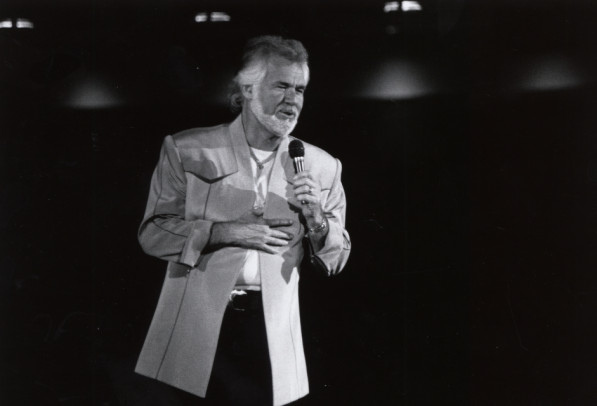
By the late 1970s, Kenny Rogers was living the kind of career arc most artists only imagine. After leaving The First Edition in the mid-1970s, he launched a solo run that turned him into a cross-genre force, equally at home in pop, country, and adult contemporary radio. The hits came in rapid succession, and so did the demands that followed them: concerts, promotional appearances, recording sessions, and the relentless machinery of a star at full commercial speed.
From the outside, it looked like triumph in its purest form. Rogers was headlining sold-out arenas, moving constantly from city to city, his name synonymous with mainstream success. But the pace that made him a household name also built a life defined by absence. Nights on the road blurred into mornings in airports and afternoons in hotel rooms, and the private consequences of that schedule accumulated quietly behind the public image.
The family life that fame could not hold together
That kind of momentum did not leave much room for stability at home. Rogers’ marriage to Margo Anderson collapsed under the strain, ending in divorce in 1976. Their son, Kenny Rogers Jr., who had been born in 1964, remained with his mother, and what might once have been a difficult but manageable distance hardened into a far more lasting separation.
As Rogers’ solo career accelerated, his son moved through adolescence without the ordinary rhythm of a father’s presence. There were no easy routines to fall back on, no regular dinners, no dependable weekends, no shared sense of growing up together. Every new tour and every new professional commitment widened a gap that was no longer just logistical. It had become emotional, the kind of distance measured in missed moments rather than miles.
A candid admission at the height of success
By 1980, Rogers had little left to prove professionally. He was at a commercial peak, one of the most visible and bankable entertainers in popular music. Yet it was at that moment of maximum success that he spoke with unusual frankness about what the previous years had cost him personally.
In that candid reflection, he acknowledged a devastating reality: between 1975 and 1980, the number of times he had actually seen, held, or spoken to his son in person was so small it could be counted on two hands. It was a stark confession, not because it was dramatic, but because it was precise. It cut through the glamour of celebrity life and exposed the human wreckage left behind by ambition when it goes unchecked.
He admitted that the number of times he had seen, held, or spoken to his son in person over those years could be counted on two hands.
What success could not repair
Rogers’ honesty carried a note of desperation. He spoke about wanting simply to sit across a table from Kenny Jr. and have an honest conversation, however uncomfortable it might be. There was no fantasy that a famous father could simply reappear and erase the distance. He seemed to understand that whatever resentment, confusion, or hurt had built up would have to be faced, not wished away.
That recognition gave his remarks their enduring power. Packed concert halls and platinum success could validate a career, but they could not restore the ordinary time that parenthood requires. A child’s upbringing is made of small, repeated acts of presence, and once those years pass, there is no encore. Rogers’ fame had bought access to almost everything except the ability to go back.
A regret that followed him for decades
The realization did not fade when the tours ended or when the headlines moved on. By his own later example, the emotional lesson stayed with Rogers for decades. The absence from Kenny Jr.’s youth became more than a private sorrow; it was a warning embedded in his own life story, a reminder that professional achievement and personal fulfillment do not always rise together.
For a performer whose identity had long been tied to motion, the regret appears to have reshaped how he thought about fatherhood later in life. The image is a poignant one: a man who had spent years defined by departures eventually deciding that staying put mattered more. After decades of roads, stages, and schedules, the priorities changed.
The quieter legacy behind the legend
Kenny Rogers remains widely remembered for his voice, his crossover appeal, and the extraordinary durability of his catalog. But another part of his story lies in moments like this one, when he allowed the public to see what celebrity often conceals. His reflections on Kenny Jr. stand out because they resist the usual mythology of success. They suggest that even at the summit of fame, a person can feel most haunted not by failure, but by what success demanded in return.
That is why the episode still resonates. It is not simply a story about one singer’s divorce or one family’s estrangement. It is about the bargain at the center of high-achieving public lives, and the way that bargain can narrow into loneliness before anyone notices. Rogers’ confession gave that dilemma a deeply personal shape: a father measuring his greatest loss not in money or awards, but in how few times he had been there.

Quick Facts
- Subject: Kenny Rogers
- Era described: Late 1970s to 1980
- Former group: The First Edition
- Former spouse mentioned: Margo Anderson
- Son: Kenny Rogers Jr.
- Central theme: The personal cost of fame and constant touring
Image credits: Philpottm / Wikimedia Commons / CC BY-SA 3.0; User kw111786 on Flickr (Original version) User UCinternational (Crop) / Wikimedia Commons / CC BY-SA 2.0; University of Houston Digital Library / Wikimedia Commons / CC BY-SA 2.0.

