
News
Kenny Rogers’ Quietest Lesson: The Cost of Success He Couldn’t Win Back
At the height of his fame, Kenny Rogers gave audiences reassurance and polish onstage while accepting a private loss at home that he would later describe with unusual candor.


A voice of comfort, a life in motion
Through the 1970s and 1980s, Kenny Rogers became one of the most recognizable entertainers in popular music, a performer whose warm, steady delivery seemed to promise calm in the middle of heartbreak. To millions of listeners, he was a familiar presence: on records, on television, and in arenas packed with fans who treated his songs like company through lonely hours. His commercial rise was not a brief flash but a sustained run built on constant visibility and relentless work.
That visibility came at a price. Rogers spent huge stretches of his life in transit, moving from city to city on customized buses, making albums that sold in enormous numbers and taking on television film work that expanded his reach beyond music. The pace looked glamorous from the outside, but it created a private reality common to major stars: while the career was always advancing, home life was happening elsewhere, without him.
The family years he missed
Rogers later spoke with striking honesty about what that schedule meant for his older children, including Carole, Kenny Jr., and Christopher. The sacrifice was not abstract. It was made up of the ordinary moments that form a family’s real memory bank: school events, weekend routines, the small conversations that build trust over time. Stardom did not erase the need for those moments; it simply kept him away from them.
In retrospect, the hardest truth was not that he had worked hard, but that he had embraced a logic that made absence feel temporary. Like many people in high-pressure industries, he convinced himself that one more tour, one more project, one more demanding season would eventually create enough security to make everything balance out. By the time he could slow down, the stage of life he had been missing was already over.
He openly came to see time as a currency that no amount of record sales, awards, or financial security could ever buy back.
The industry trap behind the regret
Rogers’ reflections resonated because they exposed a familiar pattern beneath extraordinary fame. Ambition rarely announces itself as danger. It often arrives dressed as duty, professionalism, or responsible provision for a family. For a star in his position, the next commitment could always be justified: another album to finish, another tour to complete, another production already in motion. Success made stopping seem irrational, even when the personal costs were growing obvious.
That is why his regret carried weight beyond celebrity confession. He was not simply lamenting overwork; he was describing an addictive structure of achievement. The rewards kept coming in visible forms — applause, trophies, strong sales, major projects — while the losses accumulated quietly in a space with no scoreboard. Awards could be displayed. Missed childhoods could not be recovered.
Coming home to the silence
One of the most painful images in Rogers’ later self-assessment was the recognition that a person can spend years laboring for a family and still arrive too late for the part of family life that mattered most. The fantasy of future compensation collapses when the house is quiet and the children are already grown. At that point, there is no dramatic reckoning, only the blunt understanding that a chapter has closed without you in it.
What gave Rogers’ story unusual force was his refusal to disguise that realization. He did not frame the outcome as noble collateral damage or insist that success somehow justified everything. Instead, he treated it as a genuine failure, one that remained unfixable. That honesty made his warning to younger artists sharper than any general lecture about work-life balance. He had lived the consequences.
A warning to younger performers
In talking about his past, Rogers became something more than a veteran looking back; he became a cautionary voice within an industry built on momentum. Performers are often praised for endurance, hustle, and a willingness to say yes long after exhaustion sets in. Rogers understood the seduction of that mindset because he had benefited from it. He also knew its blind spot: the belief that life at home can be paused until the schedule eases.
His message was simple precisely because it had been learned too late. There are windows in a child’s life that do not reopen. A parent can return with money, stories, and sincere love, but not with the vanished mornings and missed milestones. For younger artists hearing him, the authority of the warning came from the fact that it was spoken by someone who had already collected nearly every professional reward the business could offer.
Why he stepped away in 2015
That regret did not remain merely philosophical. It shaped Rogers’ decisions in his later years and helped explain why he ultimately walked away from touring in 2015. After decades defined by motion, he made a choice that ran against the habits that had once governed his life. The decision reflected more than fatigue. It carried the emotional force of a man determined not to repeat, with his youngest twin sons, the distance that had haunted his relationships with his older children.
Seen in that light, retirement from the road was not a soft fade but a deliberate correction. Rogers could not revise the past, but he could change the terms of the present. For a performer whose identity had long been bound up with constant work, choosing home over the road amounted to a final, deeply personal statement about what success should mean. It was the lesson his career had taken years to teach him, and the one he seemed most intent on leaving behind.

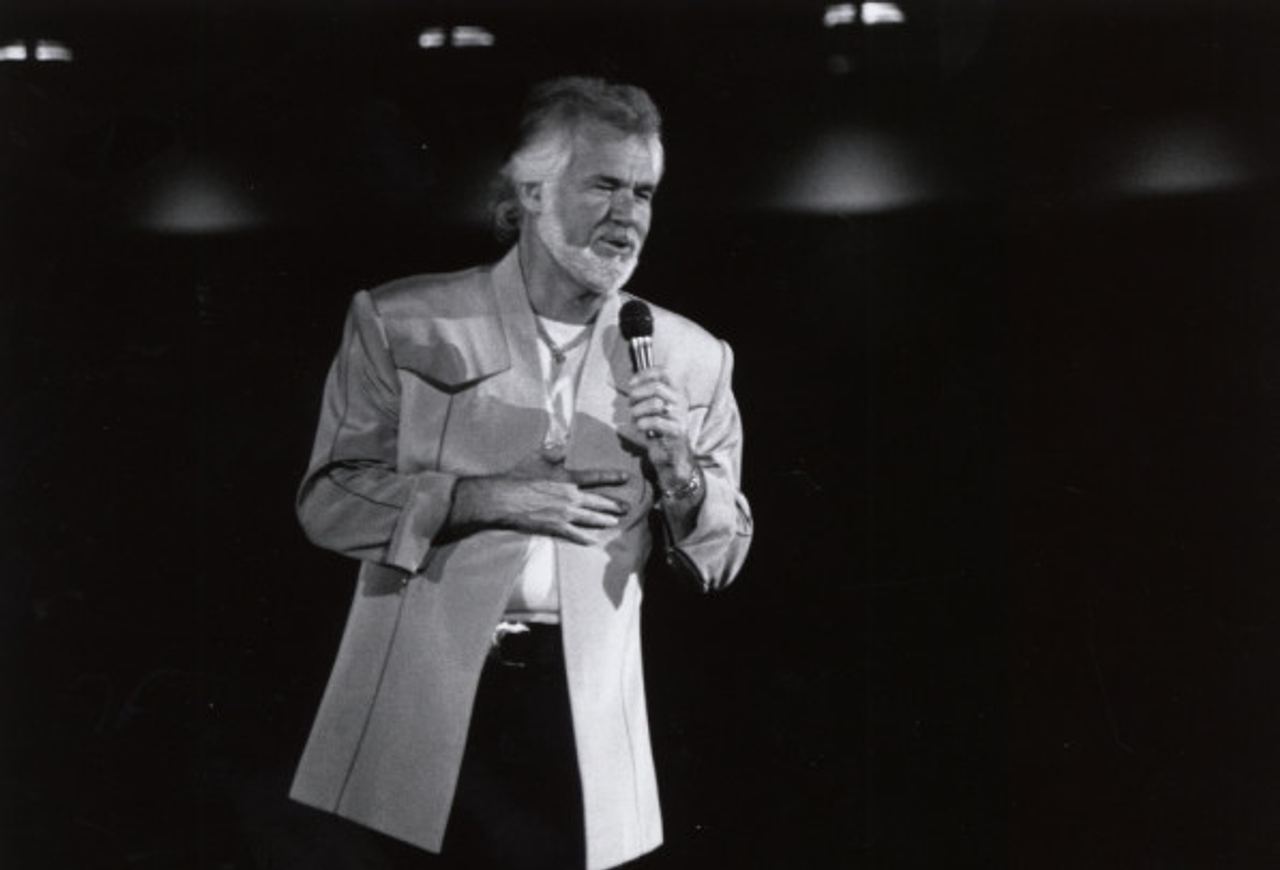
Quick Facts
- Subject: Kenny Rogers
- Peak era discussed: 1970s and 1980s
- Older children named in the story: Carole, Kenny Jr., and Christopher
- Core regret: Missing the formative years of his older children because of nonstop work
- Later decision: He stepped away from touring in 2015 to focus on raising his youngest twin sons
Image credits: Philpottm / Wikimedia Commons / CC BY-SA 3.0; User kw111786 on Flickr (Original version) User UCinternational (Crop) / Wikimedia Commons / CC BY-SA 2.0; University of Houston Digital Library / Wikimedia Commons / CC BY-SA 2.0.

