
News
At Home in Dallas: The Quiet Golden Anniversary That Framed Charley Pride’s Life
Fifty years after their 1956 wedding, Charley and Rozene Pride marked their golden anniversary not on a public stage but in a Dallas living room, where family memory and private devotion told the fuller story behind a historic career.


A milestone kept deliberately small
Charley Pride had spent years in front of vast crowds, yet the scene that mattered most in December 2006 was intimate enough to fit inside a family living room in Dallas. There were no industry spotlights, no televised tribute, no grand production to match the stature of one of country music’s most recognizable voices. Instead, Pride chose home.
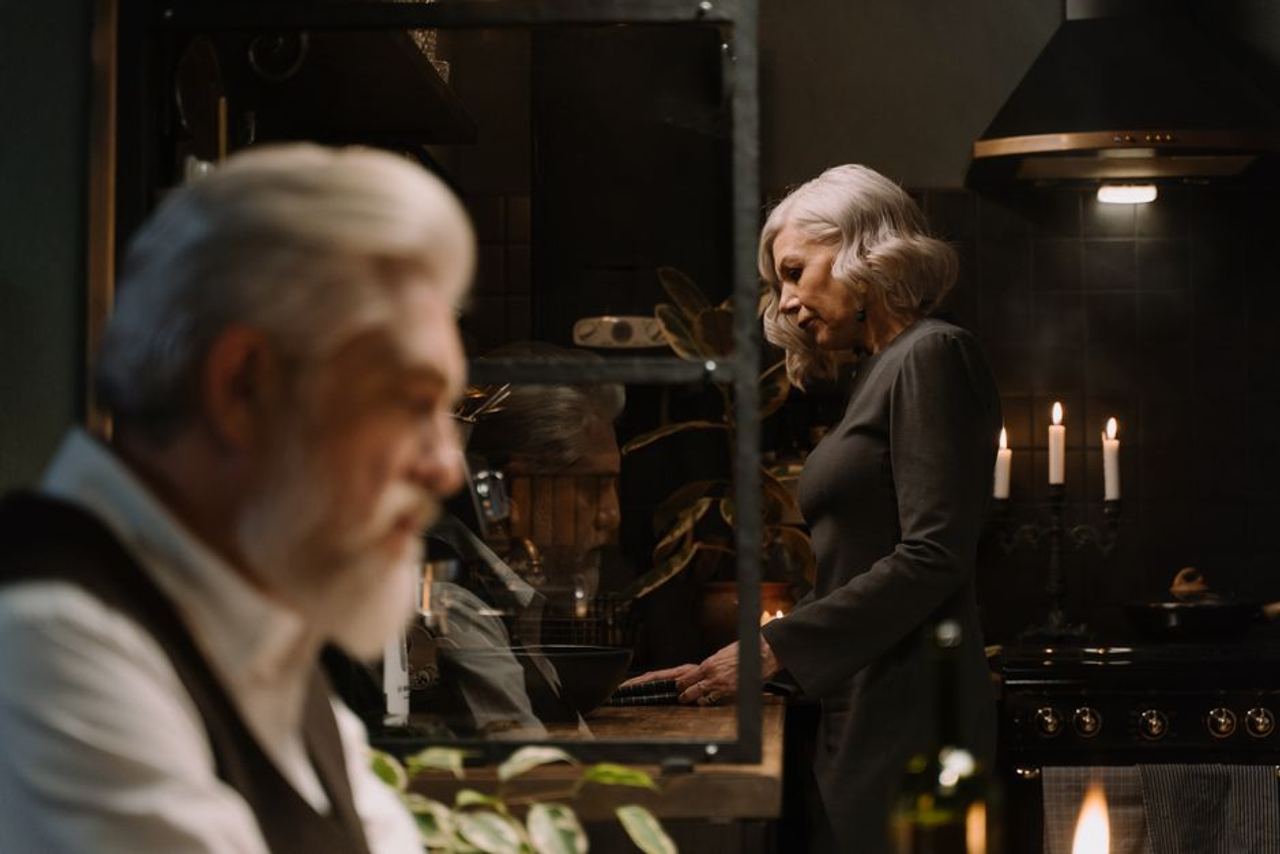
The occasion was the couple’s golden wedding anniversary, fifty years after Charley and Rozene married in Memphis in 1956. Around them were the people who had lived the consequences and comforts of that marriage most closely: their children, Kraig, Dion, and Angela, along with grandchildren and a small circle of longtime friends. The gathering was modest by design, and that modesty was the point.
An acoustic song instead of a spectacle
At the center of the evening was a gesture more revealing than any awards-show montage could have been. Without a backing band or sound system, Charley picked up an acoustic guitar and sat directly across from Rozene. He sang softly, without adornment, in a manner that recalled the years before fame, when music belonged to the two of them long before it belonged to the world.
That choice collapsed time. The superstar who had filled arenas returned, in effect, to the young husband building a future on slim baseball wages, carrying ambition but not yet celebrity. In that living room, stripped of professional polish, the performance was not about legacy in the public sense. It was about continuity, about the sound of a life revisiting its own beginning.
The man who had walked through hostile halls and broken historic barriers was simply a husband honoring the woman who made that journey possible.
Renewing vows with the family watching
Before three generations of family, Charley and Rozene exchanged rings and renewed the vows they had first made half a century earlier. The symbolism was powerful precisely because it was so personal. This was not a reenactment staged for an audience; it was a reaffirmation in front of the people who best understood what those vows had required over time.
Charley held Rozene’s hand as they stood together, and that detail carries the weight of their story. It was the same hand, family memory recalled, that had helped chart safer driving routes through the segregated South, managed the practical realities of household finances, and steadied him through difficult personal stretches. In a single domestic image, the history of a marriage came into focus.
The private architecture behind a public life
For their children and grandchildren, the anniversary gathering clarified something that public history can flatten. Country music remembers Charley Pride as a barrier-breaking star, a performer of immense poise who endured and overcame hostility in spaces not built to welcome him. Family life revealed the structure that made such endurance possible.
That structure was not abstract. It was built from ordinary acts of partnership: planning, budgeting, traveling carefully, preserving calm, and keeping a center of gravity at home. Rozene’s role in that story was not ornamental, and the anniversary made that plain. The resilience associated with Charley’s career was also marital resilience, family resilience, lived day after day away from cameras.
Why the Dallas living room mattered more than an arena
The emotional force of the evening came from its refusal to perform celebrity. Pride had every reason to commemorate such a milestone publicly, yet by avoiding gala culture he reshaped the meaning of celebration itself. The living room floor became a more important stage than any arena because it held the witnesses who mattered most.
When the final note faded and the couple embraced, the moment sealed something larger than an anniversary. It affirmed the quiet resilience that had underwritten five decades together. Public triumphs can be archived through headlines and recordings; private loyalty survives in smaller forms, in rituals repeated at home, in the family memory of how two people carried one another through history.
The keepsakes that preserve the rest of the story
The lasting record of that Dallas anniversary lies not in a broadcast special but in intimate materials: private home recordings, family journals, and personal keepsakes. Such objects do more than document an event. They preserve tone, gesture, and texture—the atmosphere of a room, the closeness of voices, the emotional scale of a family occasion that never tried to become public theater.
They also point to a fuller understanding of Charley Pride’s life. Career milestones explain achievement, but domestic artifacts explain endurance. In those Dallas-year remnants, the celebrated artist is inseparable from the husband and father at home, and Rozene is visible not simply as companion but as a central architect of the life the world came to admire.

Quick Facts
- Couple: Charley Pride and Rozene Pride
- Original wedding: 1956 in Memphis
- Anniversary celebrated: Golden wedding anniversary in December 2006
- Location of celebration: Their home in Dallas
- Family present: Children Kraig, Dion, and Angela, plus grandchildren and close friends
- Signature moment: Charley sang to Rozene with an acoustic guitar before they renewed their vows
Image credits: Kampus Production / Pexels; cottonbro studio / Pexels; cottonbro studio / Pexels.

