
News
Before MTV, Marty Robbins Turned Songs Into Western Epics
Long before music videos became a format, Marty Robbins was compressing heartbreak, gun smoke, jealousy and frontier myth into songs that played like miniature films.

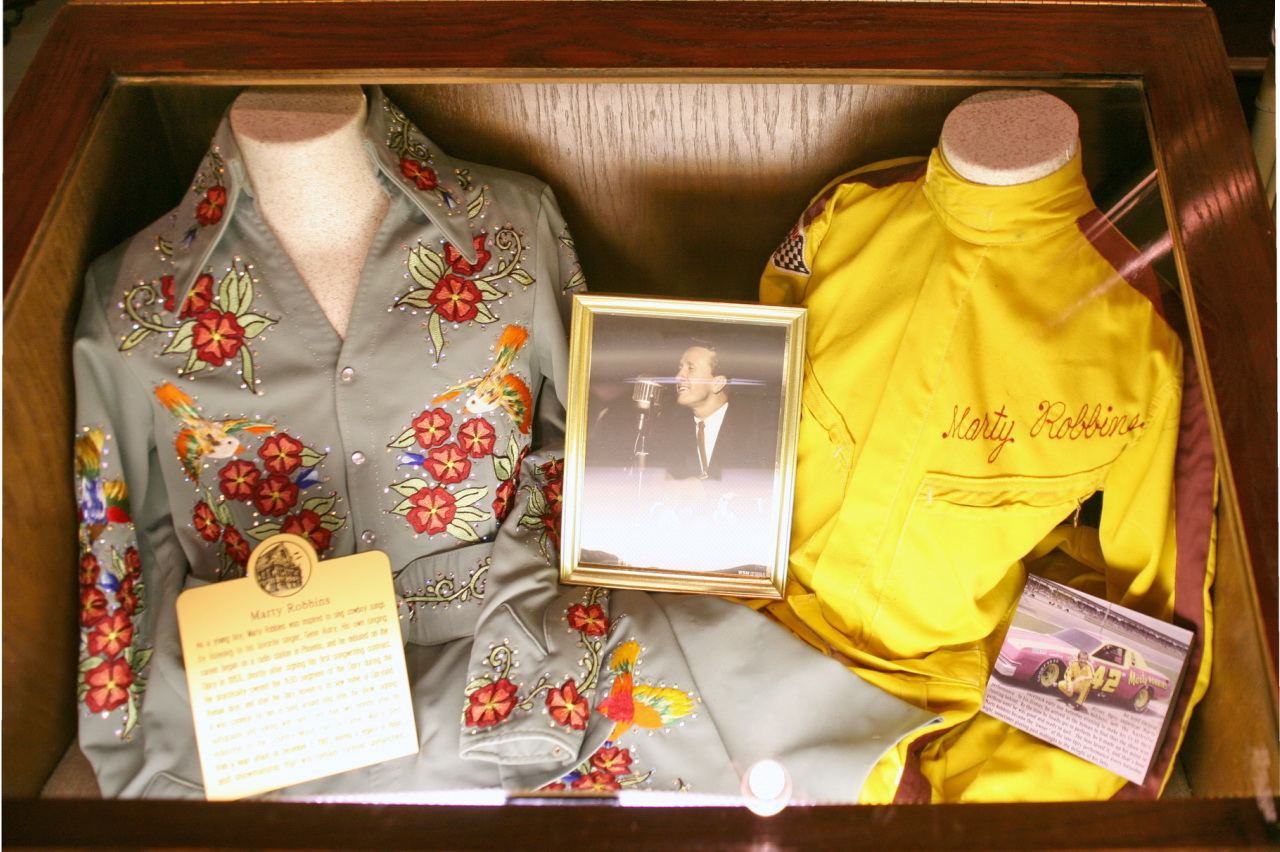
A whole Western in three minutes
The social-media caption gets at something true about Marty Robbins: he did not just sing stories, he staged them in the listener’s mind. Before the modern music video gave pop songs a visual language, Robbins was already building one out of words, pacing and atmosphere. In his Western material especially, a few opening lines could establish landscape, motive and danger with the efficiency of a seasoned screenwriter.
That gift made his songs feel unusually cinematic. A jealous cowboy, a woman who lingers like a wound, a showdown that seems inevitable from the first verse — Robbins knew how to set these elements in motion so that by the final refrain the listener had not merely heard a tune but watched a drama unfold. The songs had camera movement without cameras, close-ups without film, and endings that often arrived with the snap of a saloon door or a gun belt being drawn.
He could make a radio speaker feel like a movie screen.
The singer who understood plot
Robbins’ storytelling worked because he respected narrative. Many country songs sketch a situation; his best-known Western performances complete an arc. There is character, conflict, escalation and consequence. He understood that suspense comes from what is withheld as much as from what is said, and he used that instinct to make listeners lean toward the next line.
That discipline is a big reason the songs remain vivid. He did not overcrowd them with unnecessary detail. Instead, he chose the kind of images that instantly locate a scene: a town, a rider, a memory, a warning, a rival. The result is music that moves with the clarity of folklore and the tension of pulp fiction, but with a singer’s emotional intimacy holding it all together.
Why the Western fit him so well
The Western songbook gave Robbins an ideal frame for emotions that are already larger than life. Jealousy, regret, loneliness and honor can sound abstract in ordinary settings; placed against deserts, border towns and hard men living by hard codes, they gain mythic weight. Robbins leaned into that scale without losing the human ache at the center.
His voice mattered as much as the lyrics. It could sound calm and almost conversational one moment, then turn shadowed or urgent the next. That balance let him inhabit both the narrator and the drama. He could be the witness to a legend, the doomed man inside it, or the memory-haunted lover still chasing something gone. In a few minutes, he made those emotional shifts feel natural.
Gunfighters, ghosts and unfinished love
What listeners often remember most is how Robbins fused action with feeling. In his world, violence was rarely just spectacle; it was tied to pride, revenge, betrayal or love that had curdled into obsession. That is why a simple summary — jealous cowboy, unforgettable woman, inevitable confrontation — feels so complete. Those are the bones of countless frontier tales, and Robbins knew exactly how to animate them.
He also understood the power of aftermath. The best Western songs do not end when the gunfire stops; they linger in the silence that follows. Robbins excelled at that emotional residue. Even when a story reached its conclusion, the listener was left with dust, memory and the sense that everyone involved had been marked by what happened. That quality gives his music an almost haunted durability.
A radio imagination that still feels visual
Part of the pleasure of hearing Robbins today is recognizing how modern his sense of scene can feel. Contemporary audiences are fluent in visual storytelling, yet his songs still generate images with startling speed. The economy is part of the magic. He trusted the audience to do the final act of creation, filling in the saloon, the moonlight, the rider’s expression, the woman in the doorway.
That collaborative quality helps explain why clips and tributes keep circulating online. Even detached from their original era, the songs remain easy to picture and easy to retell. They invite reenactment because they are already built like scripts in miniature. A reel, a caption or a short video essay can hook new listeners quickly, but the songs do the deeper work themselves.
Why Marty Robbins still lands
Robbins endures because he found a meeting point between country music and American myth. He sang with enough plainness to feel immediate, but he arranged his stories with enough drama to feel timeless. Listeners did not need a set, costume or screen adaptation to understand the stakes. He supplied all of that through rhythm, melody and a storyteller’s instinct for when to turn the knife.
That is why the claim in the post resonates. Before music videos, he really could fit an entire Western into a song. Not every artist can suggest a landscape, a backstory, a romance and a reckoning before the final chord. Robbins could, and he made it seem effortless.
Quick Facts
- Subject: Marty Robbins
- Known for: Story-driven country and Western songs
- Signature strength: Cinematic narrative songwriting
- Why he stands out: He made songs feel like condensed frontier films
Image credits: Cliff / Wikimedia Commons / CC BY 2.0; NBC Television / Wikimedia Commons / Public domain; AMD Inc.-management / Wikimedia Commons / Public domain.

