
News
How “Kiss an Angel Good Mornin’” Became Charley Pride’s Signature Hit
With an easy groove, a memorable hook and a line of plainspoken romantic wisdom, “Kiss an Angel Good Mornin’” became the song that defined Charley Pride for generations of listeners.

A simple idea with enormous reach
Some songs arrive with elaborate backstories or grand ambitions. “Kiss an Angel Good Mornin’” worked the opposite way. Built around a direct, friendly piece of advice—treat your partner well if you want love returned—it sounded instantly familiar, as if it had always existed somewhere between a front-porch saying and a radio refrain.
That simplicity was the source of its power. Written by Ben Peters and recorded by Charley Pride, the song turned everyday affection into a singalong line that listeners could remember after a single spin. In country music, where emotional clarity often matters more than ornament, that kind of economy can be gold.
You’ve got to kiss an angel good mornin’ and let her know you think about her when you’re gone.
Charley Pride’s voice made it feel lived-in
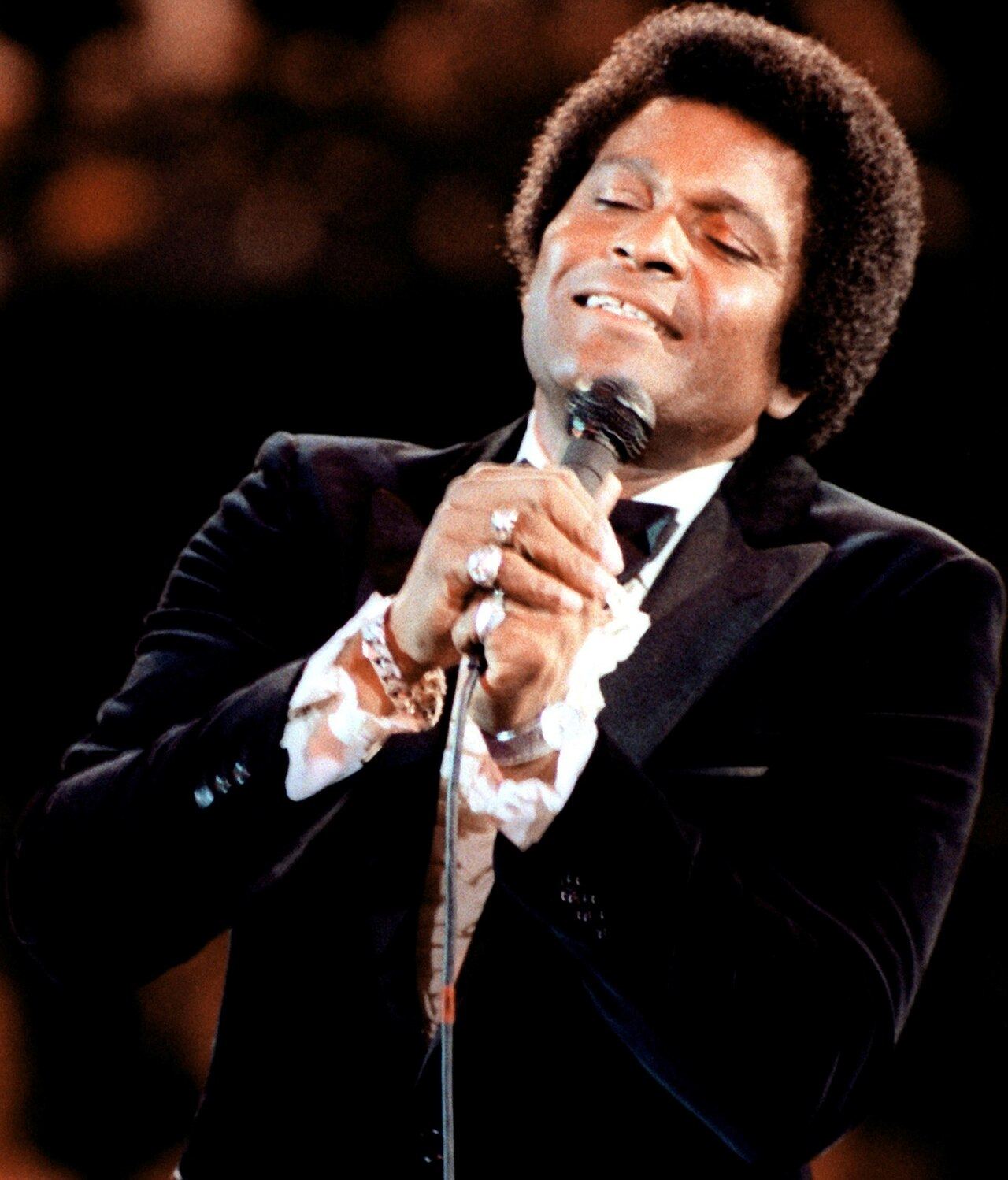
By the time he recorded the song for RCA Victor, Charley Pride had already established one of the most recognizable voices in country music: warm, unhurried and confident without ever sounding showy. He had a talent for delivering lyrics as if he were speaking directly to one person across the kitchen table, and that quality fit “Kiss an Angel Good Mornin’” perfectly.
Pride did not oversell the lyric. He let its ease do the work. That restraint is part of why the record has endured. Rather than turning the song into a dramatic declaration, he made it feel like tested wisdom, passed along with a smile. The performance gave the record both intimacy and broad appeal.
The Ben Peters song found the right home
Ben Peters wrote “Kiss an Angel Good Mornin’,” and its craftsmanship is easy to miss because it sounds so effortless. The lyric is compact, the chorus lands quickly and the central phrase is catchy enough to carry the entire record without feeling forced. That is harder to achieve than it seems.
In Pride, Peters found the ideal interpreter. Produced by Cowboy Jack Clement, the recording balanced country polish with crossover accessibility. Nothing about it feels cluttered. The arrangement supports the vocal, the rhythm moves lightly and the hook is never buried. It is the kind of production that understands the song’s best feature is its plainness.
A country smash that crossed over
Released in 1971, the recording became Charley Pride’s biggest hit. It spent five weeks at No. 1 on the country chart and grew into a million-selling crossover success, reaching far beyond Pride’s core audience. That crossover mattered because it showed how a country record, without sacrificing its identity, could connect with pop listeners through melody and mood alone.
The song’s success also reinforced Pride’s rare position in American music. He was already a major country star, but a hit of this scale turned a strong career song into a signature song. For many casual listeners, “Kiss an Angel Good Mornin’” became the first title associated with his name—and for many longtime fans, it remains the performance that best captures his charm.
Why the record has lasted
Decades later, “Kiss an Angel Good Mornin’” still feels fresh because its appeal is fundamentally human. The lyric offers neither complexity nor cynicism. Instead, it presents romance as a matter of daily attention and kindness. That message, set to a tune that is easy to hum, gives the song an unusual durability.
Its later recognition as a Grammy Hall of Fame recording confirmed what listeners had known for years: this was more than a period hit. It had become part of the shared language of country music. Even people who do not know the full story behind the record often know the chorus, and that is usually the truest sign of a standard.
A signature song in Charley Pride’s legacy
Charley Pride recorded many hits, but signature songs occupy a special place. They distill an artist’s style, persona and emotional range into one performance that seems to stand for an entire career. “Kiss an Angel Good Mornin’” did that for Pride by showcasing his friendliness, his control and his gift for making a lyric sound natural.
It remains a model of how a country hit can be both modest and monumental. There is no gimmick at its center, only a strong song, the right singer and a production that trusted both. In that combination, Charley Pride found a record that not only topped charts but stayed in circulation as a piece of American musical common sense.

Quick Facts
- Song: “Kiss an Angel Good Mornin’”
- Recorded by: Charley Pride
- Written by: Ben Peters
- Producer: Cowboy Jack Clement
- Label: RCA Victor
- Released: 1971
- Noted achievement: Five-week country No. 1 and million-selling crossover hit
- Later honor: Grammy Hall of Fame recording
Image credits: GREG MATHISON / Wikimedia Commons / Public domain; Republic Country Club / Wikimedia Commons / CC BY 2.0; Republic Country Club / Wikimedia Commons / CC BY 2.0.

