
News
Carl Dean and the Quiet Architecture of Dolly Parton’s Private Life
For nearly six decades, Carl Thomas Dean’s refusal of celebrity helped Dolly Parton preserve a marriage, a home life, and a sense of self far from the machinery of fame.

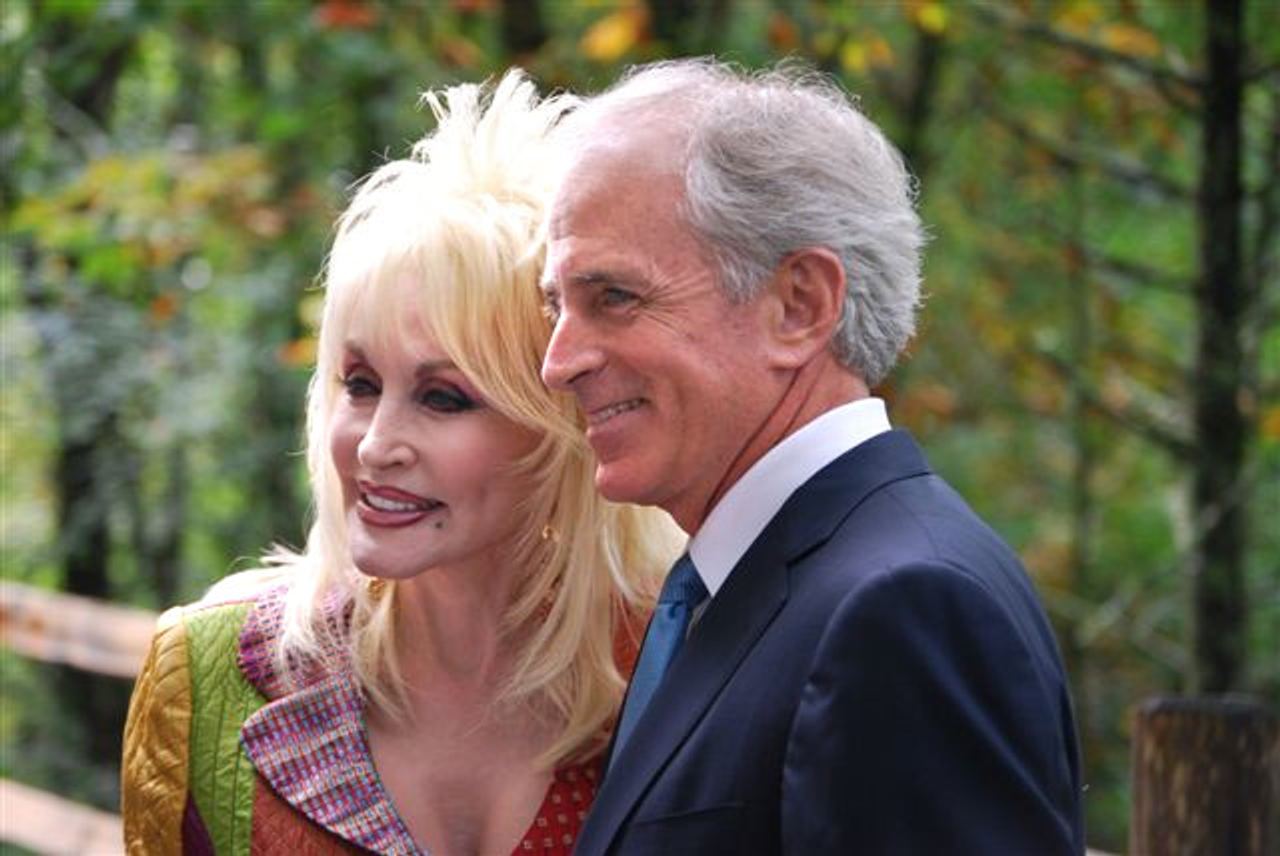
A first afternoon in Nashville, and a meeting that lasted a lifetime
When Dolly Parton arrived in Nashville in 1964, she was at the beginning of the long ascent that would make her one of country music’s most recognizable figures. On that very first afternoon in town, outside the Wishy Washy Laundromat, she met Carl Thomas Dean. It is the kind of origin story that sounds almost too neatly ordinary for a star of her scale: no backstage introduction, no industry cocktail party, just a practical errand in a new city and an unexpected encounter.
What followed was not a glamorous public courtship but the foundation of one of popular music’s most quietly durable relationships. The contrast would become a defining feature of their life together. Parton’s career would expand outward, toward stages, studio lights, film sets, and global audiences. Dean, by temperament and by choice, moved in the opposite direction, toward privacy, routine, and work outside the entertainment business.
A secret wedding across state lines
Two years later, on May 30, 1966, the couple married in Ringgold, Georgia. The decision to leave Tennessee for a private ceremony was deliberate: they wanted to avoid interference from record executives who worried that marriage might complicate the early marketing of a young female performer. In an industry eager to shape image as carefully as sound, even a wedding could be treated as a career risk.
That small act of evasion established a pattern that would hold for decades. Parton understood the demands of ambition and the expectations of the business she had entered. Dean understood, just as clearly, that their relationship would need protection from the same forces. Their marriage began not with spectacle but with distance from spectacle, and that instinct proved enduring.
Their marriage began with a boundary: fame would be her profession, not the governing force of their life together.
The man who declined the spotlight
As Parton’s fame grew, Dean remained committed to his own world, focusing on his asphalt paving business while she built an international career. He was not a shadow manager, a backroom adviser, or a celebrity spouse eager to orbit the main event. His role was almost radical in its simplicity: he stayed out of it. In a culture that often rewards proximity to fame, Dean treated fame as something irrelevant to the daily business of living.
That distance was not accidental. After attending a single industry award dinner early in Parton’s career, he asked never to return to a public entertainment event. She honored that request. The result was an unusually strict separation between public persona and private marriage. While many celebrity couples are drawn into a shared performance of visibility, Parton and Dean built theirs on an agreed refusal.
Two worlds, carefully kept apart
The division between Dolly Parton the superstar and Dolly at home became one of the most effective arrangements in modern celebrity. Onstage, she was dazzling, witty, stylized, and unmistakable. At home at Willow Lake farm in Brentwood, Tennessee, that persona could be set down. Wigs and stage costumes came off. Breakfast was cooked from scratch. Domestic life resumed at human scale.
That separation mattered because it protected more than privacy; it protected identity. In public, Parton became an institution, a brand, and a symbol as much as a person. At home, Dean insisted on continuity. To him, she was still the young woman from Sevier County, not an empire of touring, recordings, and film work. That insistence offered a form of emotional ballast. It reminded her, and perhaps made it easier for her to remember, who existed beneath the performance.
The pleasures of staying out of Nashville’s social current
Their private routine bypassed the usual pathways of celebrity life in Nashville. Rather than circulating through elite parties or dining in the city’s most visible restaurants, they favored a modest camper, drive-through meals, and quiet stops by local rivers. These details matter because they reveal that privacy was not merely defensive. It was also pleasurable. The point was not only to hide but to live differently.
In that sense, Dean did more than avoid attention; he helped create an alternate rhythm that fame could not fully invade. A marriage under commercial pressure often struggles when every space becomes work-adjacent, every dinner a networking opportunity, every outing a chance to be seen. Their answer was to choose spaces where visibility had no value at all. The intimacy of a meal eaten quietly in a parked camper offered something a gala never could: relief from performance.
Why the arrangement endured
Parton’s career demanded almost constant expansion: records, tours, films, interviews, reinvention, and the relentless maintenance of public affection. Such careers can consume the private self that first made them possible. What Dean provided was not strategic branding or polished public support but distance—exactly enough of it to prevent total collapse between the person and the persona.
That may be the least flashy and most consequential gift in this story. By keeping their marriage detached from the entertainment industry, Dean helped preserve a zone where Parton did not have to be the world’s Dolly Parton. Across six decades of commercial demands, that boundary appears to have done what many more glamorous arrangements fail to do: keep the center intact. In the mythology of celebrity, grand gestures usually get top billing. In this marriage, survival seems to have come from something quieter—steadiness, privacy, and the discipline of not turning love into part of the show.
Quick Facts
- Who: Dolly Parton and Carl Thomas Dean
- First meeting: Outside the Wishy Washy Laundromat in Nashville in 1964
- Marriage date: May 30, 1966
- Wedding location: Ringgold, Georgia
- Carl Dean’s work: Asphalt paving business
- Shared home base: Willow Lake farm in Brentwood, Tennessee
Image credits: United States Congress / Wikimedia Commons / Public domain; Curtis Hilbun / Wikimedia Commons / CC BY 3.0; Moeller Talent, Inc. Nashville (management) / Wikimedia Commons / Public domain.

