
News
How “Monday, Monday” Turned an Ordinary Day Into a Lingering Feeling
Released in 1966, The Mamas & the Papas’ “Monday, Monday” wrapped rich harmonies around a subtle unease, turning the start of the week into a pop memory that still resonates.

A hit built on a familiar dread
When The Mamas & the Papas released “Monday, Monday” in 1966, they did something deceptively simple: they took the most routine day on the calendar and made it feel loaded with emotion. The song arrives with warmth—bright vocal blend, polished pop-folk arrangement, a surface so inviting it can almost pass as reassurance. Yet what makes it endure is the opposite of reassurance. It is a song about instability, about how quickly a mood can shift, about the strange way one day can carry more emotional weather than the rest.
That tension is there from the opening lines. Monday is not treated as a villain exactly, nor as a joke. Instead, it becomes unpredictable, almost human. The song understands a feeling most people know without needing to explain it at length: the start of the week can feel heavy not because of one catastrophe, but because of uncertainty itself. In that sense, “Monday, Monday” is less about a calendar date than about vulnerability.
It doesn’t sound dramatic. It sounds honest.
John Phillips and the flash of inspiration
The song is widely associated with John Phillips’ gift for writing material that felt immediate and accessible while carrying more complexity than first impressions suggested. “Monday, Monday” has often been described as arriving in a burst of inspiration, and that speed matters to the way the song feels. It does not sound labored or overly literary. It sounds like a thought someone had in real life and then could not shake.
That directness helped make the song unusually relatable. Phillips did not need a grand concept. He took a common emotional dip and shaped it into language that was plain, melodic, and memorable. In pop music, that is harder than it looks. The trick is not simply naming a feeling, but naming it in a way that sounds as if it had always been there, waiting for someone to sing it aloud.
The harmony that softens the blow
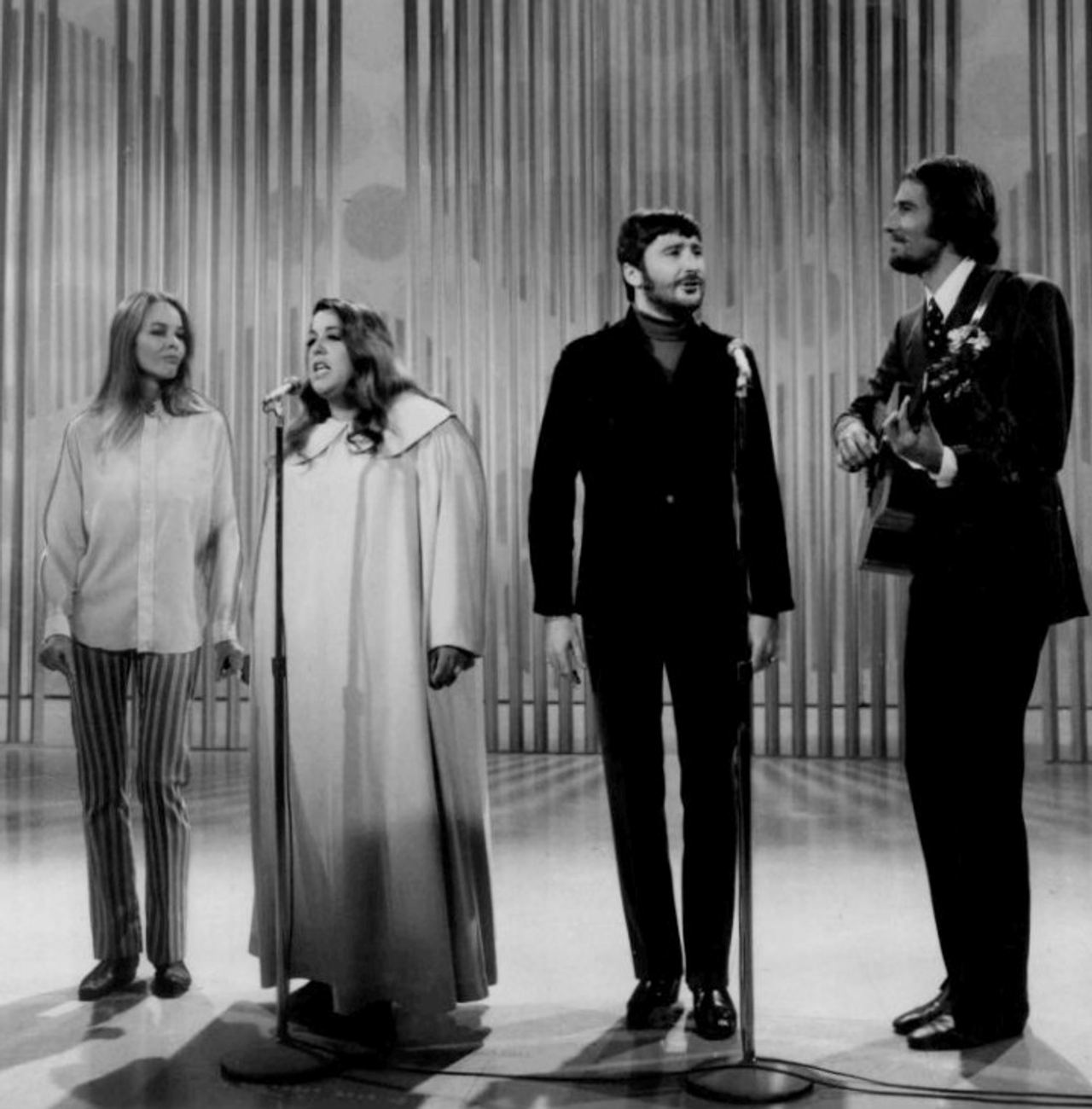
Much of the song’s power comes from the unmistakable sound of The Mamas & the Papas themselves. Their harmonies do not merely decorate the melody; they create the emotional atmosphere. Cass Elliot’s fullness, the group’s interlocking voices, and the clean arrangement give the record a glow that keeps it from sinking into self-pity. It is melancholy with sunlight on it.
That balance may be the reason the record reached such a broad audience. A sad song can alienate; a pretty song can disappear. “Monday, Monday” lands in the space between. Its production is smooth enough to invite repeated listening, but its emotional center remains unsettled. The listener feels comforted and slightly exposed at the same time, which is a rare combination in mainstream pop.
Why the song ruled its moment
In the 1960s, popular music was full of confidence, experimentation, and rapidly changing styles, yet “Monday, Monday” stood out because it did not need flash to make an impact. It was catchy without being restless. It was polished without feeling empty. And it turned an everyday experience into something poetic enough for radio but recognizable enough for ordinary life.
That helped the song connect far beyond the group’s core audience. Everyone knows the feeling of waking up to a week that has already begun making demands. Everyone has felt the little emotional sag that comes when possibility narrows into obligation. By placing that feeling inside a lush, easy-listening frame, The Mamas & the Papas made introspection commercially irresistible.
The emotion people remember, even if they forget the title
Today, “Monday, Monday” occupies a curious place in cultural memory. Many listeners may not reach for it every week, and younger audiences may know the group more generally than this single song in particular. But the emotional idea at its center remains instantly legible. Even people who have not heard the record in years can recognize the mood it describes.
That may be why the song still feels quietly alive. It does not survive only as nostalgia for the 1960s. It survives because Mondays have not changed very much. The anxiety is softer now, maybe more dispersed across modern life, but the emotional truth is intact. The song captured a feeling so ordinary that it risks being overlooked, and then preserved it with uncommon tenderness.
A pop song that made a weekday feel mythic
There are songs about romance, heartbreak, rebellion, longing, freedom—big subjects that announce themselves immediately. “Monday, Monday” is remarkable because it elevates something smaller and more easily dismissed. It turns a weekday into a symbol, and then treats that symbol with seriousness. Not solemnity, but seriousness. It listens closely to a feeling people are usually too busy to name.
That is why the record still matters. Its sadness is quiet, its beauty unforced, and its craftsmanship subtle enough that the listener may not notice how much has been achieved until the song is over. In just a few minutes, The Mamas & the Papas transformed Monday from a schedule into a mood, and from a mood into a memory.
Quick Facts
- Song: “Monday, Monday”
- Artist: The Mamas & the Papas
- Release year: 1966
- Writer: John Phillips
- Signature quality: Rich vocal harmonies with an undercurrent of uncertainty
Image credits: CBS Television / Wikimedia Commons / Public domain; Dunhill / Wikimedia Commons / Public domain; Dunhill Records, subsidiary of ABC Records Inc. / Wikimedia Commons / Public domain.

