
Human Stories
My Son Sold My House—Then My Lawyer Opened the Deed
A father returns home to find his son has tried to sell his house using forged authority and removed his late wife’s belongings. With the help of his lawyer and a fraud investigator, he uncovers the full extent of the deception and reclaims control of his property and life.

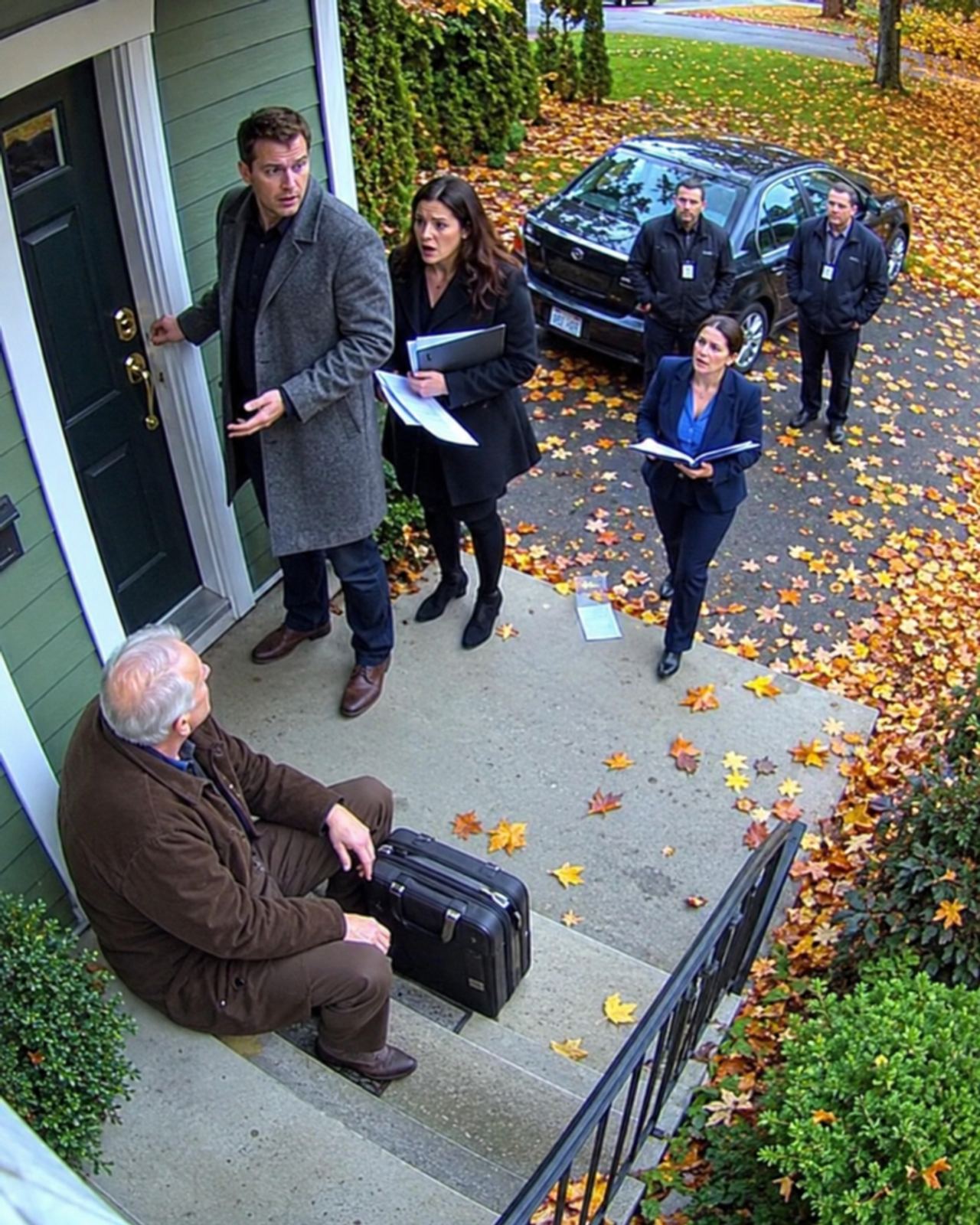
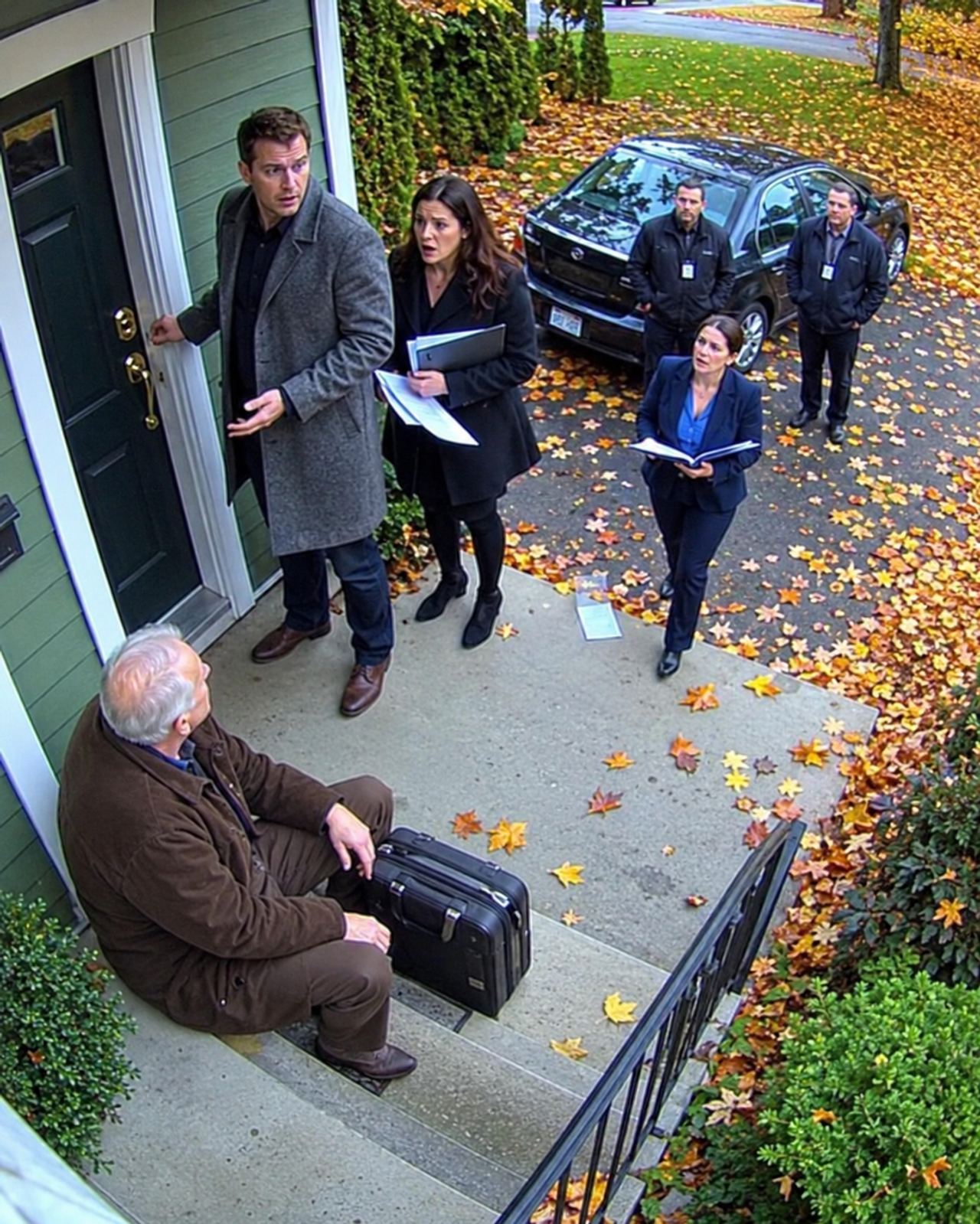
Beverly Tanaka placed the blue folder on the hood of Ryan’s SUV and opened it beneath the cold October light.
“Ryan,” she said, “before you touch that door again, tell Diane whose name is still on the deed.”
My son did not look at me.
He looked at the first page in the folder, then at the fraud investigator standing beside Beverly.
The confidence he had worn into my driveway began to loosen around the edges.
Diane stepped closer.
Her own folder slid from beneath her arm when she saw the red stamp across Beverly’s document.
TRANSACTION FROZEN.
“That can’t be right,” Ryan said.
“I have power of attorney.”
The investigator opened a slim black case and removed a clear evidence sleeve.
Inside was the document Ryan had filed—the document carrying a signature that resembled mine closely enough to pass a hurried glance.
“You have a disputed document under active investigation,” he said.
“The signature appears to have been copied from a roofing contract signed nine years ago.”
Ryan’s face hardened.
“My father authorized me.
He forgets things.”
That was the defense he had prepared.
Beverly had warned me it would come.
Ryan had not merely planned to sell my house.
He had planned to explain my objections as evidence that I could no longer manage my own affairs.
Beverly removed another page from the folder.
“Walter completed an independent capacity assessment twelve days ago,” she said.
“The physician found no impairment affecting his legal or financial decisions.
He also signed sworn statements confirming that he never granted you power of attorney.”
Diane turned toward Ryan.
“You said he had signed everything.”
“He did,” Ryan snapped.
“He just doesn’t remember.”
“Then why was his signature lifted from an old contract?” Beverly asked.
Ryan pointed at me as if I were the person on trial.
“He is sixty-seven years old, living alone in a four-bedroom house.
He fell in his workshop and didn’t tell anyone.
He needs help.”
The words struck me harder than I expected.
I had never told Ryan about that fall.
Only one person besides me could have known: the small motion-activated camera in the workshop, which I used to monitor the back entrance when I traveled.
Ryan had accessed the camera system through the family tablet I had once lent him.
Beverly saw the realization in my face.
“Walter?”
“He watched me,” I said.
“That’s how he knew about the fall.”
The investigator wrote something in a notebook.
Ryan laughed, but there was no humor in it.
“I checked because I was worried.
You could have died on that floor.”
“You did not call me,” I replied.
He opened his mouth, then stopped.
If concern had driven him, he would have phoned the moment he saw me fall.
Instead, he had saved the incident as ammunition.
Diane folded her arms tightly across her chest.
“Ryan, you told me Walter had agreed to move after the fishing trip.”
“He was going to agree.”
“That is not the same thing.”
Before Ryan could answer, the front door opened.
A man I had never seen stepped onto the porch holding Patricia’s jewelry box.
He was in his thirties, dressed in work trousers and a grey sweatshirt.
When he saw the people gathered in the driveway, he froze.
“Who are you?”
I asked.
He looked at Ryan.
“You said the place was empty.”
Ryan moved quickly toward the steps.
The investigator blocked him with one arm.
“Stay where you are.”
The stranger raised the jewelry box as though it might prove his innocence.
“I’m with North Line Clearing.
We were hired to pack the remaining contents.
Mr.Kowalski said the owner had moved into care.”
“I am the owner,” I said.
The man’s face drained of color.
Patricia’s jewelry box was walnut with a brass clasp, made by my father for our wedding.
Inside were her rings, a silver locket, and the pearl earrings she wore every Christmas Eve.
I had left it locked inside the bedroom cabinet before my trip.
Beverly walked toward the porch.
“Put the box down carefully,” she said.
“Then tell the investigator who hired you and what you have already removed.”
The man set it on the top step.
He explained that Ryan had contacted his company three days earlier.
The crew had been told I had entered assisted living and that everything marked with blue tape should go to a storage unit.
Furniture marked with red tape was to be taken to an auction warehouse.
My dining table had red tape.
So did the maple rocking chair I had built for Patricia when she was pregnant.
“Where are they?” I asked.
“The storage unit is on Lorne Street,” he said.
“The auction pickup is tomorrow.
Nothing has been sold yet.”
For the first time since arriving, I felt my calm begin to break.
The house was one kind of theft.
Patricia’s things were another.
I stepped toward Ryan.
“You marked your mother’s chair for auction?”
He looked away.
“We couldn’t keep everything.”
“It was not yours to keep.”
Mrs.
Donnelly had left her house and crossed the street.
She stood at the bottom of the driveway in slippers and a quilted coat.
“Walter,” she called, “I saw a truck here Saturday.
I took pictures because it seemed strange.”
Ryan closed his eyes.
Beverly asked Mrs.
Donnelly to send the photographs to her.
The images showed Ryan directing movers through my front door.
One captured Diane carrying boxes from the spare bedroom.
Another showed the locksmith changing the deadbolt.
The timestamp placed them inside my home two days before Ryan claimed he had needed to act urgently for the buyers.
The buyer’s lawyer, a tall woman named Priya Desai, had remained near the sedan, listening without interruption.
She now stepped forward.
“For clarity,” she said, “my clients did not request early possession.
They were told the house was vacant and that Walter Kowalski had permanently relocated.
When my office attempted to verify the power of attorney, Mr.
Kowalski’s lawyer contacted us.
We agreed to preserve the transaction records and suspend closing.”
Ryan turned on her.
“You were supposed to represent the buyers, not set me up.”
“I represent my clients,” Priya said.
“They were nearly induced to purchase property from someone without authority to sell it.”
Beverly handed the investigator a second evidence sleeve.
It contained printed emails recovered from the real-estate file.
Ryan had written that I was suffering from rapid cognitive decline.
He claimed I had become aggressive when discussing money.
He said the family had been forced to move me for my own protection.
Every word had been designed to make my absence seem reasonable and my objections unreliable.
Diane read one of the emails over Beverly’s shoulder.
“You said he was violent?”
Ryan lowered his voice.
“It was language the lawyer needed.”
“You wrote that he threatened the children.”
“I was protecting us.”
“From what?”
He had no answer that could survive being spoken aloud.
The investigator asked Ryan and Diane to remain in the driveway while another officer came to secure the house and document its condition.
He explained that no one was being arrested at that moment, but that the suspected forged document, attempted property transfer, unauthorized removal of belongings, and access to my accounts would all be investigated.
Ryan tried one last time to regain control.
“Dad, tell them this is a family misunderstanding.
We can fix it privately.”
I looked at the son I had taught to ride a bicycle on that driveway.
I remembered sitting beside his hospital bed when he broke his wrist at fourteen, lending him the down payment for his first home, and watching Patricia defend him whenever I thought he was becoming careless with money.
“You changed the locks,” I said.
“You packed your mother’s things.
You told strangers I had lost my mind.
Which part was the misunderstanding?”
His voice dropped to a whisper.
“I needed the money.”
Diane stared at him.
The truth came out in pieces.
Ryan’s consulting business had been failing for more than a year.
He had hidden tax debts, credit cards, and a private loan secured against his own house.
He believed the sale of my property would produce enough money to clear everything before Diane discovered how close they were to losing their home.
Because he had been added to one of my bank accounts for emergencies, he knew approximately how much cash I held.
It was not enough.
The house was the only asset large enough to rescue him.
He had convinced himself that he was merely taking his inheritance early.
“The house comes to me eventually,” he said.
“You don’t need seven hundred thousand dollars tied up in brick.”
Beverly’s expression turned cold.
“An expected inheritance is not ownership,” she said.
Diane backed away from her husband.
“You told me the business had recovered.”
“I was trying to keep us together.”
“By committing fraud with my email account?”
That caught Beverly’s attention.
Diane admitted that Ryan had asked to use her laptop because his was being repaired.
He had drafted several messages and told her they related to my voluntary move.
She had sent one instruction to the locksmith after Ryan assured her I had authorized the change.
But Mrs.Donnelly’s photographs showed Diane carrying my documents.
The investigator asked what she had removed.
Diane began to cry.
She had taken the filing box containing my will, tax records, property appraisal, and Patricia’s death certificate.
Ryan said the papers were needed for the retirement residence and the sale.
Diane had known I was away and had never spoken to me directly.
“I should have called you,” she said.
“Yes,” I answered.
“You should have.”
Her tears did not erase her choice, but I could see the difference between her panic and Ryan’s calculation.
She had accepted his lies because they made their financial problems easier to ignore.
That was not innocence.
It was cowardice.
The officers entered the house with me and Beverly.
My home looked familiar from the doorway, but every room had been disturbed.
Cupboard doors stood open.
Photographs had been removed from the walls.
Boxes lined the hallway, each marked KEEP, STORAGE, or AUCTION.
In the bedroom, Patricia’s side of the closet was empty.
I gripped the doorframe.
For three years, I had left her dresses hanging there.
I knew it was irrational.
I knew she was not coming back for them.
But grief does not obey logic, and their presence had made the room feel less final.
Now they were gone without my permission.
Beverly stood beside me without speaking.
After a moment, she said, “We will find everything.”
The clearing-company supervisor called his crew.
Before sunset, he produced an inventory of every removed item, the storage-unit number, and the auction manifest.
The company suspended all further work and later returned the property at its own expense.
Patricia’s clothes came back in clear plastic garment bags.
The rocking chair returned with a scrape along one arm.
My dining table had been loaded onto a truck but not yet transported.
The jewelry was intact.
The legal damage took longer to unwind.
Beverly obtained an order preventing any dealing with the property while the investigation continued.
The sale agreement was terminated after the buyers received confirmation that Ryan had no valid authority.
Their deposit was returned from the real-estate trust account, and they pursued their own costs through counsel.
A forensic examiner compared the power-of-attorney signature with my genuine records.
The false signature contained identical pen movements and spacing to the one on the old roofing contract, including a tiny hesitation where my pen had caught on the paper.
It had not merely been imitated.
It had been digitally copied and printed onto the document.
Computer records linked the file to Ryan’s home office.
Bank records showed two unauthorized transfers from my joint-access account totaling $18,400.
Ryan had labeled them property preparation expenses.
In reality, most of the money had gone toward his private debts.
I had overlooked the transfers because Beverly had advised me not to alert him while she preserved the evidence.
The moment the records were secured, the bank froze his access and opened its own investigation.
Ryan continued insisting that he had acted for my benefit.
That argument collapsed when investigators recovered messages between him and a lender.
In one, he wrote, Once the old man’s place closes, I can clear you in full.
In another, sent after I left for Chapleau, he wrote, He’ll be angry for a week, but once he’s in the residence, he won’t have the energy to fight it.
That sentence stayed with me longer than the forged signature.
Ryan had not underestimated my intelligence.
He had underestimated my will.
Diane eventually cooperated fully.
She surrendered her laptop, provided passwords, and admitted her role in entering the house and removing documents.
Her lawyer negotiated an outcome that required restitution, community service, and a formal undertaking to stay away from my property.
The exact consequences differed from Ryan’s because the evidence showed he had created the forged document, directed the sale, and moved the money.
Ryan accepted a plea resolving charges related to the forged authorization, attempted fraud, and the unauthorized funds.
He was ordered to repay what he had taken, cover a portion of the documented losses, and comply with strict conditions.
His professional reputation collapsed.
The consulting business he had tried to save closed before the case ended.
No sentence restored what had existed between us.
For months, Ryan sent messages through his lawyer asking to speak with me.
Some were apologetic.
Others explained his pressure, his fear, and his belief that everything would have worked out once the debts were paid.
I answered only once.
I wrote that desperation might explain why he wanted my house, but it did not explain why he was willing to erase my voice to take it.
My grandchildren were the hardest part.
Diane brought them to meet me at a café after Beverly confirmed the arrangement was safe.
They knew only that their parents had made serious mistakes involving my home.
I did not burden them with adult details.
My grandson asked whether he could still visit the workshop.
“Of course,” I said.
“None of this is your fault.”
Keeping that promise required boundaries I had never imagined setting against my own son.
Ryan could not come to the house.
Messages about the children went through Diane or a family counselor.
Every financial account was changed.
Every key, password, and emergency contact was replaced.
I also installed a monitored alarm system.
For several weeks after the locks were restored, I woke at night and listened for movement downstairs.
Betrayal changes the sound of a familiar house.
Pipes settling in the walls became footsteps.
Headlights crossing the bedroom ceiling became another vehicle entering the driveway.
But the house slowly became mine again.
Mrs.Donnelly helped me rehang the photographs.
Gerald repaired the scrape on Patricia’s rocking chair.
My granddaughter placed the pearl earrings back inside the walnut jewelry box and asked me to tell her when her grandmother had worn them.
So I told her about Christmas Eve dinners, Patricia’s terrible habit of singing before she remembered the words, and the way she could silence an argument by lifting one eyebrow.
In the spring, the tulips returned beside the porch.
I repainted the front door the same forest green Patricia had chosen in 1987.
When the paint dried, I installed a new brass lock myself.
Not because the old replacement was defective, but because I wanted the final turn of the screwdriver to belong to me.
Beverly visited that afternoon carrying a small envelope.
Inside was the updated deed search showing my name, alone and unchallenged, attached to the property.
I placed it in a new fireproof safe rather than the old filing cabinet.
“Are you still planning to stay here?” she asked.
I looked through the front window at the dining table, the restored rocking chair, and the family photographs back in their places.
“For now,” I said.
“But the important part is that the decision is mine.”
That was what Ryan had never understood.
The house mattered because Patricia and I had built a life inside it.
But ownership was not only about brick, land, or money.
It was the right to decide what happened to the life I had left.
My son tried to take that right by calling control concern, theft inheritance, and resistance confusion.
He believed age had made me easier to move.
Instead, it taught me when to stop arguing, gather evidence, and let the truth carry the weight.
Read more stories
- As my father’s funeral ended, the cemetery caretaker whispered that Richard Sinclair had paid him to bury an empty casket, then slipped me a brass key and warned me not to go home—because the grave was never meant to hold a body, only the first secret
- The Queen of Soul: Why Aretha Franklin Quit Flying Forever
- BILL MONROE PUT HIS UNCLE’S NAME IN THE TITLE — AND FIFTY-TWO YEARS AFTER THE OLD FIDDLER DIED, THAT NAME WENT TO NO. 1.
- “Uncle John, I’m hungry,” five-year-old Lucy whispered over the phone at 12:43 a.m., barely able to speak while her mother, Jean Kane, was gone for the night. John Hail, Lucy’s construction-worker uncle, broke into his late brother Elias’s house and found the little girl curled beside the couch, cold, weak, and terrified. Jean came home in a black dress, smelling like perfume and wine, and threatened to call the police. John didn’t argue. He wrapped Lucy in his jacket and carried her out