Stories
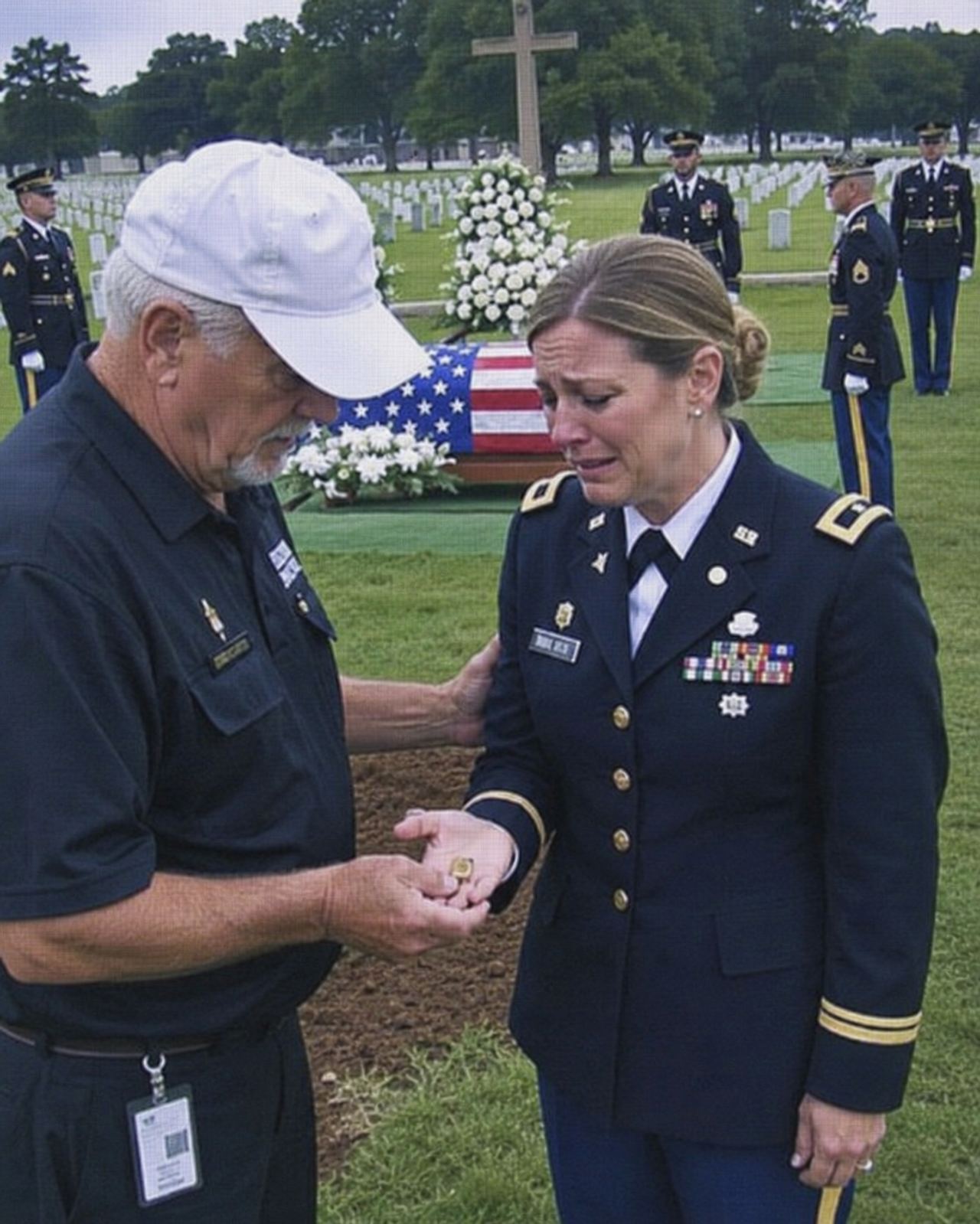
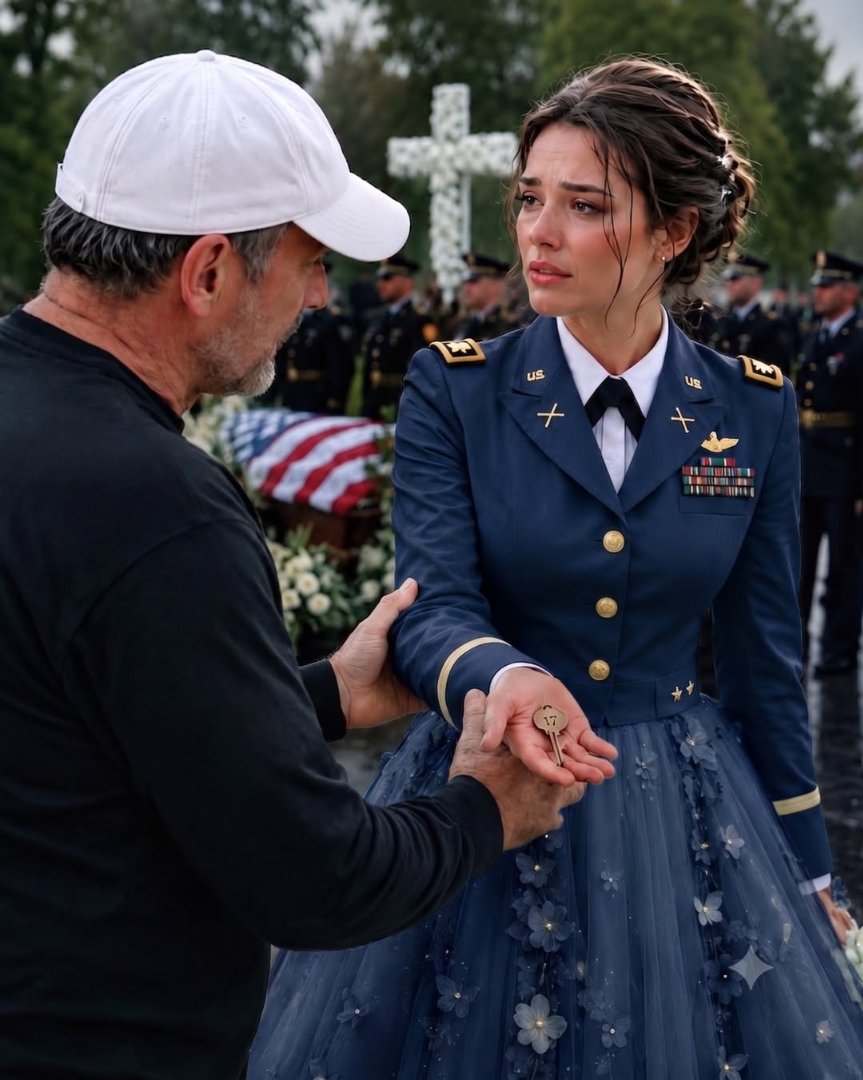
As my father’s funeral ended, the cemetery caretaker whispered that Richard Sinclair had paid him to bury an empty casket, then slipped me a brass key and warned me not to go home—because the grave was never meant to hold a body, only the first secret
At a funeral, a colonel discovers her father may not be dead after all and is drawn into a hidden world of forged identities, political corruption, and a long-buried family secret. With the help of an FBI agent, she uncovers the truth behind an empty casket and a false paternity record.
The beeping inside Unit Seventeen
The beeping came again.
Slow.
Even.
Deliberate.
Not loud enough to sound like an alarm, but too steady to be random.
The FBI agent’s hand moved beneath her black coat.
“Step behind me, Colonel.”
I almost laughed.
For twenty years, I had given that command to other people.
Now, standing in front of Route Nine Storage with my father’s brass key in my hand and my mother’s unanswered call vibrating on my phone, I obeyed.
The agent drew her weapon with one hand and reached for the storage-unit latch with the other.
“What’s your name?” I asked.
She glanced at me.
“Agent Mara Ellison.”
The name meant nothing to me.
But my father had told me to trust the woman waiting there.
So I did.
I slid the brass key into the lock marked 17.
It turned easily.
Too easily.
As if someone had oiled it recently.
Agent Ellison lifted the door.
The smell hit me first.
Dust.
Metal.
Old paper.
And beneath it, the sharp electrical scent of a battery running hot.
Inside the storage unit were rows of labeled boxes stacked with military precision. Not random belongings. Not forgotten furniture. Files.
Equipment cases. Sealed evidence bins. A folding table stood in the center beneath a battery-powered lamp.
On that table was the source of the beeping.
A small black device.
A timer.
Its red numbers counted down from five minutes.
I stepped forward.
Agent Ellison caught my arm.
“Don’t touch anything.”
“I know what a timer looks like.”
“Then you know we don’t assume what it’s connected to.”
My pulse slowed.
Training took over.
I scanned the floor. No exposed wires. No disturbed dust near the threshold. No chemical odor.
No pressure plate beneath the table.
But the timer was not alone.
Beside it sat an old cassette recorder, a sealed laptop, three passports with my father’s photograph under different names, and a folder labeled:
BEATRICE — ONLY AFTER THE FUNERAL.
My throat tightened.
Agent Ellison called it in, speaking quickly into her radio.
Then the timer hit zero.
The beeping stopped.
Nothing exploded.
Instead, the cassette recorder clicked on.
My father’s voice filled Unit Seventeen.
“Beatrice, if you are hearing this, then the caretaker did his job, Mara reached you first, and your mother has already tried to bring you home.”
I stopped breathing.
He sounded older.
Tired.
But alive.
Not alive in the room.
Alive in the plan.
“I am sorry for the grave,” he continued. “I am sorrier for the body you were made to identify.
But you were never meant to grieve me today. You were meant to survive what happens next.”
Agent Ellison’s expression hardened.
She had heard this before.
Or at least part of it.
My father’s voice lowered.
“Twenty-three years ago, I testified against a private intelligence network operating inside federal disaster contracts. Names were sealed. Trials vanished.
Careers were protected. I thought it ended there.”
The lamp buzzed above us.
“It did not.”
I looked at the boxes around me.
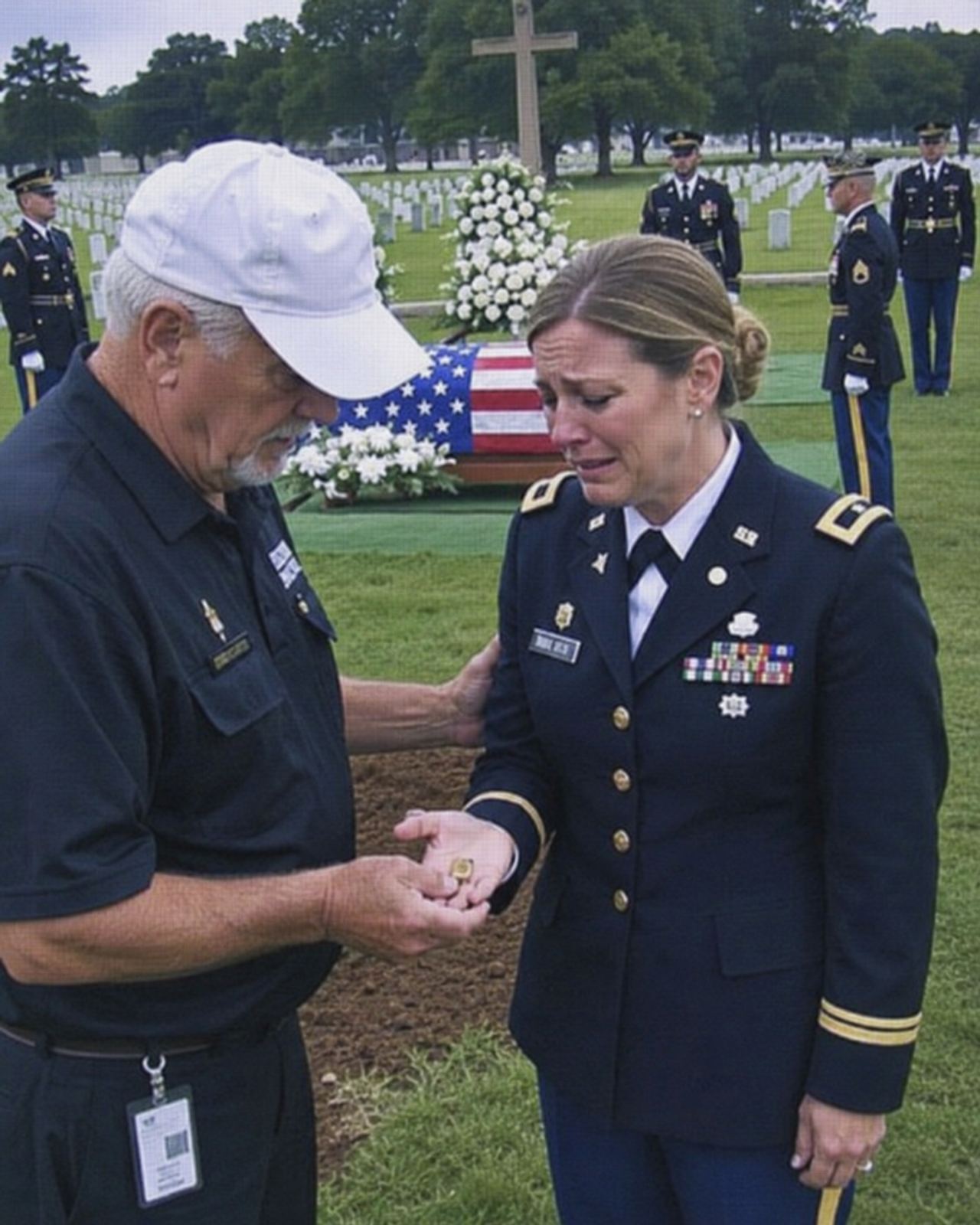
Suddenly, Unit Seventeen no longer felt like storage.
It felt like a war room.
“Your mother was not part of it at first,” my father said.
At first.
Those two words cut through me.
“She was approached after you enlisted. They told her my testimony would destroy our family if it ever came out.
They told her your career would be buried before it began. They offered safety in exchange for silence.”
My phone lit up again.
Mom.
This time, a text followed.
Beatrice, please. Come home. They’re here.
Agent Ellison looked at the screen.
“Don’t answer.”
I turned the phone face down.
My father’s recording continued.
“If she calls, she is not alone. If she texts, assume someone is watching her write.
Do not hate her before you know everything. But do not trust her before you see proof.”
My eyes burned.
For three days, my mother had sobbed beside a coffin.
Had those tears been real?
Had anything been real?
The tape clicked, then my father’s voice became sharper.
“Inside the blue evidence bin is the reason I needed the world to believe Richard Sinclair was dead.”
Agent Ellison opened the lid carefully.
Inside were photographs, bank records, military personnel files, and a hard drive sealed in plastic.
On top was a recent photo of my mother standing outside our house.
Beside her stood a man I recognized from my childhood.
Senator James Weller.
A man who had attended my promotion ceremony.
A man who had called my father his oldest friend.
My stomach turned cold.
Agent Ellison whispered, “We thought he was dead.”
I looked at her.
“Who?”
She tapped the photograph.
“The man your father testified against.”
Before I could answer, tires screamed outside the storage facility.
A black SUV stopped beyond the gate.
Then another.
Agent Ellison shut the bin.
“We have to move.”
But I had already seen the final page inside the folder labeled with my name.
It was not evidence.
It was a birth certificate.
Mine.
Except my mother’s name was not listed.
And beneath “father” was not Richard Sinclair.
It was Senator James Weller.
The world narrowed to one sheet of paper.
Then gunfire cracked outside the storage office.
Agent Ellison grabbed my arm.
“Colonel, your father didn’t fake his death to hide from them.”
She pushed me toward the back exit.
“He faked it because he finally found proof of who you really are.”
The sound was sharp, final, familiar.
I had heard gunfire in deserts, alleys, and places whose names never appeared in reports.
But nothing had ever sounded like that bullet hitting the place where my father had hidden my life.
I gripped the folder against my chest.
My birth certificate.
My name.
But not my mother’s.
Not Richard Sinclair’s.
Senator James Weller.
The man Agent Ellison said my father had testified against.
The man the FBI believed was dead.
The man whose name now sat beneath “father” on a document that should have explained my beginning, not destroyed it.
We ran through a narrow service corridor behind the storage units while Agent Ellison spoke into her radio.
“Shots fired. Route Nine Storage. Move in now.”
Behind us, men shouted.
Ahead of us, rain hammered the pavement.
A black sedan waited near the back fence with its engine running.
Agent Ellison opened the passenger door.
“Get in.”
I did not move.
“My mother is at home.”
“She is surrounded.”
“Then we go there.”
Agent Ellison looked at me with the hard patience of someone who had already seen good soldiers run toward traps.
“Colonel, your father’s instructions were clear. Do not go home until you understand why.”
I lifted the birth certificate.
“Then explain this.”
She hesitated.
That hesitation told me the truth had teeth.
“Richard Sinclair was not listed on that certificate,” she said quietly, “because someone made sure he could never legally claim you if the original file surfaced.”
The world seemed to narrow around the rain.
“Was Weller my father?”
Agent Ellison’s expression softened, but only slightly.
“Biologically, yes.”
The word hit like impact.
Biologically.
A clean word for a filthy truth.
“My mother?”
“She was young. Isolated. Working in one of Weller’s campaign offices before he entered the Senate.
Your father found her after she disappeared from public records. Pregnant. Threatened. Terrified.”
Richard Sinclair had not given me his blood.
He had given me his name.
His house.
His hands teaching me how to ride a bicycle.
His quiet pride at my graduation.
His voice on every phone call before deployment.
He had chosen me.
And choice suddenly felt stronger than blood.
Agent Ellison opened the driver’s door.
“Richard testified against Weller’s network, but when the case was sealed, Weller’s people kept enough influence to survive.
Your existence was leverage. Your mother’s silence was bought with fear.
Richard spent twenty-three years rebuilding the case without exposing you.”
My phone buzzed again.
Mom.
This time, a video message appeared.
Agent Ellison shook her head.
“Don’t open it.”
I looked at the screen.
My mother’s face appeared in the preview, pale and frightened.
I opened it anyway.
She was sitting in our dining room. Her hands were folded on the table.
Behind her, just out of focus, stood Senator James Weller.
Alive.
Older.
Smiling.
“Beatrice,” my mother whispered, “I’m sorry.”
Weller leaned into the frame.
“Come home, Colonel. Bring the folder.
Or the woman who raised you beside Richard dies with the last of your questions.”
The video ended.
For one second, I could not breathe.
Then the grief left.
The confusion left.
All that remained was training.
I looked at Agent Ellison.
“We’re going home.”
This time, she did not argue.
By the time we reached the Sinclair house, the street looked empty.
Too empty.
No neighbors outside. No cars passing. No lights except the porch lamp my mother always left on after funerals.
Agent Ellison’s team was already positioned three houses down.
I stepped from the sedan in my dress uniform coat, the folder tucked beneath my arm.
Not hidden.
Visible.
Bait only works when the predator can see it.
The front door opened before I reached the porch.
Senator Weller stood inside my childhood home as if he had every right to be there.
He smiled at me.
“Colonel Sinclair.”
I looked past him.
My mother sat in the dining room, alive, trembling, and crying silently.
“Let her go,” I said.
Weller chuckled.
“You sound just like Richard.”
“Good.”
His smile faded.
I walked inside.
Agent Ellison remained behind me, just outside the threshold, her weapon low but ready.
Weller noticed.
“You should have come alone.”
“My father raised me better than that.”
For the first time, his eyes sharpened.
“Richard was never your father.”
I held his gaze.
“He was the only one who earned the word.”
Something ugly crossed Weller’s face.
Then a voice came from the hallway behind him.
“Thank you, Bee.”
My heart stopped.
Richard Sinclair stepped out of the shadows.
Alive.
Thinner.
Older.
His face lined with exhaustion, but his eyes were the same.
The eyes that had watched me leave for West Point.
The eyes that had never once looked at me like I was borrowed.
“Dad,” I whispered.
My mother broke down.
Weller turned violently, reaching beneath his jacket.
Agent Ellison moved first.
So did Richard.
I heard the shout.
The crash.
The command for Weller to freeze.
Then federal agents flooded the house from every entrance.
In less than ten seconds, the man who had haunted my family for decades was on his knees in the home he had tried to destroy.
But the final blow did not come from a weapon.
It came from the sealed laptop in Unit Seventeen.
Richard had built a dead-man trigger into the timer.
When it reached zero, every file in the storage unit copied to the FBI, the Inspector General, and three federal judges who had not been part of Weller’s old circle.
Bank records.
False identities.
Disaster-contract payments.
Witness intimidation.
The forged birth certificate.
And recordings of Weller threatening my mother, my father, and me before I was old enough to speak.
My mother told the truth that night.
Not because she was innocent.
Because fear had finally lost its grip.
She had helped hide things. She had lied. She had obeyed men who told her silence would keep me safe.
She had watched Richard fake his own death because it was the only way to draw Weller out before the network erased the evidence again.
I did not forgive everything in one night.
Life does not work that cleanly.
But when Richard stood in front of me, alive and shaking, I stepped into his arms like the child I had not allowed myself to be at his grave.
“I saw the birth certificate,” I whispered.
His arms tightened around me.
“I know.”
“You’re not—”
“I am your father,” he said, voice breaking. “Not because a document says so. Because I stayed.
Because I loved you. Because every choice I made after the day you were born was to keep you alive.”
Outside, agents led Senator Weller into the rain.
My mother sat in silence at the dining table.
Agent Ellison gathered the evidence.
And the empty coffin I had watched sink into the earth no longer felt like a betrayal.
It had been a doorway.
A final mission planned by the first man who ever taught me that courage was not the absence of fear.
It was choosing who to protect when fear came for everyone.
By dawn, Richard Sinclair’s grave was still empty.
But the secret it had been built to expose was finally buried where it belonged.
This is a fictional story with fictional characters.
The sole purpose of this article is to provide readers with entertaining stories. We hope you have a great experience.
Thank you!
Read more stories
- The Queen of Soul: Why Aretha Franklin Quit Flying Forever
- BILL MONROE PUT HIS UNCLE’S NAME IN THE TITLE — AND FIFTY-TWO YEARS AFTER THE OLD FIDDLER DIED, THAT NAME WENT TO NO. 1.
- “Uncle John, I’m hungry,” five-year-old Lucy whispered over the phone at 12:43 a.m., barely able to speak while her mother, Jean Kane, was gone for the night. John Hail, Lucy’s construction-worker uncle, broke into his late brother Elias’s house and found the little girl curled beside the couch, cold, weak, and terrified. Jean came home in a black dress, smelling like perfume and wine, and threatened to call the police. John didn’t argue. He wrapped Lucy in his jacket and carried her out
- A little girl stopped me on a busy city sidewalk and asked for a pair of school shoes. The shoes cost me just $45. What I didn’t know was that her desperate promise to repay me one day would lead me to a dying secret, a struggling mother, and a truth powerful enough to change my life forever.