
Human Stories
“I Told My Son It Wasn’t His Fault” — But The Boy Under The Hospital Blanket Carried A Secret That Broke Every Adult In The Room
A father recounts his son’s heartbreaking hospital awakening, the viral spread of a family video, and the painful investigation that followed. The story closes with healing, accountability, and the child’s eventual understanding that none of what happened was his fault.

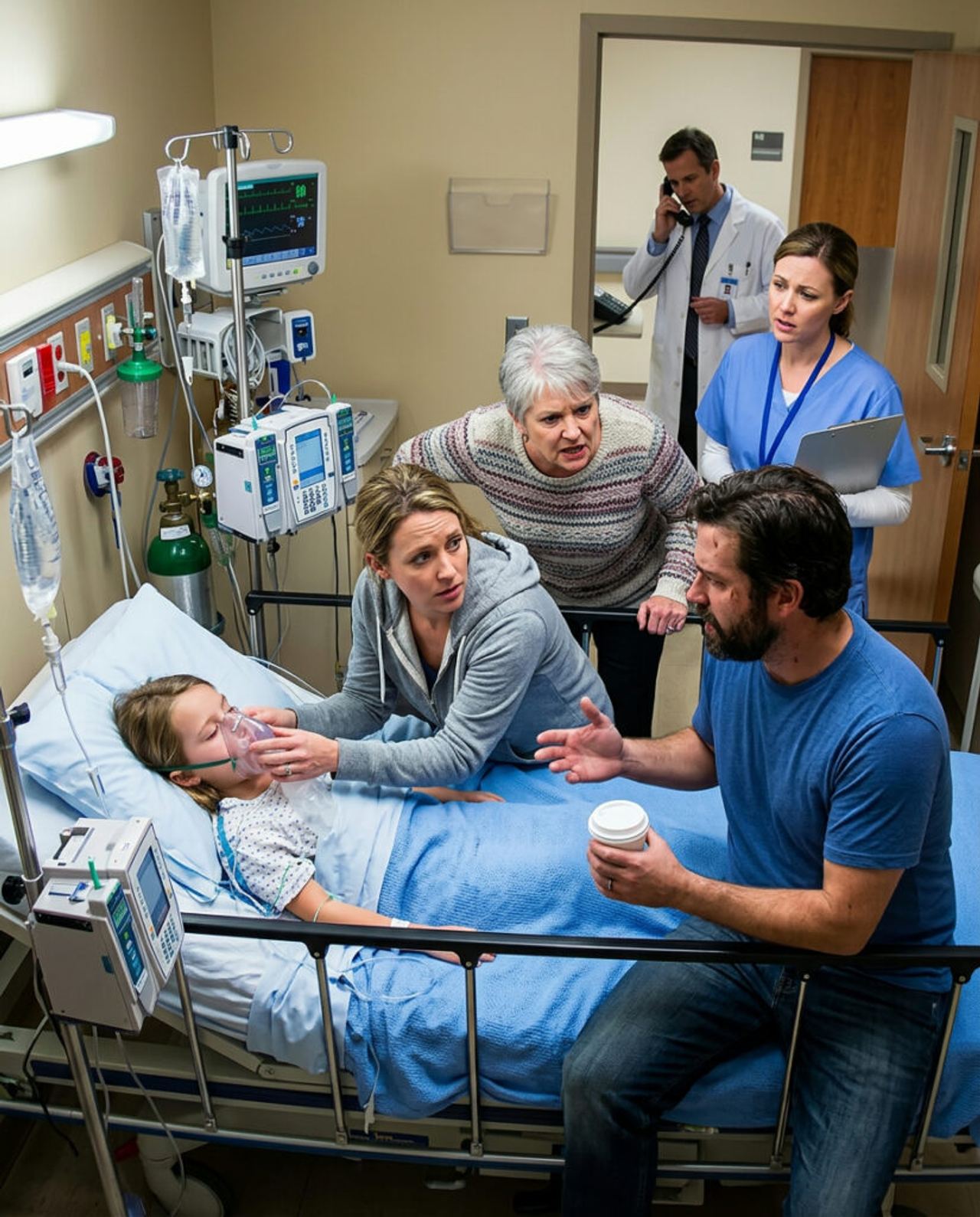
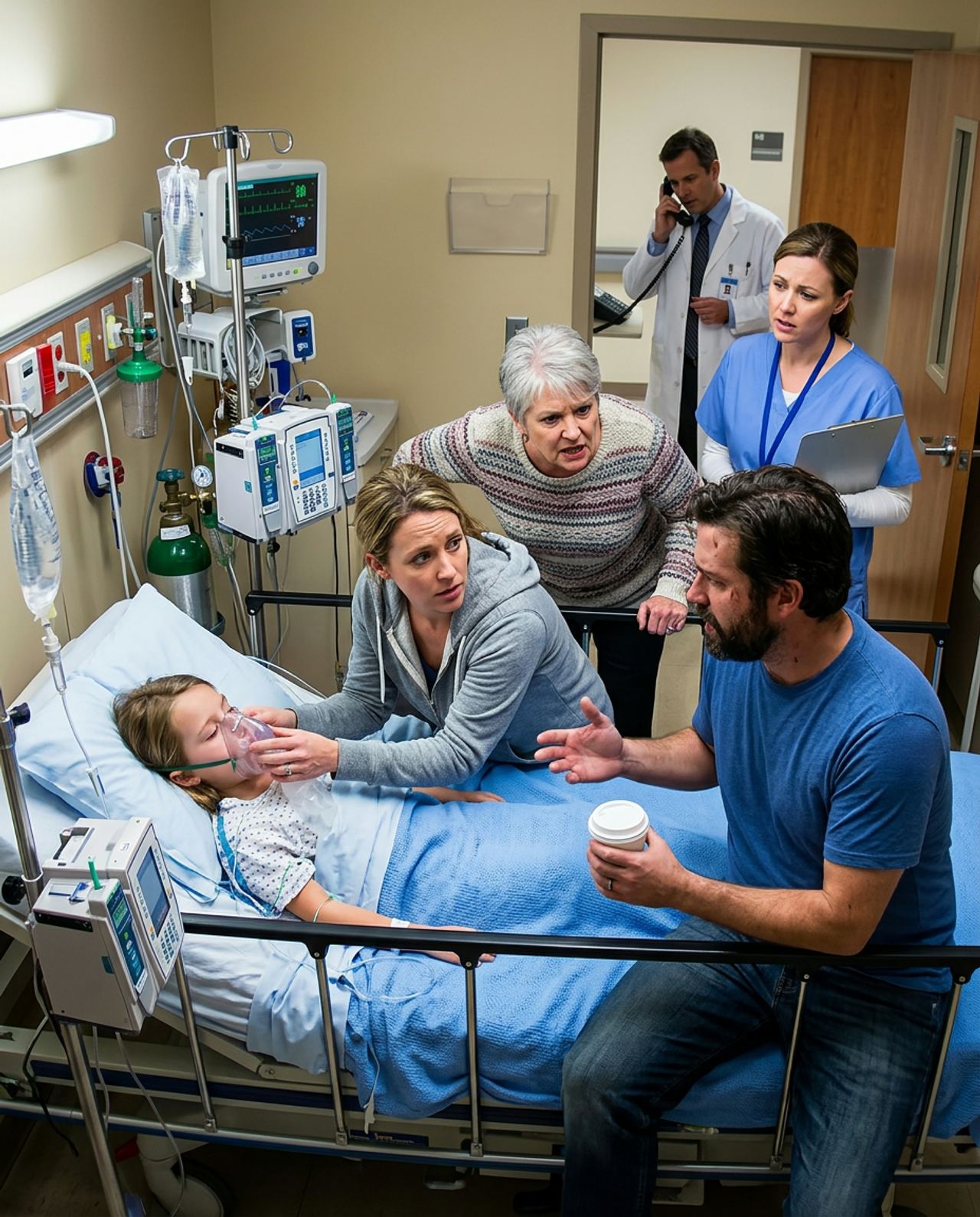
The first thing my son asked when he woke up was not whether he was hurt.
It was not whether he would have to stay in the hospital.
It was not even why his legs were wrapped in bandages.
Instead, he looked up at me with swollen eyes and whispered something that still wakes me in the middle of the night.
“Is Grandma mad at me?”
For a moment, I couldn’t breathe.
The machines beside his bed continued their steady rhythm.
The fluorescent lights hummed softly overhead.
Outside the window, winter rain crawled down the glass.
But inside that room, everything stopped.
Because the child lying beneath those blankets was asking whether the woman who helped cause his suffering was angry with him.
Not whether she loved him.
Not whether she was sorry.
Whether she was angry.
I grabbed his hand immediately.
“No,” I said.
My voice cracked.
“No, buddy. None of this is your fault.”
But guilt does not listen when the person you love most is small enough to disappear under a hospital blanket.
His eyes filled with tears.
“I ruined Christmas.”
The words hit harder than any punch.
I felt something inside me break.
The doctors later told us that children often blame themselves.
When adults fail them, they search for explanations.
And because children cannot understand cruelty, they usually decide the problem must be them.
That realization was more painful than anything else.
Because my son was not suffering from an accident.
He was suffering from betrayal.
And betrayal leaves wounds that no X-ray can detect.
The story had already begun spreading through our town.
At first it moved quietly.
A few neighbors.
A few parents from school.
Then one nurse posted a vague message online.
No names.
No details.
Just a simple sentence.
“Sometimes the worst injuries aren’t caused by strangers.”
Within twenty-four hours, thousands of people were sharing it.
Nobody knew exactly what happened.
But everyone knew something terrible had occurred.
Meanwhile, my phone would not stop ringing.
Reporters.
School administrators.
Concerned parents.
Relatives who had ignored us for years.
Everyone suddenly wanted answers.
Most of them were too late.
The people who mattered were sitting beside my son’s hospital bed.
And one of those people was Detective Harris.
He arrived carrying a thick folder.
His expression told me everything before he spoke.
“We reviewed the footage.”
I stared at him.
“What footage?”
“The footage your sister uploaded.”
The room became silent.
I had forgotten about the video.
Not because it wasn’t important.
But because my son mattered more.
My sister had filmed everything.
Every scream.
Every cry.
Every second of panic.
She had uploaded it for entertainment.
For likes.
For attention.
For strangers’ laughter.
What she didn’t realize was that she had documented evidence.
Evidence that investigators now possessed.
Detective Harris opened the folder.
“There are over three million views.”
Three million.
The number sounded impossible.
Three million people had watched a child suffer.
Three million opportunities for someone to say this wasn’t okay.
Three million reminders of how easily cruelty becomes entertainment.
The detective slid several pages across the table.
“Thousands of comments.”
I didn’t want to read them.
But I did.
Some were supportive.
Some were horrified.
Many demanded accountability.
Others were worse.
Much worse.
People laughed.
People joked.
People created memes.
People treated my son’s pain like content.
I felt sick.
Then Detective Harris showed me something else.
A separate stack.
Emails.
Messages.
Screenshots.
“These came from viewers,” he explained.
At first I didn’t understand.
Then I began reading.
One woman from Texas wrote that she had survived childhood abuse and recognized the signs immediately.
A teacher from Ohio reported concerns after watching the clip.
A pediatric nurse from Colorado contacted authorities herself.
Hundreds of strangers had done more to protect my child than members of our own family.
That realization changed me.
The internet can be cruel.
But sometimes it becomes something else.
Sometimes it becomes a witness.
And witnesses matter.
Especially when victims are too young to defend themselves.
The investigation moved quickly after that.
Faster than anyone expected.
My sister claimed it was a joke.
My mother called it a misunderstanding.
Both insisted people were overreacting.
But evidence has a habit of speaking louder than excuses.
Especially when the evidence comes directly from your own camera.
Days later, another blow arrived.
One of the hospital therapists requested a private meeting.
I assumed it was about recovery.
Physical therapy.
Treatment plans.
Something medical.
Instead, she handed me a drawing.
My son’s drawing.
The page showed a small stick figure standing alone.
Around him were much larger figures.
All of them were smiling.
Except the small one.
The therapist pointed to the corner.
“Do you see this?”
I nodded.
There was a sentence written in shaky handwriting.
“I try to be good.”
That was all.
Four words.
No accusation.
No anger.
Just a child’s attempt to understand why being good hadn’t protected him.
I cried harder reading that drawing than I had during the entire hospital stay.
Because children are supposed to believe adults keep them safe.
When that belief disappears, something precious disappears with it.
The therapist leaned forward.
“Your son doesn’t need revenge.”
I looked at her.
“He needs consistency.”
The sentence stayed with me.
Everyone wanted drama.
Everyone wanted arrests.
Everyone wanted headlines.
But healing would happen through smaller things.
Breakfast together.
Bedtime stories.
Showing up.
Listening.
Being predictable.
Being safe.
Those ordinary acts would become extraordinary.
Weeks passed.
The legal process continued.
The internet kept talking.
Television crews appeared outside buildings.
Commentators debated responsibility.
Experts discussed online humiliation.
Parents argued about family boundaries.
The story became bigger than us.
Yet inside our home, life moved differently.
Recovery happened one quiet day at a time.
One evening, nearly two months later, my son asked if we could visit the park.
His doctors had finally approved it.
I remember helping him walk across the grass.
Slowly.
Carefully.
The winter air felt sharp and clean.
Children were laughing nearby.
Dogs chased tennis balls.
The world had continued turning.
For the first time in a long time, that didn’t feel unfair.
We sat on a bench.
Neither of us spoke much.
Then he looked up at me.
“Dad?”
“Yeah?”
“Am I still brave?”
I had to look away for a second.
Because courage is not what most people think.
It isn’t being fearless.
It isn’t winning fights.
It isn’t getting revenge.
Sometimes courage is simply surviving something that should have broken you.
I squeezed his shoulder.
“You’re the bravest person I’ve ever known.”
He smiled.
A real smile.
The first one in months.
And suddenly every hospital hallway, every sleepless night, every painful conversation felt worth it.
Because healing had finally begun.
Not in a courtroom.
Not online.
Not in a headline.
But on a park bench.
With a little boy who was finally starting to understand a truth adults spend entire lifetimes learning.
The people who hurt you do not get to define you.
And what happened to you is never your fault.
PART 2
I believed that was where our story would end.
I was wrong.
Because healing has a strange way of testing itself.
Three weeks after our visit to the park, the phone rang just after sunrise.
The caller ID showed Detective Harris.
I answered before the second ring.
His voice sounded calm.
Too calm.
“We need you downtown.”
My stomach tightened.
“Is my son okay?”
“He’s fine.”
A pause.
“But your mother wants to make a statement.”
I almost laughed.
Not because it was funny.
Because after everything that had happened, I couldn’t imagine there was anything left to say.
The police station smelled like old coffee and damp paper.
Detective Harris led me into a conference room.
My mother was already there.
She looked smaller than I remembered.
Not older.
Smaller.
As though the weight of public shame had finally bent her shoulders.
She didn’t look at me.
She stared at the table.
Between us sat a recorder.
A legal pad.
And an untouched cup of coffee.
She spoke before anyone else could.
“I never meant for anyone to get hurt.”
There it was.
Not “I’m sorry.”
Not “I failed him.”
Just the same sentence people use when consequences finally arrive.
I waited.
She kept talking.
“I thought everyone was exaggerating.”
Silence.
“I thought he’d forget.”
Another silence.
Then Detective Harris quietly slid a folder toward her.
“My grandson didn’t forget.”
Inside were copies of the therapist’s notes.
Photographs of the bruises.
Medical reports.
And one color copy of my son’s drawing.
The little stick figure.
The words beneath it.
I try to be good.
For the first time since walking into the room, my mother’s hands began to shake.
Not dramatically.
Just enough for the paper to tremble.
She reached toward the drawing.
Stopped.
Pulled her hand back.
As though she no longer deserved to touch it.
“I was raised differently,” she whispered.
“My father believed children had to toughen up.”
Nobody answered.
“My mother never apologized to us.”
Still nobody spoke.
Then Detective Harris said something I will never forget.
“That explains it.”
He folded his hands.
“It doesn’t excuse it.”
The difference between those two sentences changed the room.
You can understand someone’s past.
Without allowing it to become someone else’s future.
The legal proceedings continued.
My sister accepted a plea agreement.
Part of it required removing every copy of the video she had uploaded.
She assumed that would erase it.
It didn’t.
The internet remembers almost everything.
Copies had already spread.
People had downloaded it.
Shared it.
Archived it.
The original disappeared.
The damage didn’t.
That became another lesson.
Some mistakes live longer than the people who make them.
Our mailbox began filling with letters.
Not from reporters anymore.
From strangers.
A firefighter in Oregon.
A retired teacher in Maine.
A college student who admitted she had once shared embarrassing videos online without thinking about the people inside them.
Each letter ended almost the same way.
“I’ll do better.”
Those three words mattered.
Because accountability isn’t only for the people who create harm.
Sometimes it’s also for the people who accidentally help it spread.
One afternoon, my son asked if we could read some of the letters together.
I hesitated.
“They’re from people you don’t know.”
He nodded.
“I know.”
“But they know what happened.”
We opened them one by one.
Some included drawings.
Others included small handmade bookmarks.
One little girl mailed him a paper superhero cape with glitter glued around the edges.
Across the front she had written:
Being kind is a superpower.
My son smiled so hard his cheeks hurt.
He carefully taped the cape beside his bed.
Not because it was expensive.
Because someone had made it just for him.
Healing arrived in tiny moments.
The first night he slept without nightmares.
The first day he laughed during breakfast.
The first time he walked into school without gripping my hand.
Those victories never appeared on television.
Nobody posted them online.
Yet they were the moments that mattered most.
His classmates surprised me.
Children notice more than adults think.
When he returned to school, nobody asked to see scars.
Nobody demanded details.
Instead, one little boy simply moved his backpack off the chair beside him.
“You can sit here.”
That was it.
No speech.
No questions.
Just room at the table.
Adults could learn a lot from nine-year-olds.
Months later, the court case finally ended.
The reporters waited outside.
Microphones stretched toward me.
Cameras flashed.
Someone shouted the question everyone wanted answered.
“Do you forgive your family?”
I looked at the crowd.
For a long moment, I said nothing.
Then I answered honestly.
“Forgiveness isn’t the same as trust.”
The cameras became perfectly still.
“I hope they change.”
I took a slow breath.
“But my first responsibility isn’t making the adults feel better.”
I glanced toward the courthouse doors where my son was waiting with Detective Harris.
“It’s making sure my child never has to wonder whether being good is enough ever again.”
Then I walked away.
That night, after dinner, my son climbed onto the couch beside me.
He was quieter than usual.
“Dad?”
“Yeah?”
“I don’t think Grandma hates me anymore.”
I looked at him carefully.
“What makes you say that?”
He shrugged.
“Because I don’t think about that question anymore.”
It took me a second to understand.
The question that had haunted him in the hospital…
The first words he whispered after waking up…
They no longer lived inside him.
He had stopped measuring his worth by someone else’s approval.
Children don’t always announce when they’re healing.
Sometimes they simply stop carrying the question that once crushed them.
Before bed, I found his old drawing tucked inside a folder.
The lonely stick figure.
The smiling adults.
The tiny sentence that had broken every heart in the hospital.
I stared at it for a long time.
Then I noticed something folded behind it.
A newer drawing.
One I had never seen before.
This time there were only two stick figures.
One tall.
One small.
Both smiling.
Holding hands.
Above them, in much steadier handwriting, my son had written six simple words.
Now I know I’m already enough.
I sat on the floor holding that picture long after he had fallen asleep.
Because scars don’t disappear.
But sometimes they become proof.
Proof that love showed up.
Proof that safety returned.
Proof that one child’s story didn’t end with betrayal.
It ended with something far stronger.
The quiet certainty that no cruel voice—
whether from family,
from strangers,
or from the internet—
would ever again be louder than the voice telling him the truth.
None of this was ever his fault.
Read more stories
- This tiny first-grader grabbed the mic, and transformed into Johnny Cash! No one saw it coming, but the second he opened his mouth, jaws DROPPED, His deep, soulful voice sent chills through the crowd, Is he even human?! You have gotta hear it to believe it, This pint-sized legend just broke the internet
- Daughter Cut Off $486,000 Family Support After Hospital Betrayal
- The Child They Refused to Welcome Into the Family
- HE HAD ALREADY WRITTEN HER SONG BEFORE HE KNEW SHE WAS A SHE.