
Stories
My Brother Tried To Kick Me Out At Christmas :“You Weren’t Invited”. Then The Governor Stood Up…
At her father’s Christmas party, Avery is publicly humiliated by her brother and dismissed by her family until Governor Rowan reveals she is the journalist behind an investigation into millions in stolen public funds. The confrontation escalates into corporate suspension, warrant service, and a devastating family reckoning.

The Moment I Entered The Christmas Party, My Brother Slapped Me And Shouted, “How Dare You Show Your Face Here?” Dad Sneered, “Your Place Is In The Kitchen, Not With This Family.” The Room Went Silent. Then The Governor Stood And Thundered, “Back Away From Her! Do You Realize Whose Face You Just Struck?” Dad Stammered, “What Did You Just Say?” Mom Trembled, “Who… Who Is She?” My Brother Backed Away And Said, “I Was Only Joking.” My Family Turned Pale.
Part 1
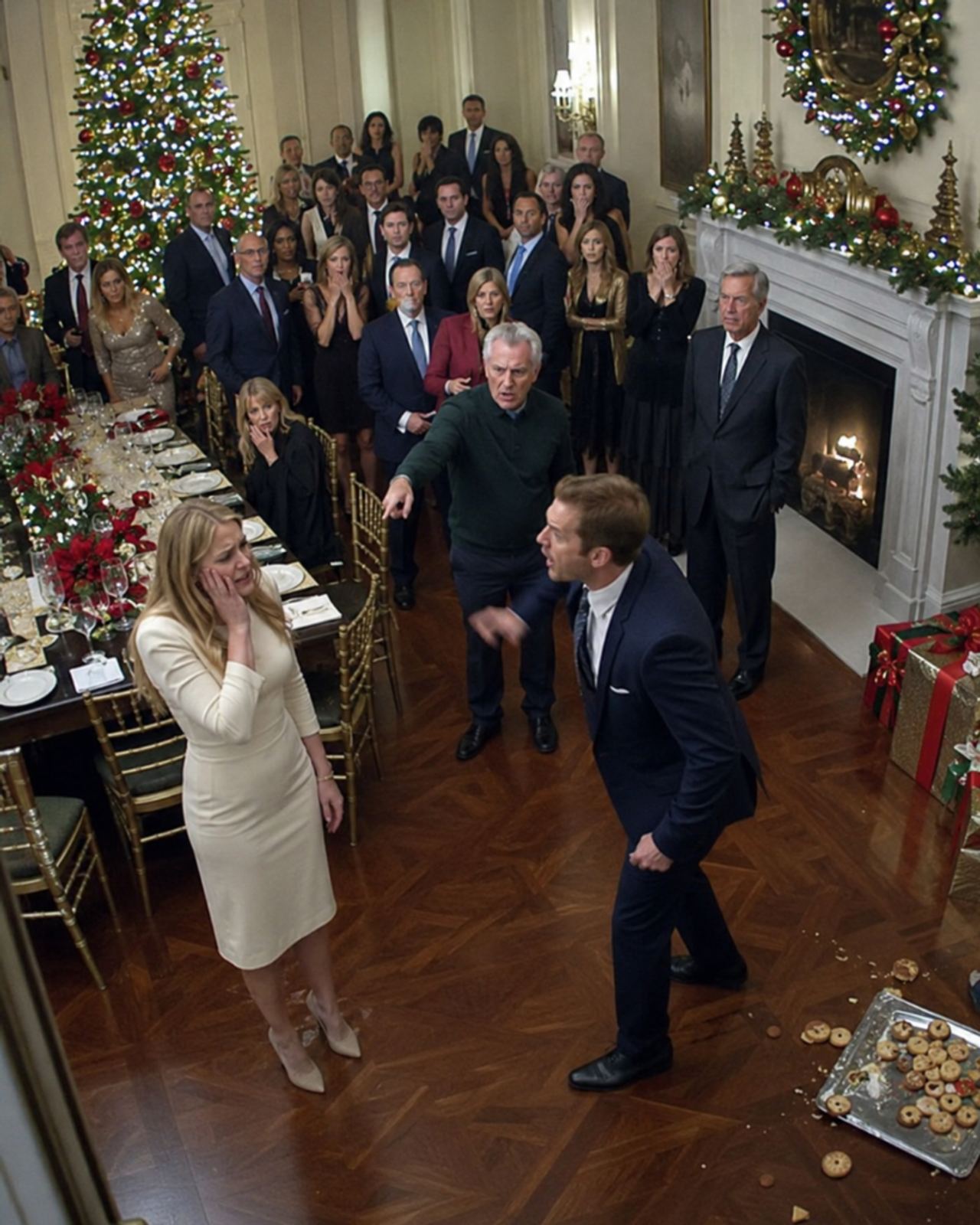
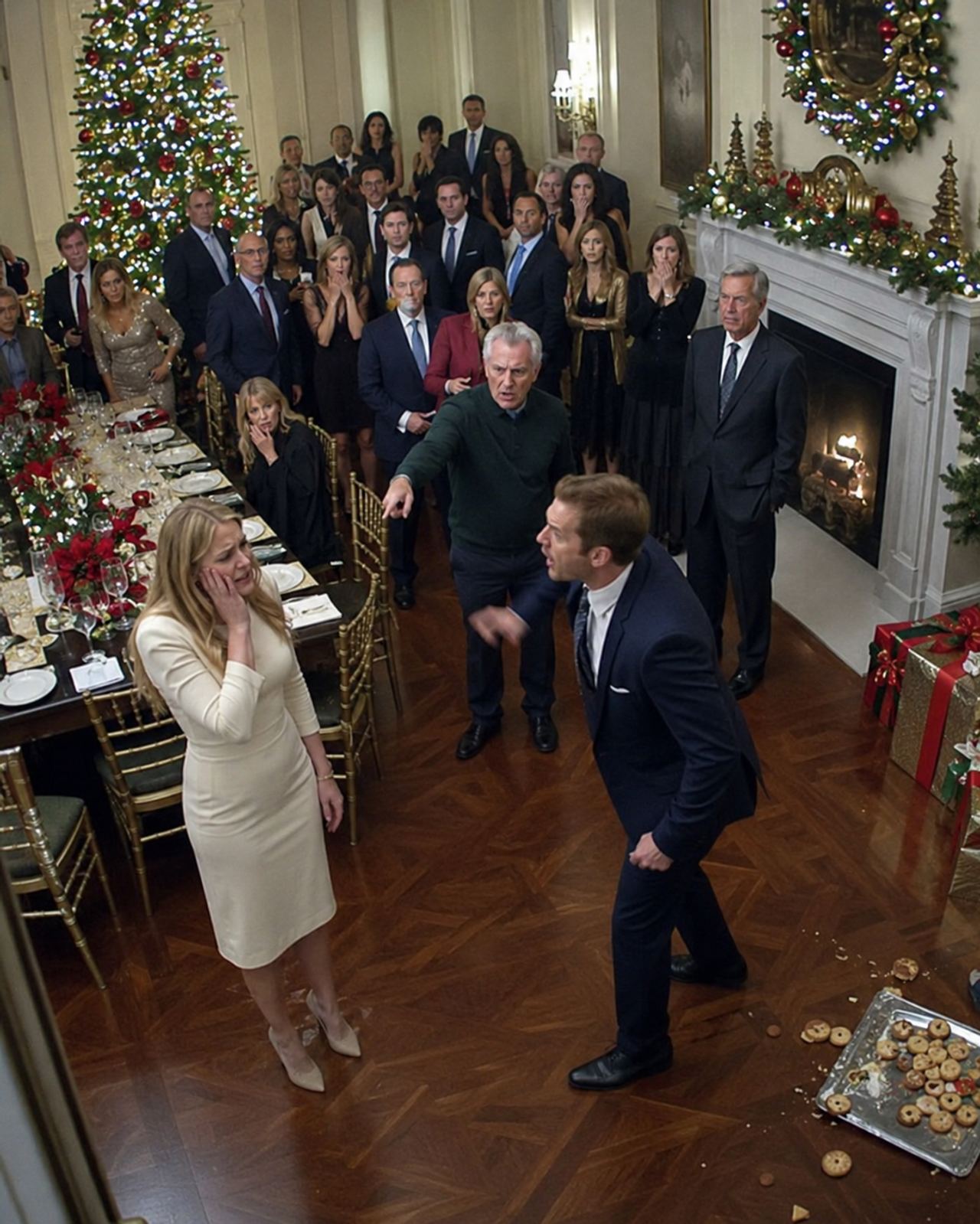
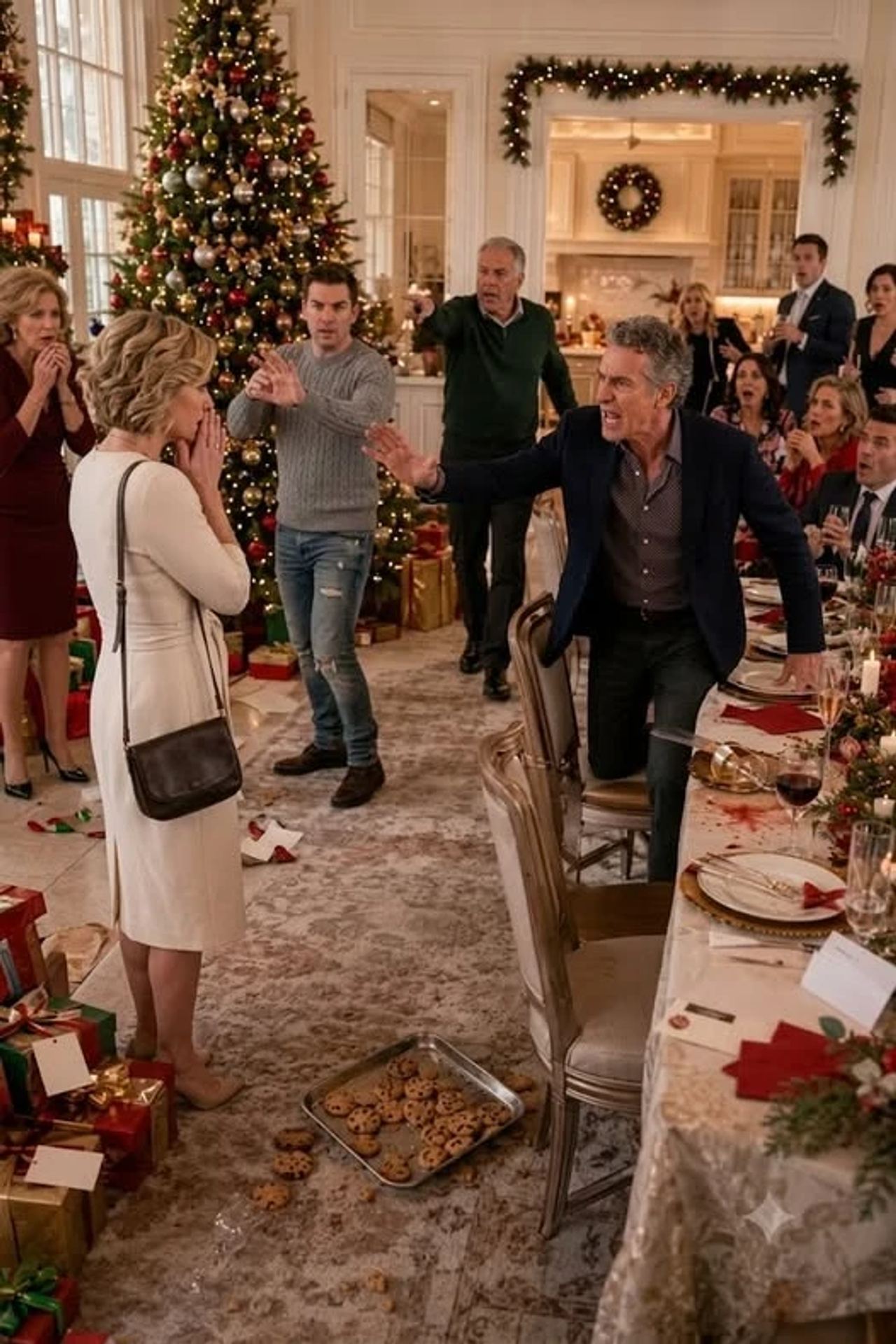
The moment I stepped into my father’s Christmas party, my brother crossed the ballroom and slapped me hard enough to turn my head.
The sound cracked through the room sharper than the holiday music playing near the fireplace.
For a second, all I could smell was pine garland, expensive cologne, and the cinnamon candles my father’s event planner had arranged along the windows. Then the heat spread across my cheek.
“How dare you show your face here?” my brother, Preston, shouted. “You weren’t invited.”
Forty or fifty people stared at us beneath crystal chandeliers and strands of white Christmas lights. A waiter stopped beside the bar with a tray balanced against his palm. Somewhere near the piano, a woman gasped and dropped a cocktail napkin.
I didn’t raise my hand to my face immediately. I didn’t want Preston to see me checking whether he had hurt me.
Instead, I looked past him toward our father.
Grant Mercer sat beside the fireplace in a velvet chair, holding a glass of bourbon as though he were presiding over a meeting. He wore the silver tie he saved for photographs and political dinners.
He didn’t look shocked.
He looked amused.
“Your place is in the kitchen, Avery,” he said. “Not among this family’s guests.”
A few people glanced down at their drinks. Others watched with the fascinated discomfort people reserve for a public accident they have no intention of stopping.
Preston seized my upper arm.
“I’m putting you outside before you embarrass us.”
I didn’t move.
I had driven three hours through sleet to reach Mercer Ridge Resort, the luxury property my family used for political fundraisers and corporate retreats. I had not come to plead for a seat at their Christmas table. I had not come for an apology, an inheritance, or a second chance.
I had come because of the cream-colored envelope beneath my coat.
And because at midnight, the empire my father and brother had built could begin collapsing.
“You should let go of me,” I said.
Preston laughed. “Or what? You’ll write another little article?”
That was what my family called my work whenever they wanted to make me feel small.
A little article.
A little newspaper.
A little career.
For fourteen months, I had allowed them to believe I was still writing short community pieces about zoning meetings and school-board disputes. They had no idea I had been working under a protected byline for the investigative desk of a statewide publication.
They had no idea whose financial records I had been following.
Preston tightened his grip.
Then a chair scraped violently across the hardwood floor behind him.
“Take your hand off her.”
The voice was deep enough to cut through every whisper in the ballroom.
A tall man rose from a table near the fireplace. He was in his late fifties, broad-shouldered, silver-haired, and wearing a dark suit without a Christmas pin or festive tie. Two men and one woman seated near him stood as well.
I recognized all three.
Preston did not.
Not yet.
“This is a private family issue,” he said.
The man came closer.
“You struck a woman in front of dozens of witnesses and are now attempting to force her out of the building. There is nothing private about that.”
My father shot to his feet.
The bourbon in his glass splashed over his fingers.
“Governor Rowan,” he said.
The room shifted.
People who had been staring at me now turned toward Governor Elias Rowan, the man my father had spent the entire year trying to impress.
The Cedar Hollow Renewal Project was the largest public redevelopment contract in the state’s recent history. My father’s company, Mercer Civil Group, had been positioned to receive it. Preston had already ordered engraved champagne bottles displaying the project number.
The Christmas party was not truly a family celebration.
It was a victory party for money they had not yet received.
My father forced a smile.
“There has been a misunderstanding. Avery has a habit of arriving where she isn’t welcome and creating scenes.”
Governor Rowan stopped beside me rather than in front of me.
That detail mattered.
He wasn’t shielding a helpless woman. He was standing beside someone whose work he already understood.
“The only scene I witnessed,” he said, “was your son assaulting a guest.”
“She trespassed,” Preston said. “She was cut off years ago.”
I finally touched my cheek. My skin felt hot beneath my cold fingertips.
“Cut off?” I repeated.
My voice sounded steadier than I felt.
The envelope inside my coat pressed against my ribs like a second heartbeat.
Governor Rowan glanced toward the ballroom entrance.
Two state investigators stood beside the closed doors. They had arrived separately and dressed like ordinary guests, but now one of them opened his jacket enough to reveal his credentials.
Preston released me.
My father’s glass began trembling.
Governor Rowan looked directly at them.
“Ms. Mercer is not here as your dependent or your disgraced daughter,” he said. “She is here as the investigative journalist whose evidence caused the Cedar Hollow contract to be suspended this morning.”
No one screamed.
The reaction was quieter and far more revealing.
A banker near the bar lowered his phone. Two subcontractors stepped away from Preston. A city consultant stared at the nearest exit.
My father’s smile vanished.
Then Governor Rowan delivered the sentence that made every face in the room change.
“And before this evening is over, Ms. Mercer will be presenting evidence concerning the disappearance of more than eight million dollars in public funds.”
Part 2
Preston stared at me as if I had changed shape in front of him.
“You?”
It was the first honest word he had spoken since I entered.
For years, he had forwarded links to my articles in family group chats with laughing emojis. He told relatives I survived by writing “angry little blog posts.” When I won a regional reporting award, he congratulated me by asking whether the prize came with grocery money.
He didn’t know that my recent work had been hidden behind the name “Staff Investigative Team” while attorneys verified the records.
He didn’t know I had interviewed eleven former Mercer Civil employees, traced payments through five shell companies, and discovered invoices for concrete, steel, and electrical equipment that had never reached the construction sites listed on the forms.
Most importantly, he didn’t know who had given me the first ledger.
Across the ballroom, a woman in a dark green dress met my eyes.
Natalie Brooks had been my closest friend since college. For six years, she had worked as Mercer Civil’s director of compliance.
Preston smiled at her every Christmas because he believed she was loyal to him.
He had never understood that professionalism and obedience were not the same thing.
“This is absurd,” my father said.
He placed his drink on the mantel and approached Governor Rowan with the controlled expression he used when negotiating with politicians.
“Governor, you understand how ambitious reporters operate. They find routine accounting mistakes, exaggerate them, and attach dramatic language. My daughter has resented this family for years.”
“Resentment doesn’t create bank transfers,” I said.
My father turned toward me.
“It doesn’t copy inspection signatures. It doesn’t bill the state for steel that was never purchased. And it doesn’t create vendors whose listed addresses are empty lots.”
A murmur moved through the guests.
Preston took a step forward.
“You have no idea what you’re talking about.”
“Then why did you delete the December audit folder at 2:14 this afternoon?”
His mouth opened.
Nothing came out.
Natalie raised her phone.
“The deletion occurred at 2:14:09,” she said. “The request came from Preston’s executive account.”
“You’re lying,” he snapped.
“The company maintains mirrored servers to satisfy lender requirements. Deleting a folder from the primary system doesn’t erase the compliance copy.”
My father’s eyes moved toward Natalie for less than a second.
That second told me everything.
He had suspected someone inside the company was cooperating. He simply hadn’t known who.
Natalie continued.
“I preserved the original folder, the access logs, and the message instructing accounting staff to ‘clean the Christmas list before the governor arrives.’”
Several guests looked toward the decorated tables.
Preston’s face reddened.
“It was a joke.”
“No,” I said. “The Christmas list was your name for the false-vendor register.”
The phrase had become the title of my evidence package.
My father changed tactics.
“Avery,” he said gently.
His voice softened into the tone he used whenever he wanted control to resemble concern.
“Give me whatever you brought. We can discuss this privately as a family.”
I remembered that same voice from nine years earlier.
I had been twenty-three, sitting in his study with an acceptance letter for an investigative journalism fellowship. He had told me the program would turn me into an embarrassment. When I refused to decline it, he threatened to stop paying my mother’s remaining medical bills.
I surrendered the fellowship.
My mother died three months later.
For years, I had wondered whether surrendering had made me a good daughter or merely an easier person to control.
That night, I finally knew the answer.
“This stopped being private when you used public money,” I said.
My father moved faster than I expected.
He reached for the front of my coat.
Before he touched me, Governor Rowan stepped between us.
“Do not make another mistake in front of witnesses.”
The investigators near the entrance moved closer.
My father froze with his hand still raised.
Preston glanced toward a side hallway, calculating whether leaving would make him look guilty.
Natalie noticed.
“You should stay,” she said. “The governor has only suspended the contract. Avery is about to explain why the company may not survive the night.”
I removed the cream envelope from my coat but didn’t open it.
Not yet.
For most of my life, my father and brother had controlled every family conversation by deciding which facts were allowed to exist.
When I mentioned the fellowship, I was ungrateful.
When I mentioned the editor who withdrew a job offer after receiving a call from Preston, I was paranoid.
When I asked why the inheritance my mother left me had disappeared from its trust account, I was greedy.
Their power had never depended on being right.
It depended on speaking first, speaking loudly, and forcing everyone else to defend themselves.
That night, I refused their script.
“You told everyone I came here because I wanted money,” I said. “So let’s begin with money.”
I placed the envelope on the piano, opened my laptop, and connected it to the screen Preston had planned to use for his contract announcement.
The Mercer Civil logo disappeared.
A scanned legal document appeared in its place.
The projector fan hummed in the silence.
My father read the date and went perfectly still.
It was my mother’s trust amendment.
And according to the document, I still owned twenty percent of his company.
Part 3
“My mother signed this eleven days before her final hospital admission,” I said.
The amendment filled the ballroom screen, each signature enlarged beneath the projector’s pale light.
“She left twenty percent of Mercer Civil Group to me. Not because she expected me to work for the company, but because she wanted me to remain financially independent.”
My father’s expression hardened.
“That document was replaced.”
“That’s what you told me.”
I clicked once.
A second document appeared beside the first.
It was a waiver dated seven months after my mother’s death. According to the waiver, I had transferred my shares to Preston in exchange for a payment of $600,000.
I had never seen the document.
I had never received the money.
From across the room, Preston laughed too quickly.
“You signed it. You probably spent the money and forgot.”
“I remember every bill I paid during those years,” I said. “I remember choosing between rent and dental work. I remember selling my mother’s old bracelet because my car transmission failed. I would remember receiving $600,000.”
The lawyer standing beside Governor Rowan stepped closer to the screen.
I enlarged the signature.
It looked like mine from a distance. Up close, the final letters leaned in the peculiar way they had on an old graduate-school application kept inside my father’s study.
“A forensic document examiner compared this signature with the application,” I said. “The waiver signature was copied.”
“That proves nothing,” my father replied.
“The notary listed on the waiver had been dead for nine weeks when she supposedly witnessed it.”
The ballroom erupted in whispers.
Preston stopped smiling.
My father stared at the screen as though he could force it to go dark.
“This has nothing to do with Cedar Hollow.”
“It establishes a pattern,” Governor Rowan said. “False documents, concealed ownership, and personal financial benefit.”
“You’re taking her side because of family paperwork?”
“The state is responding to evidence submitted through lawful channels,” the governor said. “I am standing beside her because you have attempted to intimidate the person who preserved that evidence.”
I clicked again.
Three headings appeared: Past, Present, and Payment.
I had created the structure during a sleepless night when fourteen months of records had started blurring together. Organizing the evidence had been the only way to keep my anger from organizing it for me.
Under Past, I listed the journalism fellowship, the vanished job offer, the withdrawn apartment deposit, and the missing trust distributions.
Under Present were altered inspection reports, duplicate invoices, false vendors, deleted files, and private emails.
Under Payment were the shell companies receiving public funds.
One was controlled by Preston’s former college roommate.
Another was registered to my father’s private accountant.
The final company had been created using my name.
I paused before displaying it.
That was the piece of evidence that had transformed a corporate investigation into something painfully personal.
“Mercer Media Strategies,” I said.
The shell company’s registration appeared on the screen.
“It received $1.1 million over nineteen months. The tax identification application included a scan of my passport.”
Preston’s confidence cracked.
“You gave the company copies of your documents years ago.”
“For the trust review. Not for fraud.”
“Watch your language,” my father snapped.
The command struck something old inside me.
For one breath, I was twenty-three again, sitting at his dining table while he tore my fellowship letter in half. I could hear the ripping paper, the clock ticking over the doorway, and my mother coughing in the next room.
He had leaned close and said, “Respectable daughters do not investigate powerful men.”
For years, I wondered whether grief had distorted that memory.
Then Natalie found the email he sent Preston the same evening.
I clicked.
The message filled the screen.
Keep her dependent, or keep her broke. A daughter who thinks she can survive without us will eventually become a problem.
My father stared at his own words.
Preston turned toward him.
“You told me those servers had been wiped.”
The sentence escaped before he could stop it.
Every guest heard the confirmation buried inside it.
My father’s head snapped toward him.
“I meant old family files.”
The correction arrived too late.
Natalie stepped away from the wall.
“The servers were never wiped. Mercer Civil retained mirrored archives because its lenders required seven years of backup records. I preserved them after discovering compliance reports were being altered.”
“You betrayed us,” Preston said.
“I stopped you.”
My father called her confused. Preston called her disloyal. They spoke over each other, trying to rebuild control from volume.
Watching them, I finally understood something I should have learned years earlier.
People who demand loyalty often mean silence.
People who call truth a betrayal are usually protecting whatever the lie provided them.
Governor Rowan raised one hand, and the room quieted.
“Natalie did not contact me first,” I said. “She contacted outside counsel. Counsel contacted the inspector general. I became involved because a shell company carried my identity and because I could document how the concealment began.”
My father’s expression shifted from anger to calculation.
“Then this can still be contained.”
He looked at me as though we were negotiating over furniture.
“We correct the filings, repay disputed funds, restore your shares, and resolve the trust issue. Everyone walks away.”
It would have sounded generous if he hadn’t denied everything until denial became expensive.
“Would you offer me justice if the governor were not standing here?” I asked.
He didn’t answer.
His silence did.
I lifted another envelope from my laptop case.
“This is not a settlement demand,” I said. “It is the publication notice your attorneys received this afternoon.”
I glanced at the clock above the fireplace.
“My investigation goes live at midnight.”
Forty-seven minutes remained.
Preston looked at the clock, then at my laptop.
For the first time, he stopped thinking like my brother.
He began thinking like an executive trapped inside a collapsing company.
“Turn off that screen,” he ordered.
Part 4
A technician near the wall instinctively reached toward the projector cable.
One of the investigators shook his head.
“Do not interfere with material that may become evidence.”
The technician stepped back with both hands raised.
Preston’s jaw tightened.
He had used his hand when he believed the room belonged to him. Now that witnesses surrounded him, he reached for a different weapon.
“You all know what this is,” he announced. “Avery failed to build a career, attached herself to the governor, and fed him a revenge story. Now she expects applause.”
Several guests glanced toward Governor Rowan.
It was a calculated accusation.
If Preston could make my evidence look like personal access, he could turn public corruption into private gossip.
Governor Rowan did not defend his reputation first.
He defended the process.
“Ms. Mercer and I met once,” he said. “The meeting occurred in the presence of legal counsel after the inspector general verified the initial records. I did not direct her reporting, provide her documents, or promise her special treatment.”
He looked around the ballroom.
“I was scheduled to attend tonight because Grant Mercer invited me to celebrate a contract he had already been informed was under formal review.”
That sentence disturbed the room more than any accusation I had made.
My father had used the governor’s attendance as proof that Cedar Hollow was guaranteed. Several guests had invested money based on that confidence.
Governor Rowan continued.
“When my staff learned Ms. Mercer might attend, we asked whether she would be safe entering this property. We were assured this was a peaceful family gathering. Your behavior answered that question.”
Preston scoffed.
“What was that speech about whose face I struck? Is she some protected celebrity now?”
“No,” the governor said. “She is the journalist who uncovered an attempt to divert millions of dollars intended for roads, schools, and emergency housing. You struck a cooperating witness in front of state investigators.”
He took one deliberate step closer.
“And the person you dismissed as a failure performed the due diligence your own executives refused to perform.”
No one applauded.
The truth did something more satisfying.
It rearranged the room.
People who had crowded around Preston earlier moved away. A lender’s representative opened his phone and began typing. Two subcontractors whispered beside the windows. A board member named Marcus Ellison removed a Mercer Civil lapel pin and slipped it into his pocket.
My father noticed every movement.
“Nobody leaves,” he said.
His voice cracked on the final word.
Governor Rowan turned toward him.
“You do not control the exits.”
My father took a breath and rebuilt his expression.
Then he approached me with open palms, transforming himself into a concerned parent.
“Avery, listen to me. Whatever happened with the trust was wrong. I can admit that. But if your article is published tonight, hundreds of employees may lose their jobs. Families will suffer on Christmas because you wanted revenge.”
There it was.
The burden he had prepared for me.
His decisions.
My guilt.
For years, he had converted consequences into evidence of my cruelty.
I looked at the employees and subcontractors around the room, then at Natalie.
She nodded.
We had anticipated this argument.
“The article does not demand that Mercer Civil close,” I said. “It identifies the executives who authorized the scheme and the board members who ignored compliance warnings. The inspector general has recommended an independent administrator so legitimate projects and payroll can continue.”
Marcus stepped forward.
“The board was not informed about an administrator.”
“The official notice was delivered at four this afternoon,” Natalie said.
Marcus checked his phone.
“I received nothing.”
“Preston redirected the board’s email traffic to his private server at 4:12.”
The shame on Marcus’s face hardened into anger.
“You told us the system had failed.”
Preston pointed at Natalie.
“She’s manipulating the records.”
“Then you should welcome an independent forensic review,” I said.
He had no response that did not expose him.
My father abandoned the caring tone.
“You publish that story, and I will make sure every editor in this country hears that you exploited confidential family information. I will sue you until you cannot afford a room to sleep in.”
The threat might once have worked.
During my first year as a reporter, I counted coins at grocery stores and called hunger “discipline.” My father had used money to make every act of independence feel temporary.
But the article had survived review by three attorneys, two forensic accountants, and an editor who knew exactly whom we were confronting.
“Your lawyers sent that threat six weeks ago,” I said. “They withdrew it after we provided the first evidence index.”
His eyes narrowed.
He hadn’t known.
Preston had hidden that failure from him, just as my father had hidden the server backups from Preston.
Their alliance was beginning to consume itself.
Natalie’s phone chimed.
She read the message and looked at Governor Rowan.
“The emergency board meeting has reached quorum.”
Preston laughed, but the sound was thin.
“On Christmas Eve?”
“Your bylaws permit an emergency vote whenever company officers expose the organization to criminal liability.”
The ballroom screen divided.
My evidence remained on one side. Six board members appeared on the other through a secure video conference. Marcus joined them from the room.
The board chair read from a prepared resolution.
“Pending an independent forensic investigation, Grant Mercer is suspended as chief executive officer, and Preston Mercer is suspended as chief operating officer, effective immediately.”
Preston lunged toward the laptop.
An investigator stepped into his path.
“Do not touch it.”
The board chair continued.
Their corporate access was revoked. Accounts requiring either man’s approval were frozen. Company counsel had been instructed to preserve all records and cooperate with investigators.
My father looked at me.
For the first time that night, he didn’t appear angry.
He appeared afraid.
“What have you done?” he whispered.
“I documented what you did. The board made its own decision.”
Behind us, the resort’s front doors opened.
Four additional investigators entered carrying sealed orders.
The woman leading them walked directly toward my father.
“I’m Special Agent Rosa Maren,” she said. “Mr. Mercer, we have warrants for your corporate offices, electronic devices, vehicles, and financial accounts.”
Part 5
The ballroom smelled different after the investigators entered.
The pine garland and candle wax were still there, but beneath them was the sharper scent of cold air and paper folders opening.
Read more stories
- My Husband Claimed I Destroyed His Business in Court – Until My Little Son Suddenly Whispered, ‘The Person Who Framed You Is Here’
- GEORGE STRAIT PUBLICLY CALLED CHARLEY PRIDE AN OLD FRIEND AND STEPPED UNDER THE CINEMATIC STAGE LIGHTS TO SING ONE FINAL TRIBUTE TO THE HISTORY-MAKING TRAILBLAZER.
- Four Tops’ “Baby I Need Your Loving” Launches a New Era of Soul-Pop Perfection in 1964 – Page 2 of 2
- HE HAD LESS THAN A SECOND TO DECIDE—AND CHOSE TO DESTROY HIS OWN CAR TO SAVE A COMPLETE STRANGER.