
Stories
I Was the Hidden Owner of My Ex-Husband’s Billion-Dollar Company—One Phone Call Changed Everything
Cassidy Morrison discovers in a single devastating dinner that she is the hidden owner of her ex-husband’s billion-dollar company, triggering suspensions, family fallout, and a deeper mystery tied to her late father. As she leaves the house in the rain, a sealed letter reveals that the real conflict may involve an old family trust and a long-buried attempt to control Vale Meridian through personal ties.

“Ms. Vale,” he said.
Not Cassidy Morrison.
Not Brendan’s ex-wife.
Not the burden at the end of the table.
Ms. Vale.
The name landed in the room like a dropped glass.
Brendan’s face shifted first from irritation to confusion, then to a pale, uneven anger he had not yet found words for. Diane’s wineglass froze halfway to her mouth. Jessica, still wearing that careful little smile, blinked as if she’d missed a sentence in a language she thought she understood.
“What did you call her?” Brendan asked.
Malcolm did not look at him. His attention remained on me, professional and steady.
“Are you hurt?”
The question was simple. That made it harder.
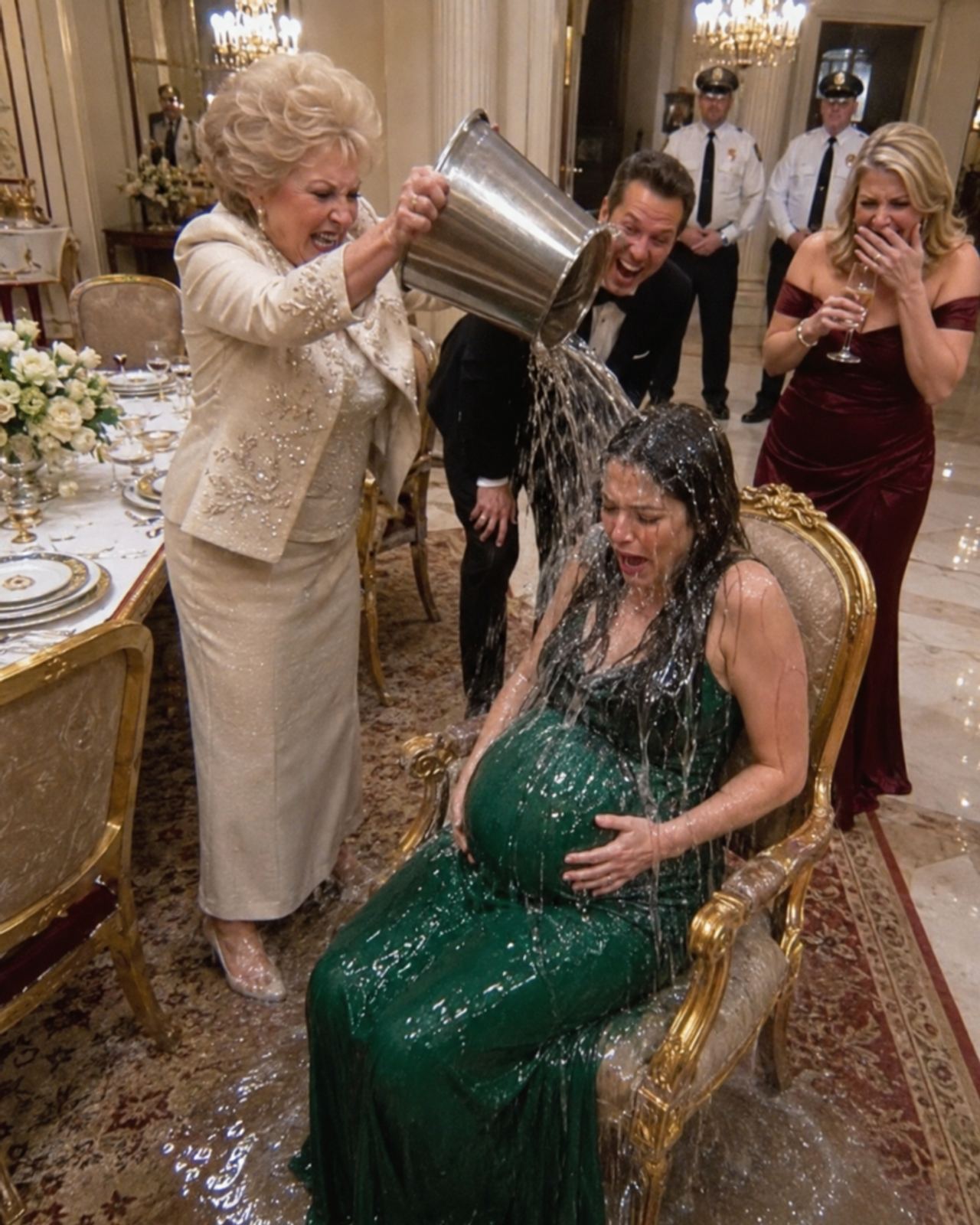
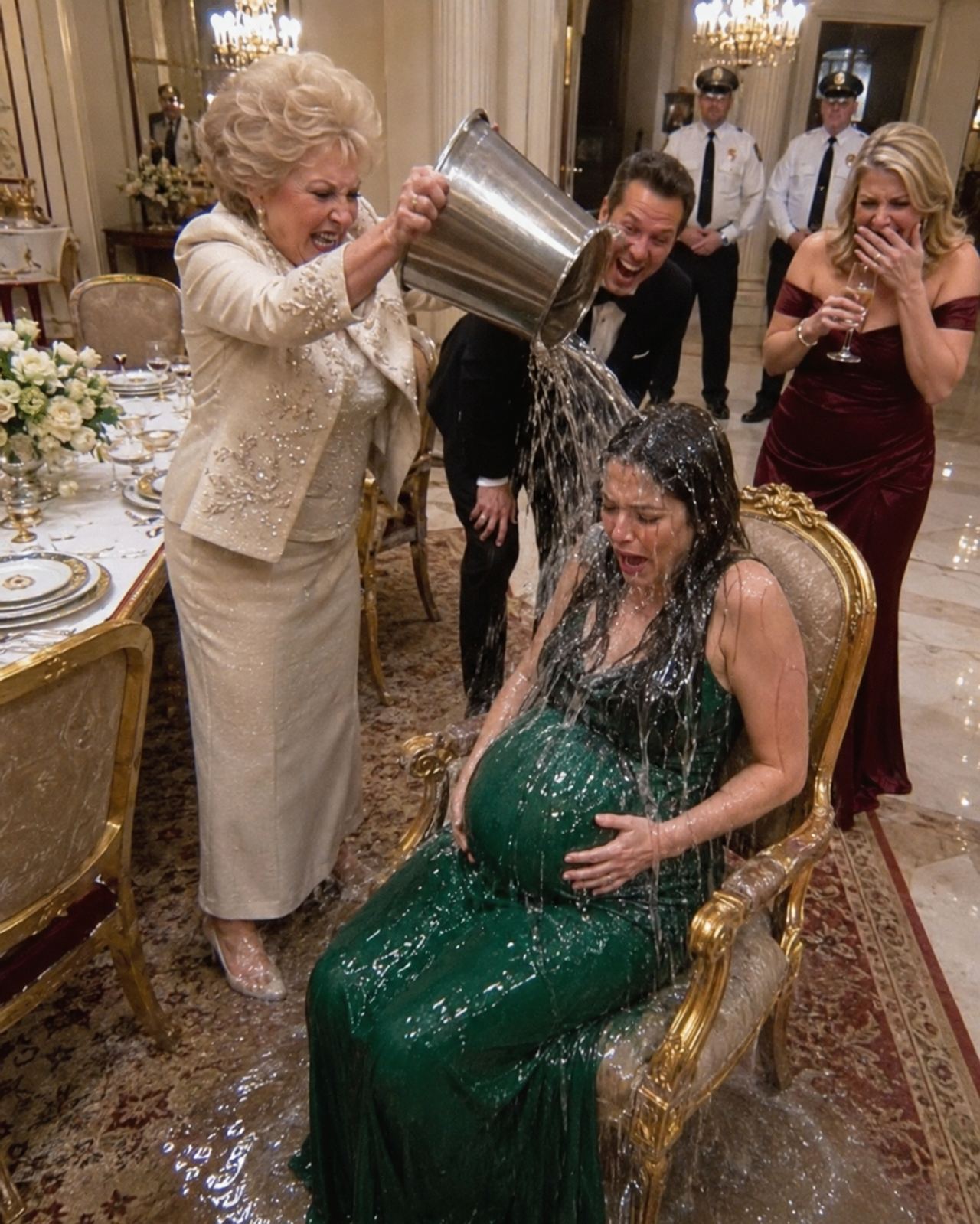
For a moment, I could still feel the filthy water sliding down my neck, cold beneath the collar of my dress. My hair clung to my cheek. My fingers were stiff from the chill. The dining room smelled of roast lamb, expensive candles, and damp earth.
I placed one hand over my stomach.
“My daughter and I are leaving,” I said.
Malcolm nodded once. “The car is ready.”
Diane finally found her voice. “Excuse me,” she said, in that polished tone she used when a waiter forgot lemon for her tea. “You do not walk into my house and—”
“With respect, Mrs. Morrison,” Malcolm said, turning at last, “this is no longer a family matter.”
Brendan let out a sharp laugh, but it cracked around the edges. “No longer a family matter? She called some security guards because Mom played a joke.”
“A joke?” I repeated quietly.
The word was so small, but it changed the air.
No one laughed this time.
Brendan looked at me as though he was beginning to recognize a stranger wearing my face. It was strange, really. We had been married for four years, separated for eight months, divorced for three. He had known the tilt of my handwriting, the way I drank tea without sugar, the fact that I slept on my left side when I was worried.
Yet he had never really known me.
He had known the version I allowed him to see.
And I had allowed him to see far too little.
Malcolm removed a folded garment bag from one of the guards and stepped toward me, keeping his movements careful. “There’s a coat, ma’am.”
I reached for it, but my fingers trembled. Not from fear. Not even from anger anymore.
From the cold.
That small visible tremor seemed to disturb Brendan more than my phone call had. His gaze dropped to my hand, then to my stomach, then away.
Jessica noticed too. Her smile disappeared.
“Cassidy…” she began.
I looked at her.
She stopped.
The silence between us held years of little moments. Her compliments that were never compliments. Her charity donations made in my name but announced at parties like proof of my helplessness. Her quiet corrections of my clothes, my accent, my education, my presence.
She had never poured water on me.
But she had handed Diane the bucket.
That mattered.
Malcolm helped drape the coat around my shoulders without touching me. Warmth spread slowly through the fabric, but it could not reach the part of me that had gone still.
“Cassidy,” Brendan said, standing abruptly. His chair scraped against the floor. “What is going on?”
I looked at him then.
Really looked.
He was handsome in the way people had always told him he was: neat brown hair, clean jawline, the expensive ease of a man who had never had to wonder whether a locked door meant safety or exclusion. When I first met him, I thought that ease was kindness. I mistook confidence for strength. I mistook charm for sincerity.
By the time I learned the difference, I was already married.
“What’s going on,” I said, “is that I’m leaving before I say something I’ll regret.”
His mouth tightened. “You called Arthur. Arthur from legal?”
“Yes.”
“Our Arthur?”
I almost smiled.
Almost.
“No, Brendan. Mine.”
Diane lowered her wineglass onto the table with a soft click. “This is absurd.”
Malcolm slipped a leather folder from inside his jacket and placed it on the table, beside the silverware and the untouched dessert plates.
“Mr. Morrison,” he said, “as of seven minutes ago, your corporate credentials have been suspended pending internal review. Mrs. Morrison, Ms. Morrison, your access to company systems and premises has also been suspended.”
Jessica stared at him. “What? You can’t just suspend me. I’m Director of Philanthropic Partnerships.”
“Interim Director,” Malcolm corrected.
Her cheeks flushed.
Brendan snatched the folder from the table and opened it. His eyes moved quickly over the page. Too quickly. He had always read contracts like enemies instead of promises.
“This is a mistake,” he said.
“No,” I said. “It isn’t.”
He looked up slowly.
And there it was—the first true crack.
Not because he understood everything. He didn’t. Not yet. But because he understood enough to know the floor beneath him was no longer solid.
“You?” he said, so quietly that only the closest of us heard.
Diane made a small impatient sound. “Brendan, don’t be ridiculous. She doesn’t own anything except whatever sympathy she’s been collecting.”
“Mom,” he said, without looking at her.
That one word made Diane stop.
Brendan’s eyes remained on mine. “Cassidy. Tell me this isn’t what I think it is.”
“What do you think it is?”
He swallowed.
For once, he had no performance ready.
Years ago, before the Morrison family knew my name, my father had built Vale Meridian from a warehouse office with uneven heating and one client who paid late. He called it a logistics company because investors understood logistics. But what he had really built was trust: routes, contracts, data systems, procurement networks, emergency supply chains, manufacturing partnerships, everything that kept hospitals stocked, ports moving, and half a continent’s invisible machinery from falling into chaos.
By the time he died, Vale Meridian was worth more than anyone in the Morrison family could dream of controlling.
And he left it to me.
Not because I was his only child.
Because I was the one who had sat beside him at fourteen, listening while he explained why a company’s real value was not in its buildings or its accounts, but in the people who could sleep at night because you had kept your word.
After his death, I vanished behind trusts, holding companies, nominee boards, and a public-facing executive structure. I had been twenty-three, grieving, and surrounded by men twice my age who saw inheritance as an invitation. Arthur had helped me build the walls. Malcolm had helped me guard the doors.
Then I met Brendan at a hospital fundraiser, where he smiled at me like I was a person and not a balance sheet.
I had wanted, foolishly and desperately, to be loved without being calculated.
So I said I worked in “operations consulting.”
It was not exactly a lie.
It was also nowhere near the truth.
“Cassidy,” Brendan said again.
I took my phone from the table. The screen glowed with Arthur’s name still connected.
“Protocol 7 isn’t revenge,” I said. “It’s a protective hold. It freezes authority for executives and family-linked employees involved in conduct that could expose the company to risk.”
Jessica gave a disbelieving laugh. “Risk? Because Mom ruined your dress?”
“Because a senior vice president, an interim director, and a board committee member created a hostile environment for the beneficial owner of the company while she was pregnant,” Arthur said through the speaker, his voice crisp and calm. “And because there have been prior reports.”
That changed the room more than anything else.
Prior reports.
Brendan’s eyes flicked to Jessica.
Jessica looked at Diane.
Diane stared at the phone.
I closed my eyes briefly.
So Arthur had found them.
I had suspected for months that something was wrong inside the Morrison branch of the company. Not theft, exactly. Not the kind that announces itself in missing money. It was softer than that. Favor-trading. Vendor pressure. Relatives placed where they had no qualifications. Quiet intimidation of employees who questioned expenses.
Nothing dramatic.
Nothing loud.
But rot rarely begins as collapse. It begins as permission.
“I didn’t authorize a full escalation,” I said to Arthur.
“No,” he replied. “You authorized Protocol 7. The rest was already in motion.”
Brendan looked from the phone to me. “What does that mean?”
“It means,” Arthur said, “you should retain independent counsel before making any further statements.”
Diane stood so fast her napkin fell to the floor. “I will not be spoken to like this by an employee.”
Arthur’s pause was almost gentle. “Mrs. Morrison, I am not your employee.”
For a second, no one moved.
Then Malcolm stepped slightly closer to me. “Ms. Vale, we should go.”
I nodded.
But as I turned, Brendan moved around the table.
“Cassidy, wait.”
Malcolm’s hand lifted—not touching Brendan, only marking the distance between us.
Brendan stopped.
That restraint struck me more sharply than if Malcolm had shouted. So much of my marriage had been made of invisible lines that Brendan crossed without noticing. My time. My privacy. My dignity. My grief. My name.
Now someone else was drawing a line on my behalf.
Brendan saw it.
His expression changed.
“Cass,” he said, and the nickname hurt in a place I thought had scarred over. “Please. Just talk to me.”
I wanted to tell him he had years to talk to me.
I wanted to remind him of every dinner where I sat beside him while his mother picked at my life like loose thread. I wanted to ask why he only needed my voice when losing his own comfort.
But my daughter shifted beneath my hand, and the answer I gave was quieter.
“Not here.”
He looked at my wet hair, the coat around my shoulders, the muddy water pooling beneath my chair.
Shame crossed his face.
Real shame.
Late, but real.
I turned away before it could affect me.
The hallway felt longer than usual. I had been inside that house dozens of times, maybe hundreds, but I had never noticed how cold the marble floor made every footstep sound. Family photographs lined the wall: Brendan graduating from business school, Jessica at charity galas, Diane beside men whose names appeared on buildings. There was one wedding photograph of Brendan and me near the entrance, half hidden behind a vase of white lilies.
I paused in front of it.
In the picture, I was smiling.
Not the careful smile I had learned later. A real one. Hopeful. Unguarded. My father’s pearl earrings rested against my neck, and Brendan was looking at me as though nothing else existed.
For a moment, I mourned her.
Not because she was foolish.
Because she was brave enough to believe.
Malcolm waited by the door.
“Would you like me to remove the photograph?” he asked softly.
“No,” I said.
I touched the frame with two damp fingers.
“Leave it. Someone should remember what this cost.”
Outside, the rain had slowed to a fine mist. A black company sedan idled near the steps, its headlights glowing against the wet driveway. The air smelled clean after the suffocating warmth of the dining room.
As Malcolm opened the car door, Brendan appeared behind us.
He had not brought an umbrella. Rain settled in his hair and darkened the shoulders of his shirt.
“Cassidy.”
Malcolm turned, but I lifted a hand.
“It’s alright.”
Brendan stopped three steps away.
For the first time that evening, he seemed smaller than the house behind him.
“I didn’t know,” he said.
“No,” I answered. “You didn’t ask.”
His jaw tightened. “You lied to me.”
“Yes.”
The honesty surprised him.
It surprised me too, how simple it felt.
“I lied by omission,” I continued. “At first because I wanted to know whether you loved me without the company. Later because I was afraid of what it would mean if you didn’t.”
Rain collected on his lashes.
“That’s not fair.”
“No. It wasn’t. I know that.”
His anger faltered, robbed of something to push against.
I wrapped the coat tighter around myself. “But Brendan, I never lied about needing respect. I never lied about wanting us to be partners. I never lied about being hurt.”
He looked down.
The front door remained open behind him. Diane and Jessica stood in the warm rectangle of light, watching us as if they were witnessing a scene they could not control.
“Is this really happening?” Brendan asked.
“Yes.”
“Am I fired?”
“I don’t know.”
That answer seemed to strike him harder than a yes.
“Arthur and the board will review the facts,” I said. “Whatever happens next will be documented. Quiet. Fair. Legal.”
He gave a humorless laugh. “Fair?”
“Yes.”
He looked up then, and something bitter moved through his eyes. “You have all the power now.”
“No,” I said. “I had it before. I’m only done pretending I didn’t.”
The sedan door stood open beside me.
I should have gotten in.
But there was one thing left.
“Brendan,” I said, “the baby isn’t a weapon in this. She never will be.”
His face changed instantly.
Pain. Fear. Hope.
He took one step closer and stopped himself. “I want to be her father.”
“You already are.”
“Then don’t shut me out.”
“I won’t,” I said. “But being her father won’t be something you inherit. It will be something you practice.”
For a moment, rain filled the silence.
He nodded once, but his eyes were red.
“I’m sorry,” he said.
The words were so late. So small.
And still, because I had loved him once, they found their way in.
“I believe you are sorry tonight,” I said. “I don’t know yet what that means tomorrow.”
Then I got into the car.
Malcolm closed the door gently, and the world became glass and rain and muffled sound.
As we pulled away, I did not look back until the house was almost gone from view.
Brendan remained in the driveway.
Diane had retreated inside.
Jessica stood at the door with one hand pressed to her mouth.
And for reasons I did not understand then, she looked more frightened than angry.
Not for herself.
For something else.
The hotel suite Arthur arranged was not one of the penthouses Vale Meridian kept for visiting executives. I refused that. It was a quiet place near the river, with warm lighting, soft towels, and a nurse waiting in the sitting room with a medical bag.
“I’m fine,” I said automatically.
The nurse, a woman in her fifties with kind eyes and no tolerance for nonsense, looked me up and down. “People who are fine usually aren’t dripping on imported carpet.”
I almost laughed.
Almost.
She checked my blood pressure, my temperature, and the baby’s heartbeat. The small, rapid rhythm filled the room, steady and miraculous. I closed my eyes as it pulsed through the monitor.
There she was.
Not a concept. Not leverage. Not the Morrison heir Diane sometimes mentioned when she forgot I was in the room.
My daughter.
The nurse smiled. “Strong heartbeat.”
I exhaled shakily. “She kicked hard earlier.”
“Smart girl,” she said. “Probably objecting to the dinner service.”
This time, I did laugh, though it broke in the middle.
After a warm shower, I sat wrapped in a robe near the window, watching rain draw silver lines down the glass. My hair was damp for a better reason now. A mug of ginger tea steamed beside me.
Arthur arrived at ten-thirty.
He was in his late sixties, silver-haired, soft-spoken, and more dangerous with a sentence than most people were with a lawsuit. He had been my father’s attorney before he became mine, and somewhere along the way he had become the closest thing I had to family.
When he saw me, his expression tightened.
I tried to spare him. “I’m alright.”
“Don’t.”
One word.
That was all it took.
I looked away.
Arthur crossed the room and sat in the chair opposite me. For a while, he said nothing. That was his gift. He never rushed silence when silence was doing necessary work.
Finally, I spoke.
“I should have stopped it sooner.”
“Their behavior?”
“My secrecy.”
He leaned back. “Those are not the same thing.”
“They’re connected.”
“Yes,” he said. “But not equally responsible.”
I stared into my tea. “I thought if Brendan didn’t know, then whatever he felt for me was real.”
“And was it?”
I hated how gently he asked.
“I don’t know.”
Arthur’s face softened. “That is an answer too.”
The rain tapped against the window.
On the coffee table between us lay three folders. I had learned to dread Arthur’s folders. They never contained one problem when six would do.
“What did you find?” I asked.
He hesitated.
That frightened me more than if he had opened them immediately.
“Cassidy, the Morrison review began because of procurement irregularities in the eastern division. Brendan’s name appeared on approvals, but not necessarily as the originator. Jessica’s department has unusual donation-routing patterns, but again, that may be negligence rather than intent.”
“And Diane?”
Arthur’s mouth thinned.
“Diane has been lobbying two board members for six months.”
I frowned. “For what?”
“To have you declared unfit to retain voting control.”
The room seemed to tilt.
I put down the mug carefully.
“On what grounds?”
“Emotional instability. Pregnancy-related incapacity. Failure to participate visibly in leadership. She gathered statements from people who believed you were financially dependent on the family.”
I stared at him.
Then, strangely, I understood the bucket.
Not entirely. Not excusably. But structurally.
Humiliation had not been spontaneous.
It had been useful.
If I had screamed, slapped someone, broken down in front of staff, threatened them wildly, Diane could have turned the scene into evidence. Poor Cassidy. Unstable Cassidy. Pregnant Cassidy who couldn’t handle stress. Cassidy who should certainly not control billions in assets and voting shares.
But I had made a phone call instead.
Cold.
Precise.
Documented.
Arthur watched realization settle over my face.
“You think tonight was planned,” I said.
“I think Diane creates situations and waits for people to become useful inside them.”
A chill moved through me that had nothing to do with wet clothes.
“Did Brendan know?”
“We don’t know.”
That answer hurt more than I expected.
Because part of me wanted a clean villain. It would have been easier if Brendan had known everything, if he had sat beside me smiling while a trap closed around my life. Then I could cut him out of my heart without complication.
But people rarely do us the favor of being simple.
“He laughed,” I said.
Arthur’s eyes saddened. “Yes.”
I pressed my hand to my stomach. The baby shifted gently now, as if reminding me I was not alone inside my own body.
“What happens next?”
“Tomorrow morning, the board convenes. Protocol 7 holds until the review committee determines scope. Malcolm has secured your private residence. Your medical team has been notified. Communications is prepared with a neutral statement if rumors begin.”
I rubbed my forehead. “Rumors always begin.”
“Yes.”
“What about employees?”
Arthur looked faintly pleased. “That was your father’s first question too.”
The mention of him tightened my throat.
Arthur opened the first folder. “No operational disruption. Payroll, vendor payments, client deliverables, employee benefits, all protected. The Morrison inquiry is governance-level. No staff member outside the relevant review needs to be affected.”
“Good.”
He closed the folder.
“There is something else.”
I looked at him.
“Your father left a sealed directive tied specifically to Protocol 7.”
For several seconds, I only heard the rain.
“My father died seven years ago.”
“Yes.”
“And you’re telling me he anticipated this exact protocol?”
“He created it.”
I stood slowly and moved to the window.
Below, headlights curved along the river road. People were going home. Ordering food. Arguing about parking. Living ordinary lives full of ordinary troubles.
Behind me, Arthur continued.
“He worried that one day someone would try to separate you from your authority by separating you from your confidence. He asked me to hold the directive unless Protocol 7 was activated by you personally.”
I swallowed. “What does it say?”
“I don’t know.”
That made me turn.
Arthur’s expression was sober. “It is sealed to you alone.”
From the third folder, he removed an envelope.
Cream paper. Heavy. My father’s handwriting across the front.
For Cassidy, when silence is no longer protection.
My knees weakened.
Arthur rose, but I shook my head. I did not want help standing. Not for this.
I took the envelope.
My father’s handwriting blurred.
I had spent years believing grief was a house I had learned to live in. I knew its rooms. Its shadows. The floorboards that creaked without warning. But sometimes a door opened where there had not been one before, and grief stepped out young again.
“I’ll leave you with it,” Arthur said.
“No.”
The word came quickly.
He paused.
I held the envelope against my chest. “Stay. Please.”
His eyes softened. “Of course.”
I sat back down, sliding one finger beneath the flap. The paper opened with a soft tear that sounded much louder than it should have.
Inside was a single letter.
My dearest Cassidy,
If you are reading this, then you have discovered something I hoped you would never need to learn: silence can protect a person only until others mistake it for emptiness.
You have always been quiet when hurt. Even as a child, you would retreat, observe, and wait until you understood the room better than everyone else in it. This made you wise. It also made some people careless around you.
Do not confuse their carelessness with your weakness.
Vale Meridian is yours not because my blood runs in your veins, but because you understand that power is a tool, not a throne. Use it to protect what is entrusted to you. Use it sparingly. Use it cleanly. But use it.
There is one matter I did not resolve before my death.
At this line, my breath caught.
Arthur leaned forward slightly but did not speak.
I kept reading.
Years ago, before the company became what it is, I accepted investment from a private family trust. The terms were unusual, and at the time necessary. That trust later disappeared behind layers of transfers. I have reason to believe its beneficiaries may one day attempt to influence Vale Meridian through personal rather than corporate channels.
I have placed all documentation in the blue archive.
Trust Arthur’s caution, but trust your own instincts more.
And Cassidy, when the day comes that people make you feel alone in a room full of witnesses, remember this: love that requires you to become smaller is not love. It is architecture. Someone built it that way.
Walk out of the room.
Then decide what must be rebuilt.
With all my love,
Dad
I read the letter twice.
Then a third time.
The phrase would not let go of me.
Personal rather than corporate channels.
“What is the blue archive?” I asked.
Arthur looked deeply uncomfortable.
“I was hoping you knew.”
“I don’t.”
He took off his glasses and cleaned them slowly, a habit that meant his mind was moving fast.
“Your father maintained several confidential archives. Red for litigation, gray for acquisitions, white for family matters. I have never heard of a blue archive.”
“Could Diane know?”
“I doubt it.”
“Could Brendan?”
Arthur hesitated. “Not unless someone told him.”
I folded the letter carefully.
The hotel room suddenly felt too exposed despite the guards downstairs, despite Malcolm outside the suite, despite Arthur three feet away.
For the first time that night, the Morrison family seemed less like the center of the problem and more like one visible piece of something older.
A private family trust.
Personal channels.
Influence through marriage?
The thought came quietly.
Then refused to leave.
I looked at Arthur. “Who introduced Brendan to the hospital fundraiser?”
He frowned, searching memory. “A trustee, I believe. Someone from the old philanthropic circle. Why?”
“Which trustee?”
“I’d need to check.”
“Check now.”
Arthur reached for his phone.
While he searched, mine buzzed on the table.
Brendan.
I stared at his name.
Arthur noticed. “You don’t have to answer.”
“I know.”
The phone buzzed again.
Then stopped.
A voicemail appeared.
I did not play it.
A text followed.
Please just tell me you and the baby are safe.
Then another.
I didn’t know about Mom’s board conversations. Cassidy, I swear I didn’t.
I set the phone face down.
Arthur lowered his own phone slowly.
“What?” I asked.
“The trustee who sponsored Brendan’s invitation to the fundraiser was Leland Cross.”
The name meant nothing to me.
But Arthur looked as though it meant something to him.
“Who is he?”
“A discreet man. Old money. Private foundations. He sat on several hospital boards. He also advised smaller family trusts.”
“The investment trust?”
“I don’t know.”
But again, that was not the same as no.
A knock sounded at the suite door.
Malcolm entered after Arthur cal…
Read more stories
- My husband got a vasectomy, and two months later, I ended up pregnant. He called me unfaithful, left with another woman 🥹😡⚠… and he still didn't know that the biggest shock was waiting in the ultrasound.
- They Stole His College Fund to Marry on His Estate
- My ex-husband’s new wife took the seat my son had reserved for me at his graduation and smiled as she said, “His mother can watch from the back.” But when my son stepped up to the valedictorian podium in front of six hundred people, he folded his speech, looked straight at her cobalt-blue dress, and exposed the evidence that silenced the entire auditorium.
- THEIR LABEL HESITATED TO RELEASE IT. ABOUT 20 COUNTRY STATIONS REFUSED TO PLAY IT. THEN WOMEN WHO HAD SURVIVED DOMESTIC VIOLENCE STARTED CALLING IN — AND ONE STATION CHANGED ITS MIND.