
Human Stories
The Smoke Detector Footage My Family Forgot Was Watching That Night
A woman recounts a brutal attack by her brother and the family-wide gaslighting that followed, until a hidden smoke detector camera and 911 recording expose the father’s role in helping frame her. The evidence finally ends years of abuse, manipulation, and being told she was unstable.

The first sound was the door hitting the wall.
It was not the neat little click of someone checking on me, or the creak of an old house settling at night.
It was a violent crack that tore through the dark and shot me upright before my mind understood my body was already afraid.
The hallway light cut across my bedroom floor, thin and pale, and for one breath I saw only the shape in the doorway.
Then Aaron stepped in.
My brother had always known how to make a room smaller.
He did it with his shoulders, with his voice, with the certainty of someone who had never been required to explain himself.
That night he did not bother with words first.
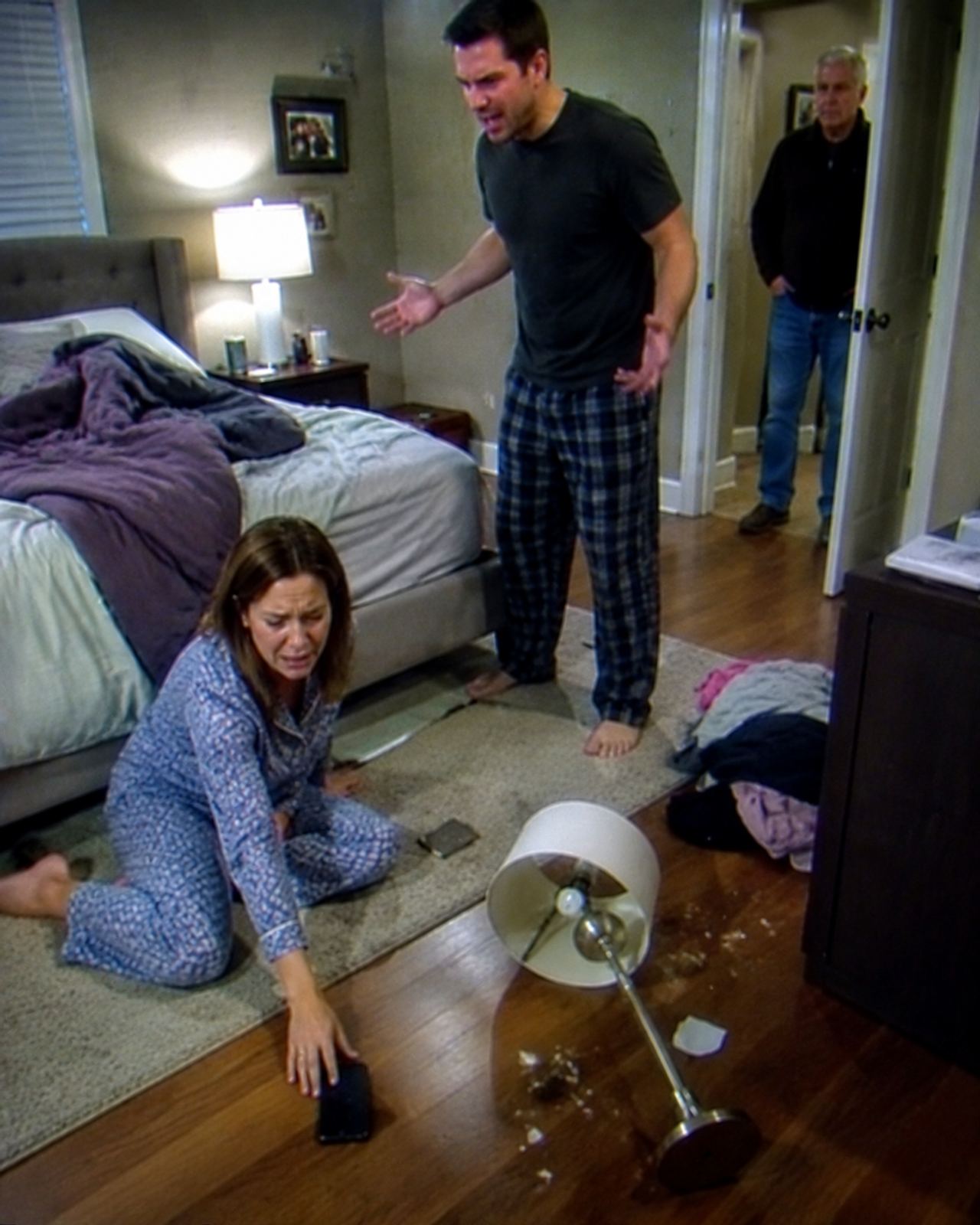
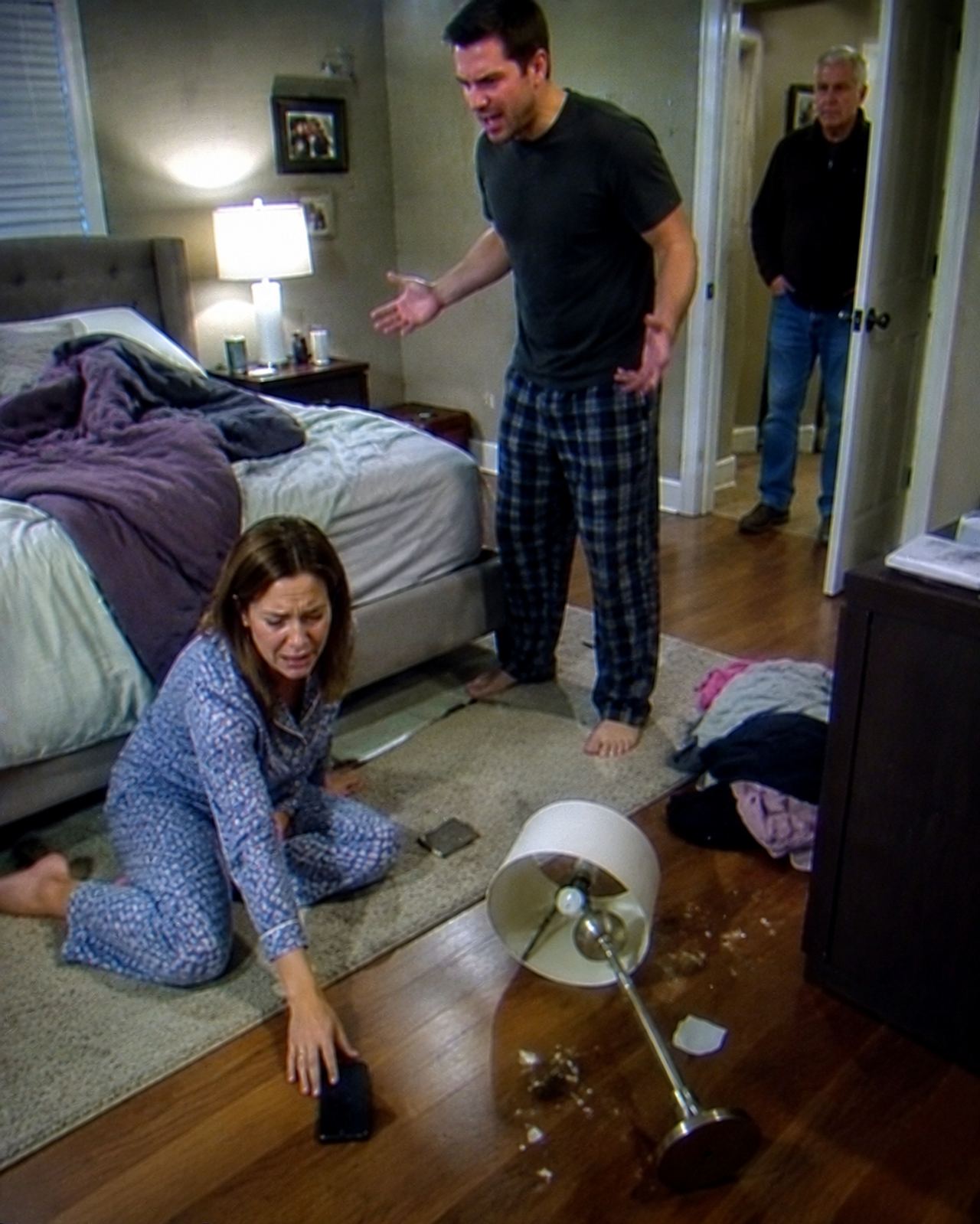
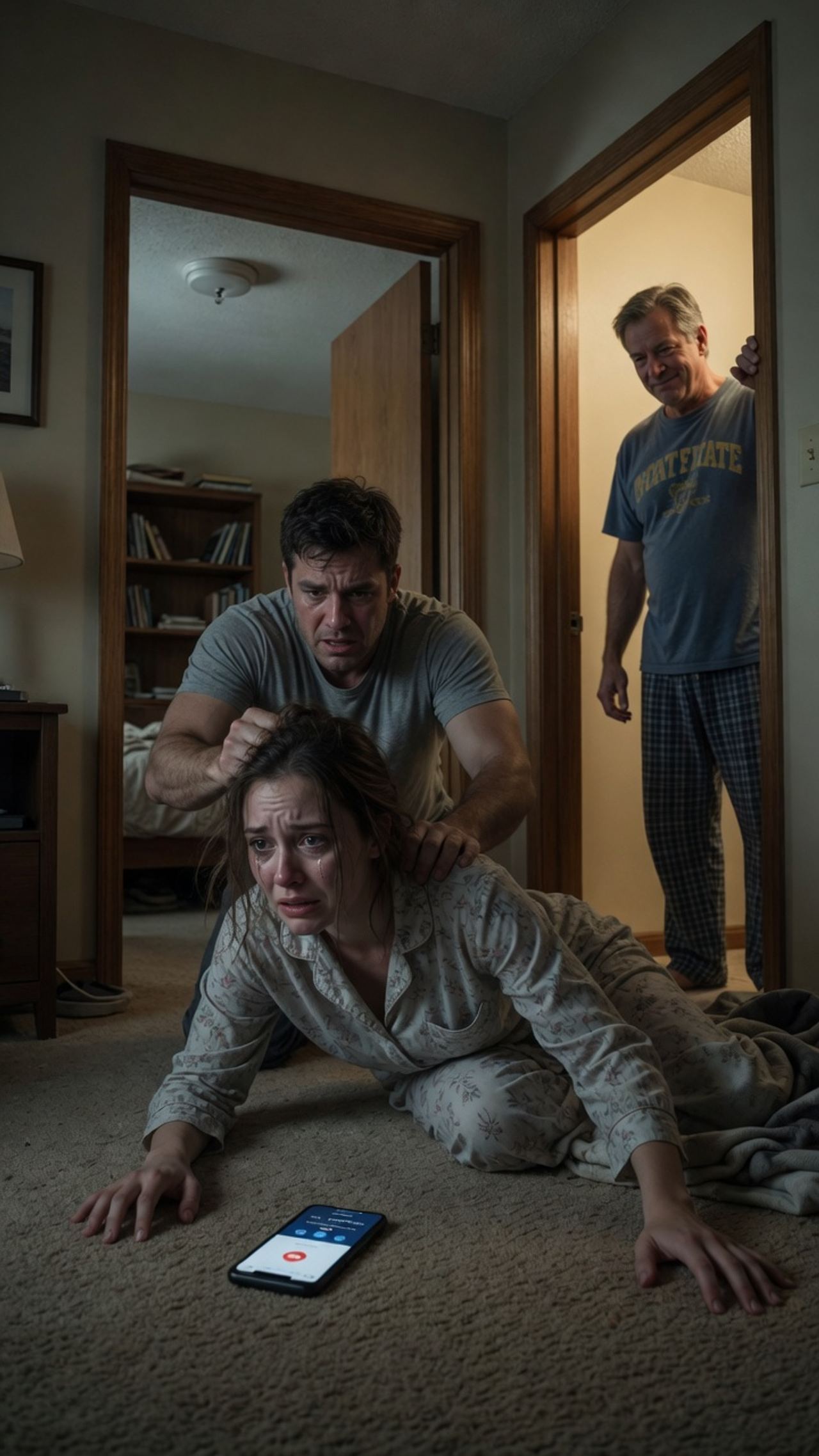
His hand went into my hair, hard and fast, and he dragged me out of bed before my feet could find the floor.
The nightstand caught my shoulder.
The lamp went down.
The bulb burst against the floor, and the little pop of it felt absurdly small compared with the sound I made trying to breathe.
“Get up,” Aaron said.
I grabbed his wrist with both hands.
I remember the heat of his skin, the smell of beer and cologne, the rough edge of my blanket twisted around my legs.
I remember thinking that this was not an argument anymore.
This was the thing I had spent years telling myself he would never actually do.
Then he pulled again.
The hallway came toward me sideways.
My cheek hit the wall, and the framed family photo beside us dropped, shattered, and scattered our smiling faces across the runner.
That was when I heard my father laugh.
Douglas Kensington stood in his bedroom doorway, half in shadow, wearing plaid pajama pants and an old college T-shirt from a school he never stopped bragging about.
He did not ask what was happening.
He did not say Aaron’s name with warning in it.
He smiled as if the house had finally become entertaining.
“Look at this,” he said. “Madison at it again. Always the victim.”
There are sentences that bruise deeper than hands.
That one had been practiced for years.
When Aaron shoved me down the back steps at ten, Dad told me I had always been dramatic.
When Aaron locked me outside in winter at fourteen, Dad said I must have mouthed off.
When my mother once saw marks on my arm and started to cry, Dad cut her off before she could ask the right question.
“Madison exaggerates,” he said then.
He said it with the same bored confidence that night.
Aaron wanted an apology, though neither of us knew for what.
That was how our house worked.
My guilt arrived first, and the accusation was invented later.
“Say you’re sorry,” Aaron hissed close to my face.
I asked, “For what?”
He answered by dragging me toward the living room.
My hip struck the coffee table, and a small black shape slid off the glass and landed near my hand.
My phone.
For a second, the whole room held still around it.
Aaron saw it too.
His grin widened, ugly and confident.
“Call someone,” he said. “Let’s see who believes you this time.”
That was the cruelest part of him.
He did not think I had no way out because the doors were locked.
He thought I had no way out because every adult in my life had helped him build the wall.
My fingers closed around the phone anyway.
I could barely focus on the screen.
My hand was shaking so hard that the numbers looked like they were floating.
9.
1.
1.
The call connected.
“911, what is your emergency?”
The operator’s voice was steady in a way that made me want to cry.
It sounded like a world where rules still existed.
“My brother is attacking me,” I gasped.
Aaron’s face changed before I finished the sentence.
He grabbed for my wrist, and the phone flew from my hand, skidding under the coffee table with the line still open.
The operator kept speaking.
I heard her ask if I could get away.
I heard my father laugh again, then say clearly enough for the room and the phone to catch it, “She always does this for attention.”
That was the moment fear became something colder.
They were not panicking because they had already chosen the story.
By morning, I would be unstable.
Aaron would be the overwhelmed brother trying to calm me down.
Douglas would be the tired father who had suffered through my episodes for years.
They had used that script in kitchens, doctors’ offices, school meetings, and family gatherings.
They knew every line.
They did not know I had changed the stage.
Three weeks earlier, Aaron had torn through my room looking for money he claimed I stole.
He yanked out drawers, dumped my laundry, opened books as if cash might flutter from the pages, and left my life on the floor like trash.
Dad stood outside my doorway that day too.
He told me to stop making Aaron feel like a criminal.
That sentence kept me awake that night.
By sunrise, I had ordered the smallest camera I could find.
When it arrived, I mounted it inside the smoke detector above my bookshelf with fingers that would not stop trembling.
I told no one.
Not my closest friend.
Not my mother.
Not even the frightened part of me that still wanted to believe I was overreacting.
I installed it because memory is useless in a house where the loudest person owns the truth.
I installed it because I needed something that would not flinch.
That night, as Aaron stood over me and my father’s voice floated through the open 911 line, I thought of the tiny black pinhole above my bookshelf.
The camera.
If it was still recording, the room had a witness they could not bully.
I tried to say it.
Check the camera.
My mouth moved, but no sound came out.
The ceiling pulled away from me.
The operator’s voice stretched thin.
The last thing I saw was Aaron stepping back, already fixing his face into something almost worried.
The next light was white and harsh.
My living room had become a place of careful voices.
Two officers stood near the coffee table, one speaking softly into his radio, the other crouched beside me with a notepad and eyes that did not rush me.
Aaron sat on the far end of the sofa, breathing through his nose like a man offended by inconvenience.
My father stood behind him.
He had become calm again.
That was Douglas’s real talent.
He could look trustworthy in the same room where he had just laughed.
“She gets confused,” he told the officers.
Aaron nodded immediately.
“She came at me,” he said. “I was trying to stop her from hurting herself.”
The lie entered the room so smoothly it almost sounded rehearsed.
The officer beside me looked at my hair, the broken lamp, the shattered picture frame, and then the phone still glowing under the coffee table.
He did not argue.
He only asked questions.
That scared my father more than shouting would have.
Questions made space for answers.
“Who broke the doorframe?”
Aaron said I slammed it.
“Who called 911?”
I raised my hand.
“Why was the phone under the table?”
Aaron said I threw it.
Then the second officer came back from the hallway and looked up toward my bedroom ceiling.
“Who installed the smoke detector above the bookshelf?”
For the first time that night, my father forgot his face.
It slipped for only a second, but I saw it.
So did the officer.
“I did,” I whispered.
Aaron turned toward me slowly.
His mouth opened, but nothing useful came out.
The officer asked if it recorded.
I said I thought so.
I expected my father to start talking again, to bury the moment under concern and authority and all the old words that had worked before.
Instead, he stared at the ceiling as if the smoke detector had betrayed him personally.
The officer removed the card and connected it to a small screen from his kit.
Everyone watched because nobody in that room knew how not to.
The video began with my dark bedroom.
A strip of hallway light.
My bed.
The door already cracked open wider than it should have been.
Then Aaron appeared.
He did not stumble.
He did not look frightened.
He stood in the doorway with his shoulders set and his hands flexing like he was preparing for work.
Behind him, partly hidden by the hall, was my father.
Douglas was awake before the door ever hit the wall.
He was not arriving late.
He was waiting.
The sound was grainy, but clear enough.
My father’s voice came first, low and flat.
“Make it look like she started it.”
The room froze.
That was the sentence the house had been holding in its walls for years.
Aaron reached for me on the screen.
I heard my own half-asleep voice ask what he was doing.
I watched him grab my hair, watched my body disappear out of the camera’s lower edge, watched the lamp fall after me.
I had lived it once, but seeing it from above was different.
From there, it looked exactly like what it was.
Not confusion.
Not an episode.
Not a family misunderstanding.
An attack.
My father tried to speak.
No words came.
The officer held up one hand without looking away from the screen.
That small gesture did what twenty years of pleading had not done.
It made Douglas Kensington stop talking.
The footage continued.
It caught Aaron dragging me into the hallway.
It caught my father laughing.
It caught him saying I was always the victim.
It caught the phone sliding under the coffee table and the operator’s voice bleeding faintly through the room.
Then it caught the part I had not remembered.
After I blacked out, Aaron stepped back and asked, almost breathless, “What do I say?”
My father answered him without hesitation.
“Say she went crazy. Say she came at you first. I’ll handle the rest.”
A person can spend years knowing the truth and still shake when someone else finally sees it.
The young officer beside me swallowed hard.
The older one closed the laptop slowly, not because there was nothing left to see, but because there was enough.
Aaron stood up too fast.
“That’s not the whole story,” he said.
No one asked him for the rest.
The officer turned him around before he reached the hallway.
My father said my name then, softly, almost tenderly, as if he had found it at the bottom of a drawer and wanted to use it carefully.
“Madison,” he said, “you don’t understand how this looks.”
For the first time in my life, I did not explain myself to him.
I looked at the smoke detector.
Then I looked at the broken frame on the floor, the one with all of us smiling in a place that had never really been safe.
“I understand exactly how it looks,” I said.
That was the beginning of the end of their version of me.
Aaron left the house in handcuffs while telling the officers he needed a lawyer.
My father followed them onto the porch, still trying to sound reasonable, still trying to pull the night back under his control.
But the 911 recording had his voice.
The camera had his face.
The living room had the wreckage.
And I had finally stopped helping them hide it.
In the days after, relatives called with voices full of questions they should have asked years earlier.
Some apologized badly.
Some tried to explain my father to me, as if cruelty becomes softer when you give it a family history.
My mother cried so hard on the phone that for a moment I almost became the one comforting everyone again.
Almost.
Then I remembered the sound of my father laughing while I was on the floor.
Some doors do not close gently.
Some doors have to be locked from the other side.
I gave my statement.
I gave the footage.
I gave the 911 recording permission to speak where I once could not.
For years, my family had treated truth like a light switch they controlled.
On when it helped them.
Off when it exposed them.
But a camera does not care who is beloved at dinner.
A recording does not get nervous when a powerful man lowers his voice.
Proof has no childhood to protect.
Weeks later, I returned to that house with an officer and a friend to collect the rest of my things.
The hallway wall had been patched where my cheek struck it.
The broken frame was gone.
The smoke detector had been removed, leaving a pale round mark on the ceiling like an eye that had finally closed.
My father would not look at me.
Aaron was not there.
My room smelled like dust and cardboard, and for a moment I stood inside it feeling the old fear crawl toward me by habit.
Then I saw the empty place above the bookshelf.
I thought that would make me feel unprotected.
Instead, it made me feel free.
The camera had done its job.
It had watched one night, but it had given back years.
The final twist was not that my brother attacked me.
I had known who Aaron was for a long time.
The final twist was that my father, the man who had spent my whole life calling me unstable, had finally been recorded teaching the lie before anyone else could say it.
He had not failed to believe me.
He had needed everyone else not to.
That is a different kind of betrayal.
It is colder.
It is cleaner.
And once you see it clearly, you cannot unsee it.
People think proof gives you revenge.
Sometimes it only gives you permission to stop begging.
That was enough.
The last time I walked out of the Kensington house, I did not slam the door.
I did not need the drama.
The truth had already made enough noise.
Read more stories
- My mother-in-law “taught” my baby a lesson at midnight, but the ER doctor’s words shattered
- She Announced Her Engagement. Her Stepmother’s Slap Changed Everything.
- PART 2: Everyone Believed the Maid Had Three Children by Three Different Men—Until Her Wedding Night Revealed the Truth
- My Family Skipped My Son’s Surgery, Then Tried To Empty My Accounts