
Human Stories
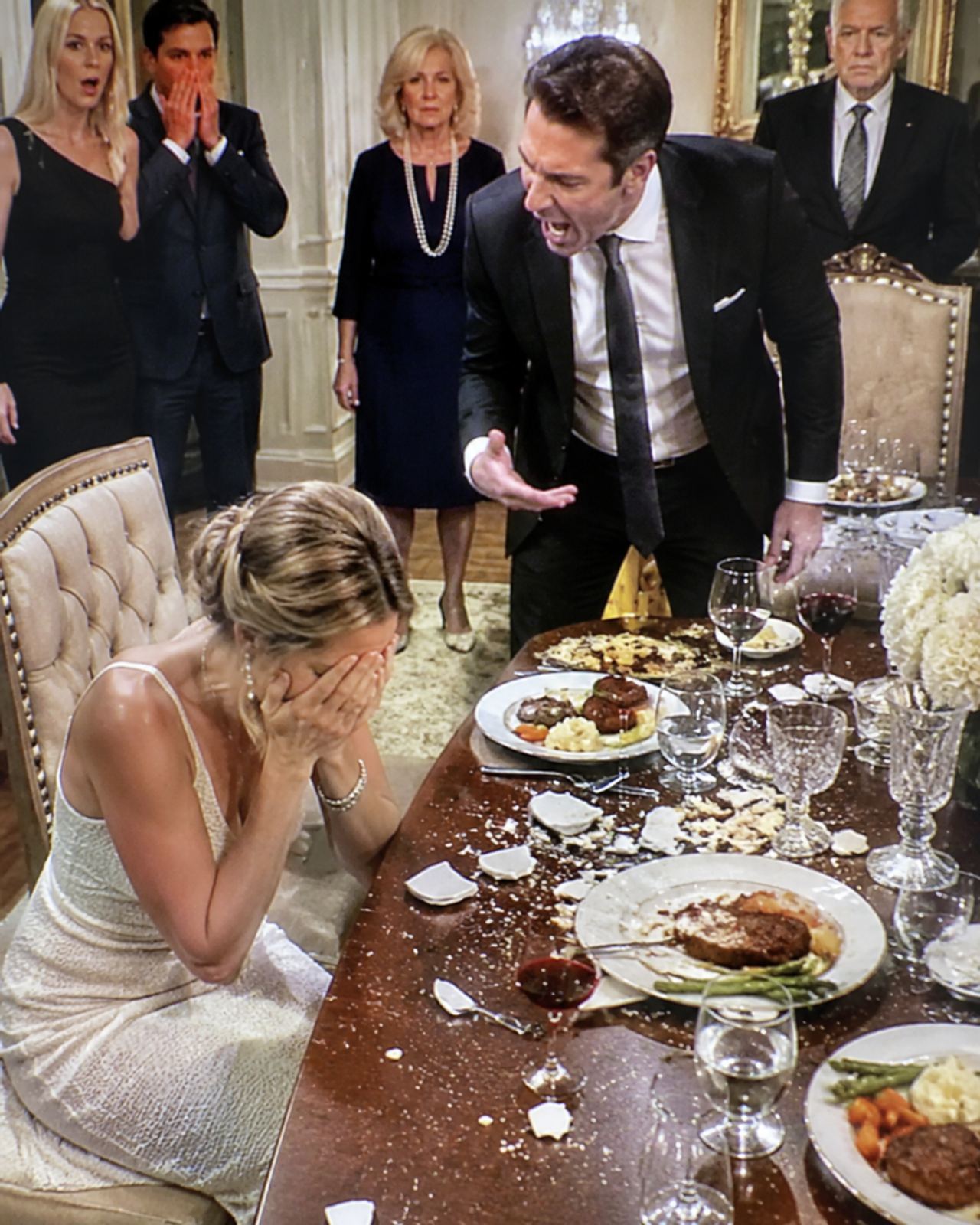
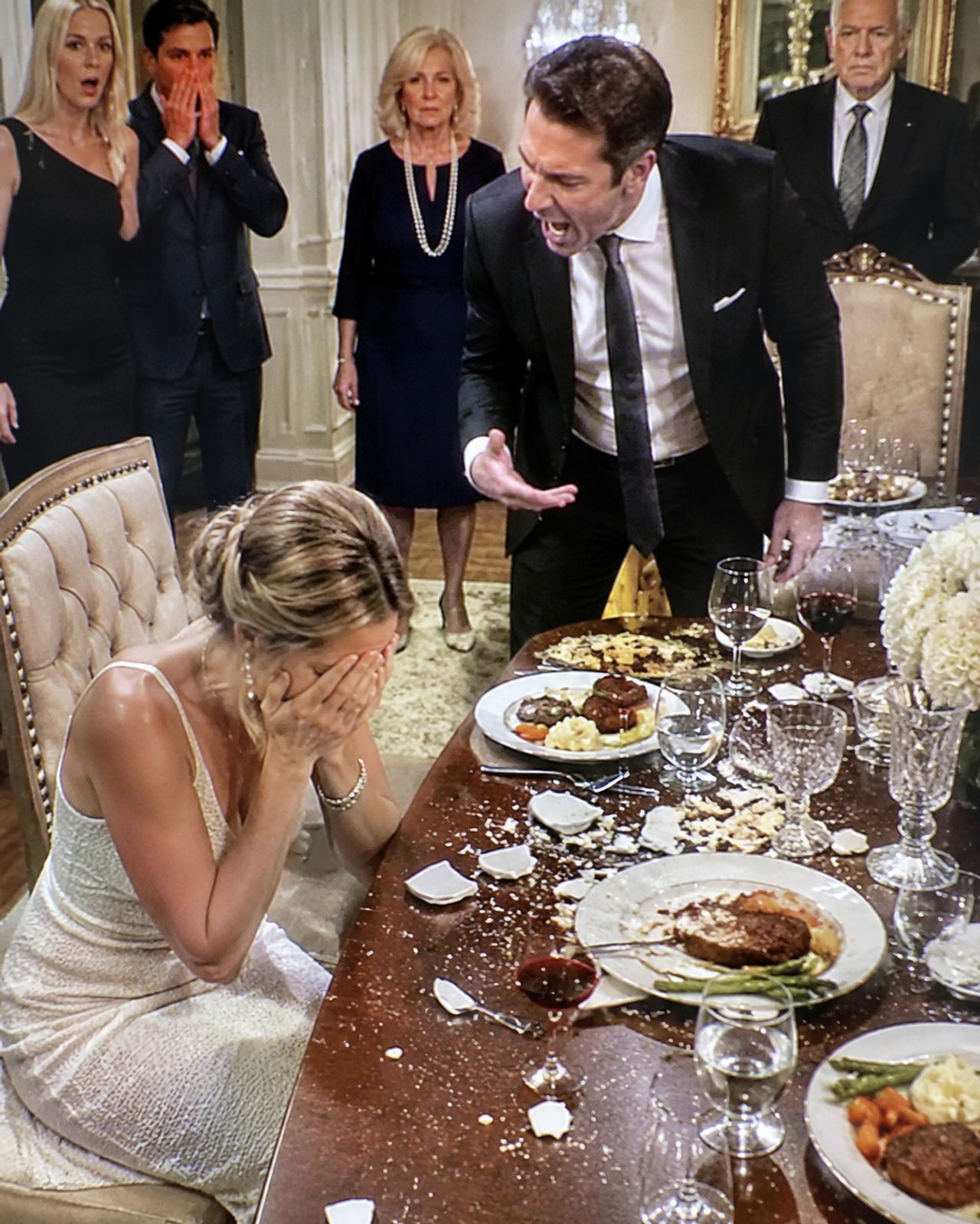
Part 2 My husband hurled a dinner plate at my head because I refused to give his mother my apartment and pay her $1,200 every month.
During a tense family dinner, Elaine is injured when her husband Jackson throws a plate at her, triggering police intervention and exposing signs of a deeper scheme involving her apartment. As the evening unravels, long-hidden abuse, family complicity, and attempts to transfer her property come to light.

The small black device beside my handbag was no bigger than a lipstick tube.
For one terrible second, nobody moved.
Then Genesis’s face drained of color.
It was strange, almost unreal, seeing the woman who had spent an entire evening speaking about my life as if it were furniture suddenly lose control of her own expression. Her fingers hovered in the air where the carving knife had been. Her eyes fixed on the object by my bag, widening not with confusion, but recognition.
Jackson saw her reaction and his anger faltered.
“Elaine,” he said.
My name came out low, warning and pleading at the same time.
I kept the phone pressed to my ear.
“Yes,” I said into it, my voice steadier than I felt. “I’m at 1482 Briar Hollow Road in Hidden Hills. I’m bleeding from a head injury. My husband threw a plate at me during dinner.”
A woman on the other end of the line asked if I was somewhere safe.
I looked around the dining room.
Twenty adults. Crystal glasses. Gold-rimmed plates. A chandelier glittering above us as if this were a normal family gathering and not the moment my marriage finally cracked open for everyone to see.
“No,” I said. “I’m not sure.”
Jackson pushed his chair back. The scrape of wood against marble made several people flinch.
“Don’t be dramatic,” he snapped, but the words didn’t carry their usual force. His gaze kept sliding back to the little black recorder.
Genesis recovered first.
“Jackson, sit down,” she said sharply.
He froze.
That was the first time I noticed it—not the first time it had happened, only the first time I truly understood what I was seeing. Jackson could tower over me, shout until veins stood out in his neck, throw things, accuse and belittle and demand. But when Genesis spoke in that clipped tone, he became a boy waiting to be punished.
His brother, Marcus, stood at the far end of the table. “Mom,” he said quietly, “what is that?”
Genesis turned on him with a look so cold that he stopped speaking.
I lowered myself slowly back into my chair because the room had tilted again. Blood trickled along my cheekbone and into the corner of my mouth. It tasted metallic. My hands were shaking now that the first hard wave of adrenaline had begun to fade.
The dispatcher told me to stay on the line.
“I am,” I whispered.
Jackson’s father, Arthur, finally looked up from his plate. He was a thin, gray man with careful manners and the soft, absent voice of someone who had spent years learning not to be noticed.
“Elaine,” he said, barely above a murmur. “You need a towel.”
For some reason, that almost broke me.
Not the plate. Not the demand for my apartment. Not Genesis’s cold entitlement or Jackson’s public rage. But Arthur offering a towel as if the problem were a spilled drink.
I laughed once, a small, broken sound.
Genesis’s eyes narrowed. “There is no need to turn a family disagreement into a criminal matter.”
“A criminal matter?” Marcus said. “Mom, she’s bleeding.”
“It was an accident,” Jackson said quickly.
Every head turned toward him.
The lie landed with a dull thud in the room.
My fingers tightened around the phone.
“An accident?” I repeated.
Jackson swallowed. “You moved.”
A cousin near the sideboard made a faint sound of disbelief. His wife touched his sleeve, warning him to stay quiet.
The silence that followed was different from the first silence. That earlier one had been cowardly, practiced, automatic. This one was uncomfortable. Restless. People were beginning to understand that the story they told themselves about their family was not going to survive the evening intact.
The dispatcher asked me whether the person who hurt me still had access to anything that could be used as a weapon.
I looked at the carving knife on the floor, lying beside Genesis’s chair.
“Yes,” I said. “But no one is holding it.”
Genesis’s mouth tightened.
“Tell them,” she said, “that you are confused. Tell them we are handling this privately.”
I stared at her.
For years, I had tried to understand Genesis Vale.
When Jackson and I were first engaged, I believed she disliked me because I was new. Because I had not been raised in their world of catered charity luncheons, silent grudges, and inherited furniture. I mistook her sharpness for protectiveness. I told myself that mothers sometimes resented daughters-in-law because love felt like competition.
Later, I told myself she was lonely. Then that she was difficult. Then that she was old-fashioned. Then that perhaps I was too sensitive.
But sitting there with blood cooling on my skin, I finally saw the truth clearly.
Genesis did not dislike me because I had taken her son.
She disliked me because she had failed to take me.
She had mistaken kindness for weakness. Patience for permission. Marriage for surrender.
And tonight, she had overplayed her hand.
“No,” I said.
Her expression hardened.
The word seemed to land more heavily than anything else I had said all evening.
No.
One syllable. A locked door. A line drawn in ink.
Jackson stepped toward me.
Marcus moved before I did, placing himself between us. He wasn’t a large man like Jackson, but there was something firm in his shoulders, something decided.
“Back up,” Marcus said.
Jackson stared at him. “Are you kidding me?”
“No,” Marcus replied. “I’m not.”
I had never heard Marcus speak to his brother like that. He was usually the family comedian, always smoothing things over with a joke, always stepping away from conflict before it had a chance to stick to him. But now his face was pale, and his eyes kept moving between me and the recorder beside my bag.
Jackson gave a bitter laugh. “So that’s how it is? She plays victim, and everyone suddenly turns on me?”
“No one turned anything,” Marcus said. “We watched you throw a plate.”
Jackson’s jaw worked.
Aunt Sylvia, Genesis’s sister, placed both hands on the table. Her rings flashed under the chandelier. “I think everyone needs to calm down.”
“That’s what you said when he grabbed her arm last Thanksgiving,” Marcus said.
The room went still again.
I felt my breath catch.
Jackson turned slowly toward him. “What did you just say?”
Marcus’s voice was quiet, but it did not waver. “I said that’s what she said last Thanksgiving. And at Dad’s birthday. And at the charity dinner when Elaine disappeared into the bathroom for twenty minutes and came out with red eyes.”
A strange sound filled the room. It took me a moment to realize it came from me.
Not quite a sob. Not quite relief.
Someone had seen.
All this time, someone had seen.
Genesis rose from her chair. “Enough.”
But the word no longer had the same power.
Sirens sounded faintly in the distance.
Jackson heard them too. His face changed again, this time with real fear. Not panic exactly, but calculation. He began looking around the room as if searching for the fastest way to rebuild the old order before strangers arrived and asked questions no one could control.
Then his eyes dropped once more to the recorder.
“What is that, Elaine?”
I did not answer.
He took a step toward the table.
Marcus blocked him again. “Don’t.”
Jackson’s voice dropped. “I’m asking my wife a question.”
“She doesn’t owe you an answer right now,” Marcus said.
Genesis’s breathing had become shallow. She gripped the back of her chair with both hands.
Arthur looked at her then, really looked at her, and something in his face folded inward. It was not shock. It was recognition mixed with dread.
He knew too.
Of course he knew.
Maybe not everything, but enough.
The dispatcher told me officers were close. She asked whether I could move toward the front of the house.
Marcus reached for a cloth napkin, then hesitated, glancing at me for permission. I nodded. He handed it to me carefully, avoiding my blood, as though even in that small gesture he wanted to make clear I still had control over my own body.
I pressed it to my temple and stood.
The room shifted, but I stayed upright.
“I’m going outside,” I said.
Jackson gave a humorless laugh. “You’re really going to do this? You’re going to ruin me because of one mistake?”
“One?” Marcus said under his breath.
I looked at Jackson then, not as the man who had once brought me coffee in bed on Sunday mornings, not as the husband who knew exactly how I took my tea, not as the person I had defended to friends when they asked why he never seemed to keep a job for long.
I looked at him as someone I had been slowly losing for years.
Or perhaps as someone I had slowly been seeing.
“You ruined yourself,” I said.
His eyes flashed. “You think you’re so much better than me.”
“No,” I replied. “I think I’m tired.”
That was the truth beneath everything.
Beneath the fear. Beneath the anger. Beneath the humiliation of standing in front of his relatives with blood on my face.
I was tired.
Tired of shrinking rooms to fit his temper. Tired of checking his mood before speaking. Tired of making myself smaller so he could feel large. Tired of pretending love could survive without respect.
I walked toward the front hall.
A few relatives moved aside. No one tried to stop me.
Behind me, Genesis spoke in a low voice. “Jackson, do not say another word.”
For once, I agreed with her.
The front doors opened before I reached them. Two officers stepped inside, followed by paramedics carrying a medical kit. Cold night air rushed into the house, smelling faintly of eucalyptus and rain on pavement.
The sight of uniforms changed everything.
Voices overlapped.
Genesis began explaining before anyone asked her a question. “There has been a misunderstanding. My daughter-in-law became upset during dinner and—”
“She was hit with a plate,” Marcus said.
Genesis stared at him as if he had struck her.
One officer, a woman with calm eyes and dark hair pulled tightly back, lifted a hand. “One person at a time.”
The other officer approached me. “Ma’am, are you Elaine Vale?”
I hesitated at the name.
Vale.
Jackson’s name. His family’s name. A name I had worn like a coat in bad weather, believing it protected me. Tonight, it felt soaked through and heavy.
“Yes,” I said.
The paramedic guided me to a bench in the foyer. She was gentle, efficient, and blessedly direct.
“I’m going to look at the cut,” she said. “You may need stitches.”
Jackson stood in the dining room entrance with his arms crossed, trying to look offended rather than frightened. But his eyes betrayed him. They kept flicking toward the table, toward my handbag, toward the recorder.
The female officer noticed.
“What is that device?” she asked.
No one answered.
I closed my eyes briefly.
This was the point of no return.
Months earlier, I had bought the recorder after a conversation with my attorney, Naomi Patel. Not because I wanted drama. Not because I had some elaborate plan. I bought it because Jackson had developed a terrifying talent for denying things immediately after saying them.
He had called me unstable, then insisted he had never said it.
He had threatened to drain our joint account, then laughed when I repeated the words.
He had told me his mother deserved my apartment more than I did, then acted wounded when I said I felt unsafe.
I began recording conversations in my own home after Naomi told me, carefully and professionally, that if I was preparing to separate, documentation mattered. She also told me to understand the recording laws in my state and wherever I was recording. I did. I learned more legal language in three months than I had in my entire life.
But tonight I had not planned to record anything at dinner.
I had brought the device because I planned to meet Naomi in the morning and hand over everything I had already collected. It was in my bag along with the folder Jackson had never found.
The folder was what Genesis had seen.
Not the recorder.
The edge of it had slipped from my handbag when I pulled out my phone. A plain manila folder, marked with a blue tab.
ST. PAUL PROPERTY — TRANSFER ATTEMPT.
That was what had wiped the rage off Jackson’s face.
Not fear of the police.
Fear of what I had discovered.
I opened my eyes.
“It’s mine,” I said. “A recorder. But it wasn’t running tonight.”
Jackson exhaled sharply, relief flashing across his features before he could hide it.
Genesis’s shoulders lowered a fraction.
Then I reached into my handbag with slow, careful fingers and pulled out the folder.
“This,” I said, “is what they’re worried about.”
Genesis made a small sound.
Arthur closed his eyes.
The officer took the folder but did not open it immediately. “What is it?”
“Documents related to my apartment,” I said. “Someone tried to initiate a transfer of ownership using my information.”
Jackson barked out a laugh. “That’s insane.”
But he looked at his mother when he said it.
Not at me.
The female officer noticed that too.
I turned toward Genesis. “You knew the notary’s name.”
Her face became perfectly still.
It was a gift of hers, that stillness. She could disappear behind it whenever emotion threatened to expose her. I had seen it at bridal showers, hospital visits, dinners where Jackson drank too much and said too little afterward. A marble mask with pearl earrings.
“I don’t know what you’re talking about,” she said.
“Yes, you do,” I replied. “You mentioned her tonight.”
Marcus frowned. “Who?”
“Carol Whitcomb,” I said.
Genesis’s lips parted, then closed.
It had been one sentence. One tiny slip, buried in the middle of her long performance about aging, sacrifice, and family duty.
She had said, Carol said these things are never as complicated as people make them sound.
At the time, everyone assumed Carol was a friend.
But I knew the name because Carol Whitcomb had notarized a document I had never signed.
The paramedic paused with gauze in her hand. “Ma’am, keep pressure here.”
I obeyed, though my fingers felt numb.
The officer opened the folder and scanned the first page. Her face gave nothing away, but her posture changed slightly.
Jackson shifted. “That has nothing to do with tonight.”
“It has everything to do with tonight,” I said.
His voice hardened. “Elaine.”
The warning in it was familiar. It had worked on me for years. Lower your voice. Change the subject. Smile. Don’t embarrass me.
But the warning had no place left to land.
I looked at the officer. “Three weeks ago, I received a notice from my lender about a request for payoff information on my apartment. I never requested it. When I called, they said someone claiming to represent me had asked about a transfer. Then I found out a quitclaim deed had been drafted with my name on it.”
Genesis sat down slowly, as if her legs no longer trusted her.
Jackson shook his head. “You’re confused.”
“No,” I said. “For the first time in years, I am very clear.”
The officer asked if I had filed a report.
“I met with an attorney,” I said. “We were preparing everything.”
Jackson laughed again, but it sounded thin. “Preparing? So you came here looking for a fight.”
“I came here because you told me it was your father’s birthday dinner.”
Arthur looked down.
That, more than anything, confirmed what I had suspected. There was no birthday cake. No gifts. No casual celebration. His birthday was not for another month.
It had been a pretext.
Marcus stared at his father. “Dad?”
Arthur rubbed one trembling hand over his mouth. “I didn’t know about the plate.”
It was the wrong answer.
Marcus stepped back as if struck by it.
“You didn’t know about the plate,” he repeated.
Arthur said nothing.
The female officer turned toward Jackson. “Sir, I need you to step outside with my partner.”
Jackson’s face tightened. “I’m not leaving my own parents’ house.”
“You’re not being asked,” she said.
For a moment, I thought he would refuse.
Then he looked at Genesis.
She gave the smallest shake of her head.
Careful, it said.
He went.
The room seemed to exhale after he passed through the front doors.
I had expected to feel triumph when that moment came. Some clean, dramatic surge of victory. Instead I felt hollow and cold. The paramedic touched my shoulder and told me to breathe slowly. I realized I had been holding my breath.
Marcus crouched near me, not too close.
“Elaine,” he said. “I’m sorry.”
I looked at him.
His eyes were wet.
“I should have said something sooner,” he continued. “I saw things. I told myself it wasn’t my marriage. I told myself you were private, and Jackson was under pressure, and Mom would make everything worse if I interfered.”
He swallowed.
“All excuses,” he said. “I’m sorry.”
A month ago, I might have comforted him. I might have told him it was okay because I had spent years taking other people’s guilt and polishing it into something easier for them to carry.
But tonight I could not.
“Thank you for saying something now,” I said.
He nodded once, accepting that it was all I had to give.
Across the foyer, Genesis was speaking quietly to the female officer, who had stayed inside to take initial statements. Her voice had regained some of its smoothness.
“Elaine has been under strain,” Genesis said. “Her work is very demanding. She and Jackson have had financial disagreements, as many couples do.”
“I own my apartment separately,” I said without looking at her. “There is no marital dispute about it.”
Genesis turned her head slowly. “Family property is never truly separate.”
The officer looked up.
Even Genesis seemed to realize she had said too much.
Aunt Sylvia sank into a chair in the hallway. Someone in the dining room began crying softly. The younger cousins had gathered near the kitchen entrance, whispering. The children were nowhere in sight, and I was grateful for that small mercy.
The paramedic cleaned the cut at my temple. The sting brought tears to my eyes, but I blinked them away.
“You likely need stitches,” she said. “We should take you in.”
I nodded.
The officer asked whether I wanted to make a statement at the hospital.
“Yes,” I said.
Genesis’s gaze snapped to me.
It was almost impressive, how deeply she had believed I would still protect them. Even after the plate. Even after the blood. Even after the folder.
To Genesis, my refusal to cooperate was not self-preservation. It was betrayal.
The female officer placed the documents back in the folder and handed it to me. “Bring this with you. It may be relevant to a separate investigation.”
Jackson stood outside by the patrol car, speaking with the other officer. Through the glass panels beside the front door, I could see his profile. Hands moving. Shoulders tense. He was performing now, no doubt. Explaining. Minimizing. Recasting the scene into something more flattering.
I had seen him do it with unpaid contractors, disappointed investors, friends he had borrowed money from and never repaid.
He could be charming when cornered.
That charm had been the first thing I loved.
Or thought I loved.
When I met Jackson, he was all warmth and ambition. He said I made him feel steady. He admired my designs, asked thoughtful questions about load-bearing walls and zoning restrictions, brought me pastries from a bakery near his office even after that office closed and he pretended for two weeks he still had meetings there.
There had been softness once.
I needed to believe that.
Not because it excused him, but because I needed my own story to make sense. I needed to know I had not walked willingly into cruelty with open eyes. I had loved the version of him he showed me, and maybe he had loved me too, in the incomplete way people love what shelters them.
But love without accountability turns into appetite.
And Jackson had been hungry for a long time.
The paramedics helped me stand.
As we moved toward the door, Arthur stepped into my path.
For a moment, the officer stiffened.
But Arthur only held out something small and silver.
My apartment keys.
I stared at them.
They had been missing for two days.
“I found them in Genesis’s desk,” he said.
The words were so quiet I almost missed them.
Genesis made a sharp movement behind him. “Arthur.”
He did not turn around.
His hand shook as he held the keys out to me.
I took them.
“Why were they there?” I asked.
His face crumpled with shame. “I don’t know.”
But he did.
Not all of it, perhaps. But enough.
Genesis stepped closer. “Arthur is confused.”
“No,” Arthur said.
The entire foyer went silent.
He seemed surprised by his own voice. He straightened a little, though it clearly cost him something.
“No,” he repeated. “I am not confused.”
Genesis stared at him, and for the first time since I had known them, I saw fear pass across her face that had nothing to do with police or paperwork.
It was the fear of losing control over someone she had controlled for decades.
Arthur looked at me. “I’m sorry, Elaine.”
I could not answer him.
The paramedics guided me outside.
The night had turned misty. The grand houses of Briar Hollow Road sat behind iron gates and manicured hedges, their windows glowing softly, hiding whatever sorrows lived inside them. Somewhere down the street, sprinklers ticked across a lawn. A dog barked once and fell silent.
Jackson saw me and stopped talking.
For a brief moment, we were alone inside the noise of everything else.
He looked younger in the porch light. Tired. Furious. Afraid.
“Elaine,” he said.
The officer beside him told him not to approach.
Jackson ignored him with his eyes, not his feet.
“Don’t do this,” he said. “We can fix it.”
I looked at the gauze in my hand, red blooming through white.
“No,” I said. “We can’t.”
His face twisted. “After everything I did for you?”
The old reflex rose in me—explain, defend, correct the record.
I let it pass.
That was growth, I realized. Not a grand transformation. Not an instant becoming. Just the small, quiet decision not to step into the same trap because someone had opened it.
The paramedic helped me into the ambulance.
As the doors closed, I saw Marcus standing on the porch. Arthur beside him. Genesis behind them, half in shadow.
She was not looking at Jackson.
She was looking at me.
And in her face, beneath the anger and panic, I saw something else.
Not remorse.
Recognition.
She had underestimated me, yes.
But I had underestimated her too.
At the hospital, time became fluorescent and fragmented.
A nurse asked questions. A doctor examined the cut and told me I needed four stitches. Someone brought me a clean towel and a paper cup of water. The police officer returned to take my statement in a small room with pale blue walls and a poster about concussion symptoms.
I answered everything as clearly as I could.
Yes, Jackson threw the plate.
Yes, others witnessed it.
Yes, there had been prior incidents that frightened me, though I struggled to describe them because so many had left no visible mark.
How do you explain a marriage that bruises the air around you?
How do you make someone understand the weight of a look across a room, the punishment of silence, the way your own home can become a place where you measure every cabinet door by how loudly it closes?
I did my best.
When the officer asked about the property documents, I gave her the folder.
“There’s more,” I said.
She waited.
“My attorney has copies of recordings, emails, bank statements, and messages. I was planning to file for divorce.”
Saying it aloud felt less like a confession than a door opening.
Divorce.
The word had terrified me for months. It seemed enormous, like a storm system on the horizon. But spoken in that small hospital room, it became practical. Painful, yes. Complicated, yes. But survivable.
The officer took notes.
“Did your husband know?” she asked.
“No,” I said. “I don’t think so.”
But even as I said it, I remembered the way Jackson’s eyes had dropped to the folder.
Maybe he had known something.
Maybe he had suspected.
Maybe that was why tonight had happened now.
After the officer left, I borrowed a charger from the nurse’s station and called Naomi.
She answered on the second ring, her voice thick with sleep but instantly alert when she heard mine.
“Elaine? What happened?”
I told her.
Not all of it. Not yet. Just enough.
There was a pause, then the rustle of movement.
“Are you safe right now?” she asked.
“Yes. I’m at the hospital.”
“Good. Do not go home alone. Do not speak to Jackson without counsel. Do not agree to meet anyone from his family privately. I’ll contact you first thing in the morning.”
“Naomi,” I said. “They had my keys.”
Her silence sharpened.
“Who had your keys?”
“Arthur gave them back. He said they were in Genesis’s desk.”
“Elaine,” she said carefully, “has anyone been inside your apartment without your permission?”
I thought of t…
Read more stories
- The most feared man in New York unknowingly spent an entire flight sitting beside the little girl he had been searching for without even realizing she was his daughter. When she looked at me and asked, “Have you ever loved someone enough to ruin your own life?” I thought it was just an innocent question. Then the plane hit violent turbulence, and I found myself holding the hand of the child whose mother had hidden her from me for six long years.
- While eight months pregnant, the divorce judge stripped me of everything. My husband smirked and delivered the cruelest blow: “Let’s see how you and that baby survive without me.”
- His Dinner Guests Believed I Was Away—Until the Basement Door Blew Open-jeslyn_
- I secretly bought my dream house worth $1 million after 6 years of hard work. On moving day, I saw my sister’s husband and his family with the movers, trying to move their belongings inside. I smiled and politely invited them in. Then they suddenly stopped short, “Wait! This is not what we were told.”