
Stories
Just walked out of court finalizing my divorce and called my dad: “Fire every single employee my ex’s family put in the company,” and that very night, after they laughed at me outside the courthouse, my ex-mother-in-law came running over, screaming and pleading.
After finalizing her divorce, Eleanor Prescott calls her father and orders him to cut off her ex-husband’s family members who had infiltrated the company. She then returns to the company, exposes the Miller family’s corruption, and begins dismantling the network that helped her ex exploit both her marriage and the business.

Just Walked Out of Court Finalizing my Divorce and Called my Dad: “Fire Every Single Employee My Ex’s Family Put in the Company.” That Very Night, My Ex-Mother-In-Law Came Running Over, Screaming and Pleading…
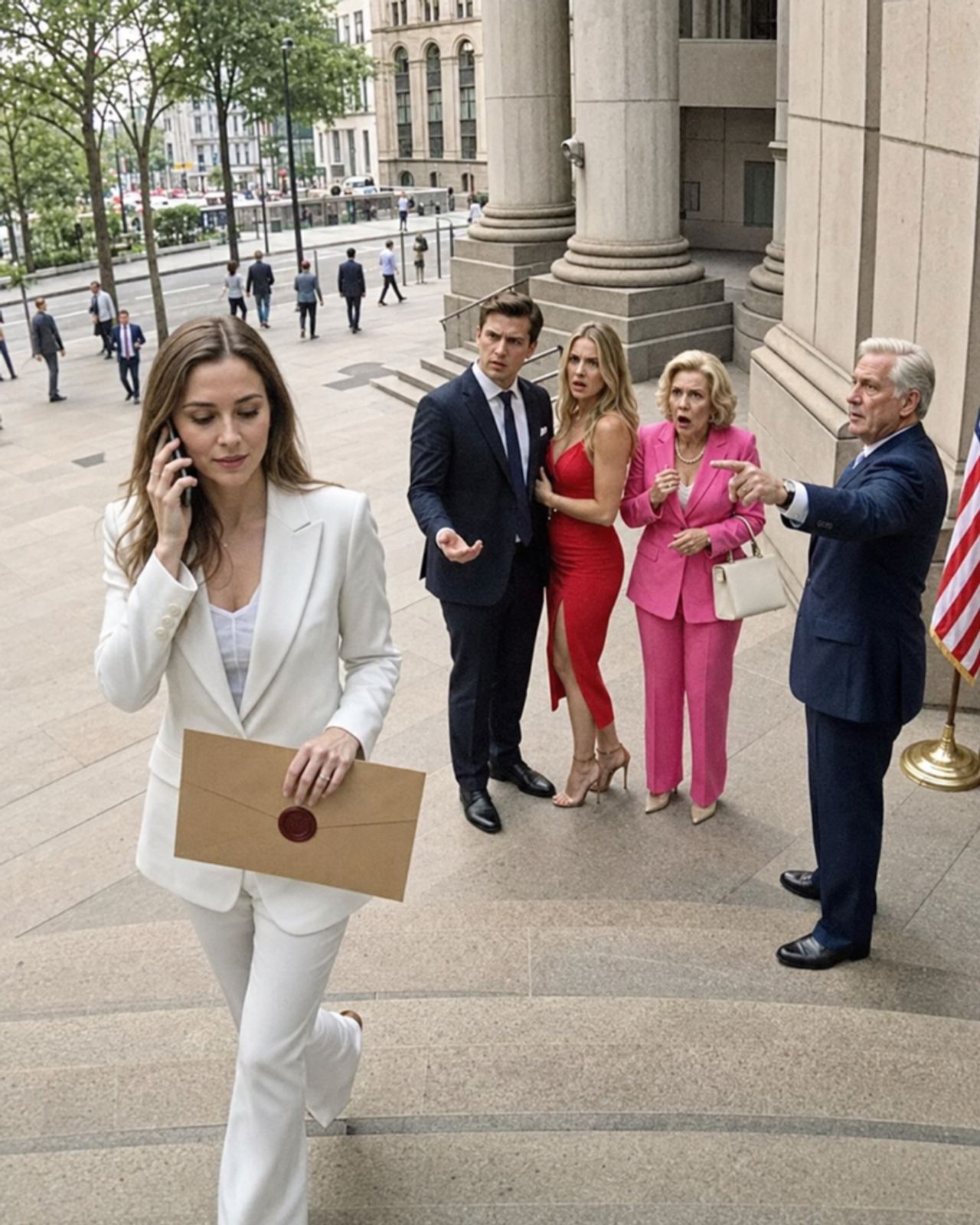
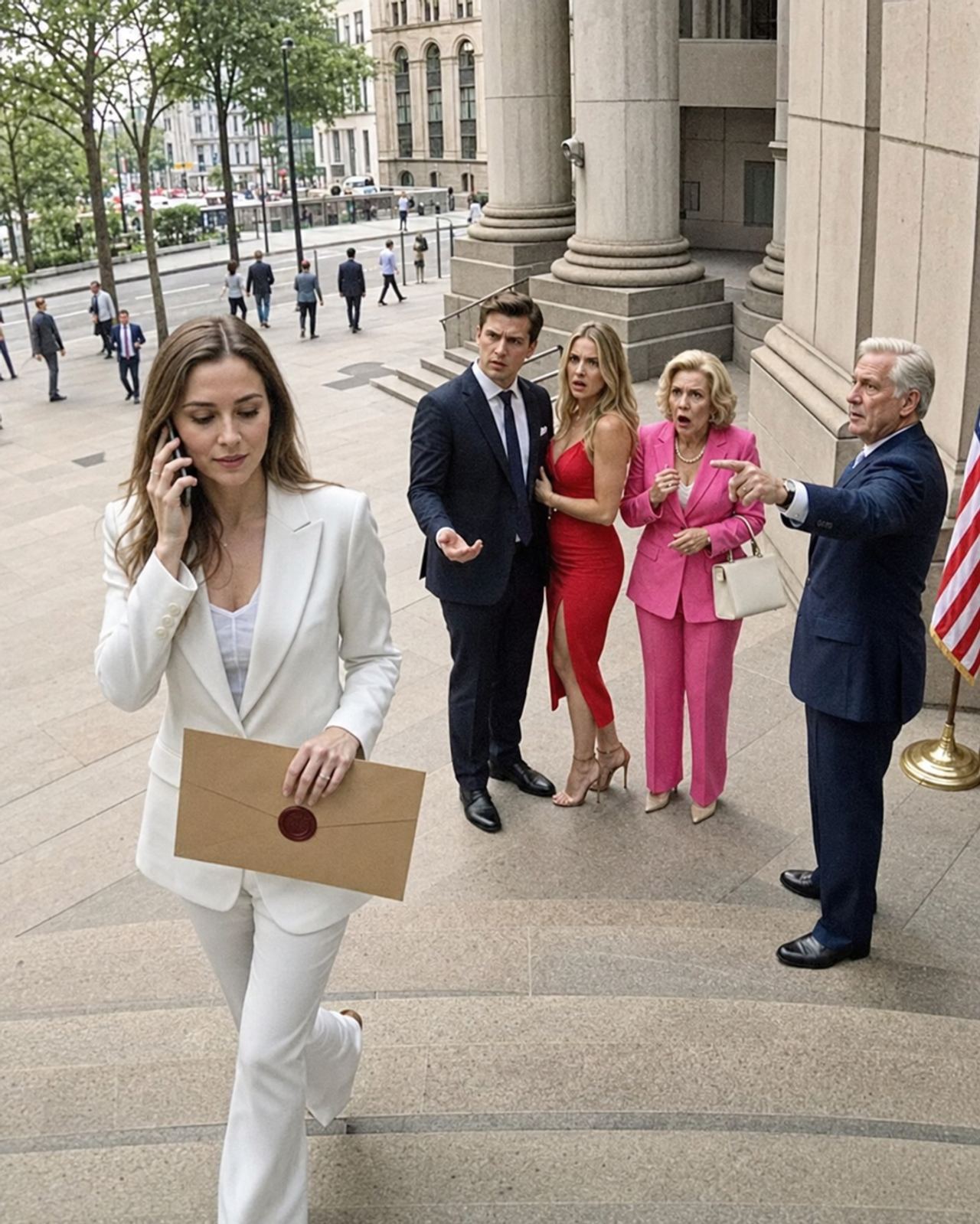
The August sun over Manhattan was sharp enough to make the courthouse steps look white-hot.
I stood outside the New York County Supreme Court with the final dissolution of marriage in my hands, the paper still warm from the clerk’s printer. The official seal pressed into the page caught the light every time my fingers trembled.
Eleanor Prescott and Anthony Miller.
Five years of marriage reduced to two names, one stamped document, and a silence inside me that felt heavier than grief.
I had imagined divorce would feel like an ending. Instead, it felt like walking out of a burning house and realizing the smoke had been in my lungs for years.
People moved around me on the courthouse steps. Lawyers with leather folders. Couples whispering through clenched teeth. A woman crying into a tissue while her attorney held the door open. A man lighting a cigarette with shaking hands near the curb.
I barely saw any of them.
My thumb rested on the line where my name appeared. Eleanor Prescott. Not Eleanor Miller. Not Mrs. Anthony Miller. Not the foolish daughter who had given five years to a man who used love as a key and family as a bank.
Eleanor Prescott.
The name felt unfamiliar and old at the same time.
Behind me, the glass doors opened.
I knew his footsteps before I turned.
Anthony Miller came out of the courthouse as if he had just closed a successful deal. His navy Italian suit was perfectly tailored. I knew that because I had paid for it. His shoes shone black in the sun. His hair was styled in the careful, expensive way he had learned after entering my world, the world he once claimed made him uncomfortable.
He was not alone.
Christina Reed stepped out beside him in a fitted red dress, one hand wrapped around his arm and the other holding a designer handbag I recognized immediately.
I had seen the charge on my card months ago.
Anthony had called it a business gift.
Now the gift was standing in front of me, smiling.
“Well,” Anthony said, sliding one hand into his pocket, “this is it.”
His voice was smooth, almost casual, as if we had just signed closing papers on a property instead of tearing apart a life.
Christina leaned her head against his shoulder.
Anthony looked at the envelope in my hand and smiled.
“Don’t hold it against me, Eleanor. Feelings change. People grow apart. We just set each other free.”
Set each other free.
That was a generous way to describe late-night messages, hotel receipts, hidden accounts, and a mistress wearing a handbag purchased with my money.
I folded the decree carefully and slid it into my purse.
Christina watched me do it.
“You know,” she said, her voice light and sharp, “you have money and status, but you never understood men. Men don’t want a cold princess sitting in a mansion. They want warmth. Softness. A woman who knows how to make them feel like a man.”
I looked at her for a long second.
The red dress. The polished nails. The expensive purse. The confidence of someone who had only seen the performance and mistaken it for power.
“You picked up what I threw away,” I said quietly. “If you think you found gold, keep it.”
Anthony’s smile vanished.
A muscle in his jaw moved.
He took one step closer, lowering his voice enough that only we could hear.
“You still don’t get it, do you?”
The noise of the courthouse courtyard seemed to dull around us.
Anthony’s eyes were no longer charming. They were flat and cold.
“You think because the judge signed a paper, everything goes back to how it was before me? You sat at home for years playing loyal wife while my family did the work. My mother helped build the staff. My uncle handles procurement. My aunt is in accounting. My cousins are in vendor relations and project management. My people are everywhere.”
Christina’s fingers tightened around his arm.
Anthony leaned in.
“Your father is old. The company runs because of us now. The roots are deep, Eleanor. If you try to pull them out, you bring down the whole tree.”
There it was.
Not an insult.
A confession.
For five years, he had mistaken my silence for blindness.
For five years, Catherine Miller, his mother, had sat at my dining table praising family loyalty while quietly moving her relatives into Prescott Holdings one by one. A brother in procurement. A sister in accounting. A nephew in project management. A cousin in vendor relations. Another cousin in compliance support.
Always with the same explanation.
They just need a chance.
They are good people.
They are loyal.
They are family.
I had believed it once. Or maybe I had wanted to believe it because admitting the truth would mean admitting my father had been right from the beginning.
Five years earlier, I had stood inside my father’s study in Greenwich and begged him to accept Anthony.
The study smelled of old books, cedar, and the faint tobacco scent that remained in the walls from my grandfather’s time. Rain had tapped against the windows that night. My father sat behind his walnut desk, one hand resting on a photograph of my mother, Natalie, who had died when I was still young enough to believe fathers could fix everything.
“Eleanor,” he had said, his voice tired, “I do not dislike Anthony because he comes from less. I distrust him because he wants too much too quickly.”
I had cried. I had shouted. I had accused him of being elitist, controlling, and cold.
“Anthony is ambitious,” I told him. “That is not a crime. He just needs someone to believe in him.”
My father had looked at me for a long time.
Then he sighed.
In that one sigh, I heard a man surrendering not because he agreed, but because he loved his daughter too much to cage her.
“Love should not make you blind,” he said.
I married Anthony anyway.
My father gave him a place at our table. Then a place at the company. Then room to prove himself.
Anthony did not prove himself.
He multiplied.
He brought in his mother. His mother brought in the family. The family brought in vendors. The vendors brought in invoices. And somewhere along the way, the company my father built with decades of discipline became a hunting ground for people who smiled while taking.
Now Anthony stood in front of the courthouse and told me the roots were too deep.
I looked past him at the traffic moving along the street, yellow cabs flashing between shadows, a delivery cyclist shouting at a sedan, the city continuing as if my old life had not just ended on the steps behind me.
“We’ll see,” I said, “how deep those roots really are.”
Anthony frowned.
“What does that mean?”
I did not answer.
I turned and walked toward my SUV.
Christina called after me, “Still acting like a queen.”
Anthony said my name once, louder.
I kept walking.
By the time I closed the car door, the city noise disappeared. Inside, the air smelled faintly of leather, perfume, and paper.
My hands were steady.
That surprised me.
For years, I had cried in bathrooms. In closets. In guest bedrooms after charity dinners where Anthony spent the entire night whispering into his phone. I had cried in silence while Catherine complimented my china and asked whether my father had considered giving Anthony more authority. I had cried when I found messages from women whose names I did not know, then let Anthony explain them away because I was afraid of what the truth would cost.
But sitting in that car with the divorce decree in my purse, I did not cry.
I opened my phone.
The photo gallery appeared first.
Thousands of images filled the screen.
Anthony feeding me soup when I was sick.
Anthony and me in Florence, his arm around my waist under a sunset he had barely looked at because he was messaging someone else.
Anthony laughing beside my father at a Prescott Holdings holiday gala.
Catherine in my kitchen wearing an apron, pretending to help with Thanksgiving dinner while asking casual questions about board appointments.
A Christmas photo in Greenwich where we all stood under garlands and white lights, smiling like a family.
I selected them all.
The phone asked if I wanted to delete more than five thousand items.
I pressed confirm.
The screen flickered.
Five thousand pieces of evidence that I had loved the wrong man vanished into a blank folder.
It felt less like deleting memories and more like cutting out something infected.
Then I opened my contacts.
Dad.
For three years, that name had lived in my phone like a closed door.
Our conversations had become rare and careful after my marriage. Every time he asked a question about Anthony, I became defensive. Every time he hinted at concerns inside the company, I accused him of looking for faults. Eventually, he stopped asking.
That was how silence grew between us.
Not all at once.
One avoided call at a time.
One unfinished dinner at a time.
One daughter choosing a husband’s lies over a father’s patience.
My thumb hovered over the call button.
Then I pressed it.
The phone rang three times.
A cough came through the line. Deep. Familiar. Older than I remembered.
“Eleanor?”
Just my name.
Just his voice.
The wall I had built inside myself cracked.
“Dad,” I whispered. “I was wrong.”
There was a long silence.
No lecture.
No anger.
No sharp satisfaction.
Only my father breathing on the other end of the line, as if he had been waiting years for those words and did not want to frighten them away.
“I know the hearing was today,” he said softly. “Are you alone?”
“Yes.”
“Good. Then cry if you need to. Home is still home.”
That was when the tears came.
Not pretty tears. Not quiet tears. The kind that bent my shoulders forward until my forehead touched the steering wheel. The kind that came from humiliation, grief, exhaustion, and the unbearable relief of no longer pretending.
“I defended him,” I said. “I defended all of them. I let them into your company. I let Catherine smile in your house. I let Anthony put his people everywhere.”
My father said nothing.
So I kept going.
I told him about Christina. About the card charges. About the courthouse steps. About Anthony’s warning. About procurement, accounting, vendor relations, and the way the Miller family had spread through Prescott Holdings like mold behind painted walls.
When I finally stopped, my father’s voice changed.
The tired father disappeared.
The chairman returned.
“Paul Prescott’s daughter does not fall because of people like that,” he said.
I wiped my face with my sleeve.
“I don’t know how bad it is.”
“I do.”
I sat completely still.
“What?”
“I have known enough for some time,” he said. “Contracts. Vendor payments. Inflated invoices. Access logs. Shell companies. I did not have every piece at first, but I had enough to know we had a problem.”
“You knew?”
“Yes.”
“Why didn’t you tell me?”
His silence this time was heavier.
“Because you would have protected him,” he said. “And if I moved too early, you would have believed I was destroying your marriage. I needed you to see him without my shadow in the room.”
The truth hurt because it was fair.
I would have defended Anthony.
I would have called my father cruel.
I would have said Catherine was misunderstood. I would have accused him of punishing the Miller family because they were not Prescotts.
I had been that blind.
Through the windshield, far beyond the traffic and summer glare, I could see the glass tower of Prescott Holdings rising over Midtown. Forty floors of steel, glass, payroll, contracts, employees, history, risk, and my father’s life.
For years, I had treated it like his world.
Not mine.
That ended in the parking lane outside the courthouse.
“Dad,” I said, and my voice sounded different even to me. “At exactly two o’clock, I’m coming to the main office.”
“I’ll be ready.”
“Have Arthur from HR there. Leonard from security too. I want legal on standby. Before I step into the boardroom, every access card connected to Anthony and his relatives gets shut down. Email, database access, bank permissions, vendor portals, executive elevator clearance, company devices, everything.”
My father did not hesitate.
“Done.”
“And Dad?”
“Yes?”
“Do not warn them.”
A pause.
Then a low, approving breath.
“Your mother would recognize that tone.”
I closed my eyes for one second.
Then I started the car.
The engine came alive with a low growl.
Anthony had been right about one thing.
The roots were deep.
But he had forgotten who owned the land.
At exactly two o’clock, I stepped out of my SUV in front of Prescott Holdings.
The building rose over Midtown with its polished glass face reflecting the city in clean silver lines. Near the entrance, the American flag moved lightly in the hot wind beside the company flag. The lobby beyond the revolving doors glowed with marble, steel, and money old enough not to shout.
For five years, I had entered that building mostly as Anthony’s wife.
That afternoon, I entered as Eleanor Prescott.
I wore a black pantsuit with sharp shoulders and a narrow waist. My hair was pulled back. My heels struck the granite floor with a crisp rhythm that made conversations fade before I reached the reception desk.
The receptionist looked up and froze.
“Miss Prescott,” she said quickly.
Not Mrs. Miller.
Miss Prescott.
Security straightened.
An assistant near the coffee bar lowered her phone. Two analysts by the elevators stopped mid-conversation.
The silence followed me across the lobby like a weather change.
Arthur Greaves, the director of human resources, waited beside the private elevator. He had worked with my father for almost thirty years. His hair was gray now, his back a little bent, but his eyes were clear behind thin glasses.
Beside him stood Leonard Hayes, head of security, with six officers in dark suits.
Arthur held a thick folder.
“Everything is ready,” he said.
I took the folder.
“Has Anthony noticed?”
“His account began returning errors twelve minutes ago. We expect him to call IT any moment.”
“Good.”
The elevator doors opened.
We stepped in.
No one spoke as the numbers climbed.
Thirty-four.
Thirty-five.
Thirty-six.
With every floor, something inside me became colder and calmer.
Forty.
The executive floor opened into a corridor lined with framed photographs of company milestones. Groundbreakings. Ribbon cuttings. Charity events. My father shaking hands with governors, mayors, union leaders, and employees who had spent their lives building something real.
Near the end of the hallway, through double-paned glass, I saw the boardroom.
Catherine Miller was sitting in the vice president’s leather chair.
Not near it.
Not beside it.
In it.
She wore a red velvet dress and a pearl necklace so large it looked theatrical under the recessed lights. One hand wrapped around a coffee cup. The other waved through the air as she laughed with the people gathered around the table.
Samuel Miller, her brother, head of procurement, sat with his jacket open and his feet stretched casually beneath the glass table.
Susan Miller, her sister and chief accountant, was scrolling on a tablet.
Two nephews occupied seats reserved for senior directors.
A cousin connected to vendor relations had a plate of pastries in front of him.
They looked comfortable.
That was the part that made my chest go quiet.
They were not sneaking.
They were not nervous.
They had lived inside my family’s company long enough to believe the room belonged to them.
Arthur stood beside me.
Leonard waited slightly behind.
I placed my hand on the oak door.
Then I pushed it open.
The laughter stopped.
Every face turned.
Catherine saw me first. Surprise crossed her face, then irritation, then the familiar smile she used when she wanted to insult someone while pretending to be kind.
“Eleanor,” she said, “what are you doing here during work hours?”
Her voice carried the patronizing warmth she had used in my kitchen for years.
“This is a senior management meeting. If you need something, we can talk at home.”
I walked to the head of the table.
No one moved.
I placed my purse down and dropped the folder onto the glass.
The sound cracked through the room.
“Catherine,” I said, “you seem to have forgotten a basic rule. At home, you were once my mother-in-law. In this building, I am the daughter of Chairman Paul Prescott and the second-largest shareholder of this corporation.”
Her smile stiffened.
“And as of this morning,” I continued, “there is no family connection left between me and your son.”
For the first time, Catherine looked genuinely confused.
“Divorce?”
A few people shifted in their seats.
Susan stopped scrolling.
Samuel’s mouth opened slightly.
“Anthony didn’t tell you?” I asked.
Catherine’s confusion sharpened into anger.
“You think a piece of paper lets you humiliate my family?”
“No,” I said. “Your family did that without help.”
Her chair scraped back as she stood.
“Careful, Eleanor. Anthony has run this company for years. These departments answer to him. These contracts are in his hands. If you remove him, you will damage the entire firm.”
I looked at Arthur.
“Read the order.”
Arthur stepped forward and opened his folder.
His voice was formal, steady, and loud enough to reach every corner of the boardroom.
“By decision of Chairman Paul Prescott and in light of documented financial misconduct, ethics violations, unauthorized vendor relationships, misuse of corporate access, and conflicts of interest, human resources hereby announces the immediate termination of Anthony Miller, chief executive officer, pending legal review.”
Catherine went still.
Arthur continued.
“Also terminated or suspended pending investigation are Samuel Miller, head of procurement; Susan Miller, chief accountant; and fifteen related employees, contractors, and vendor representatives connected to the Miller family.”
A nephew grabbed his phone.
Susan touched her tablet.
Samuel looked at his laptop.
Arthur turned the page.
“All access to company databases, financial platforms, vendor systems, building entry, executive elevators, internal messaging, and company bank authorization channels was suspended fifteen minutes ago. Active contracts connected to six flagged vendor entities have been frozen pending legal and regulatory review.”
The laptop in front of Samuel flashed red.
Access denied.
Susan’s tablet returned to the login screen.
The nephew’s phone began ringing. He stared at it, then looked at Catherine.
Catherine gripped the back of the chair.
“You can’t do this,” she said.
“I already did.”
“You ungrateful little—”
“Choose your next word carefully,” I said.
The room went silent.
Catherine’s face flushed.
“Our family worked for this company,” she snapped. “We gave everything to help Anthony carry your father’s dying empire.”
I opened the folder and slid one page across the table.
“Your brother approved material contracts at nearly three times market rate.”
Samuel’s face drained.
I slid another page.

“Your sister processed payments to vendors with no offices, no staff, and no completed work.”
Susan whispered, “That’s not—”
I placed a third page on top.
“Your nephew approved change orders on projects that never received the services listed. Your vendors billed us monthly for consulting that appears to exist only on paper.”
Catherine looked at the pages but did not touch them.
“You think you can scare us with paperwork?”
“No,” I said. “Paperwork is what scares people who know what they signed.”
I turned to Leonard.
“Escort all unauthorized personnel from the building. Calmly and professionally. Company property stays here. Personal belongings may be collected under supervision.”
Security moved in.
That was when the room broke apart.
Chairs scraped. Someone cursed. Susan began gathering files, but Arthur placed a hand over them.
“Company documents,” he said.
A nephew stood too quickly and knocked over his coffee.
Samuel started shouting that he needed to call Anthony.
I looked at him.
“You can try.”
He did.
The call failed.
Catherine came around the table toward me, pearls bouncing against her collarbone.
“You will regret this,” she whispered. “Do you understand me? You are burning bridges.”
I stepped closer.
“No, Catherine. I am closing doors that should never have been opened.”
Her eyes narrowed.
“You think your father can protect you forever?”
“I am not asking him to.”
For a moment, she looked almost afraid.
Then Leonard’s officers guided her toward the door.
She resisted just enough to make a scene, but not enough to risk being touched more firmly. That was Catherine’s way. Loud when there was an audience. Careful when consequences became physical.
As she passed me, she hissed, “Anthony will fix this.”
I looked at the empty vice president’s chair.
“Anthony cannot even access his email.”
The door closed behind them.
The boardroom was quiet.
A coffee stain spread slowly across the polished glass table.
Arthur exhaled.
Leonard looked at me.
“Miss Prescott?”
“Prepare a full audit trail. Preserve all devices. Send legal the access logs. No one connected to the Miller review enters this building without written clearance.”
“Yes, ma’am.”
I walked to the window.
Below, Manhattan moved as if nothing had happened. Traffic, taxis, pedestrians, delivery trucks, office workers with iced coffees in their hands.
Inside the glass tower, the cleanup had begun.
The first call from Anthony came seventeen minutes later.
I watched his name flash across my screen.
Then again.
Then again.
I did not answer.
By evening, there were forty-three missed calls and a string of messages that shifted from outrage to fear.
What did you do?
Call me now.
My mother is hysterical.
You have no idea what you’re doing.
Eleanor, please.
Christina left.
That last message made me laugh once, quietly, without joy.
Three days later, I agreed to meet him.
Not because I missed him.
Not because I wanted closure.
Because sometimes people who have lied for years need to look directly at the person who finally stopped believing them.
We met at a small café in the West Village, tucked between a bookstore and a narrow brick apartment building with fire escapes climbing the front. Rain moved down the windows in silver lines. Inside, the air smelled of espresso, wet coats, and cinnamon.
Anthony arrived at four.
He looked nothing like the man from the courthouse steps.
His shirt was wrinkled. His hair was uncombed. His eyes were red at the edges, and there was a roughness around his jaw that made him look older than thirty-five.
He sat across from me and folded his hands on the table.
For a moment, I saw the man I had once wanted him to be.
Then he opened his mouth.
“Eleanor,” he said, voice hoarse, “I was wrong.”
I stirred my espresso.
“I was wrong about everything,” he continued. “Christina only wanted money. The second she saw what was happening, she left. She won’t even answer my calls.”
I said nothing.
He leaned forward.
“I know I hurt you. I know I disappointed your father. I know my mother overstepped. But we were married for five years. That has to mean something.”
Rain tapped the glass.
He reached for my hand.
I moved mine away.
His face flickered with irritation before grief returned.
“I don’t need to be CEO,” he said. “I’ll start over. Any position. Even a clerk. I’ll do whatever your father wants. I just need a chance to prove I can make this right.”
The performance was almost impressive.
The lowered voice. The tired eyes. The carefully measured regret. He had always been good at becoming whatever a room required.
I opened my purse.
Anthony stopped talking.
I removed a small recorder and placed it on the table between us.
His eyes fixed on it.
“What is that?”
“Wipe your tears,” I said. “There are no cameras here.”
Then I pressed play.
Christina’s voice came first, light and amused, as if she were discussing vacation plans.
“You’re so clever, darling. Getting access to the mansion, the company, the accounts. Soon we can move everything through the shell vendors and leave.”
Anthony’s voice followed.
The same voice that had once promised to love me in front of my father.
“Eleanor will believe anything. She’s obsessed with me. Her old man is fading. I a…
Read more stories
- Eight months after our divorce, my ex-husband called to invite me to his wedding just so he could brag that his new fiancée was pregnant.
- 8-Year-Old Girl’s Whisper Stopped Her Father’s Execution—Then a Hidden Truth Began to Surface
- He Claimed Her Dream House—Then His Family Entered an Empty Home
- My family never helped me buy a single thing, but the moment they saw my